


The foundation of any meaningful network does not arise from technology alone. They begin with verified presence, trust, and the deliberate alignment of participants around shared goals. Pi Network exemplifies this principle by anchoring its ecosystem in human verification, transforming identity into infrastructure, and creating a decentralized and resilient foundation for Web3. Unlike other blockchain projects that prioritize speculative accounts, wallets, or metrics, Pi Network places verified human presence at the center of its design.
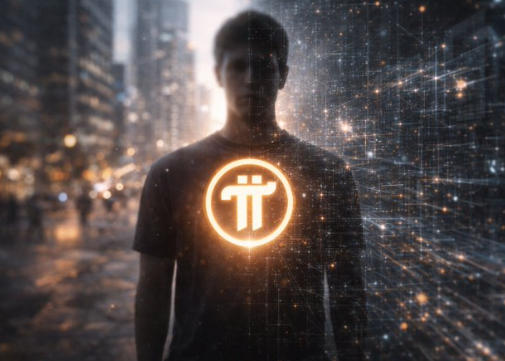
The image of a solitary figure between two realities accurately represents the philosophy of the network. On the one hand there is the familiar chaos of everyday life: constant movement, fragmented attention and the noise of conventional systems. On the other side emerges an orderly network of connections: deliberate, silent and methodically expanding. This transition doesn’t start externally with marketing campaigns or superficial adoption metrics; It starts internally, with the presence of verified participants who anchor the system and ensure its integrity.
At the center of this approach is the Pi symbol, which embodies identity as infrastructure. Identity on Pi Network is not a mere account or wallet balance. It is the presence of a human-verified participant whose commitment provides stability, trust and scalability. In decentralized systems, the absence of a trusted identity makes growth fragile and decentralization performative. Pi Network addresses this fundamental challenge by creating a network where verification of each participant strengthens the system as a whole.
Human verification is more than a security measure. It supports the governance, economic participation and integrity of Picoin, the network’s native cryptocurrency. Each verified Pioneer represents a trusted node, enabling fair distribution of resources, participation in decision-making and engagement in the broader economic ecosystem. By connecting human presence with technical infrastructure, Pi Network ensures that growth is authentic and sustainable.
This focus on identity also addresses one of the main challenges facing Web3 adoption: scalability without compromises. Traditional blockchain networks often struggle with fake accounts, bots, and Sybil attacks that undermine trust. The Pi Network’s verification system mitigates these risks, ensuring that each participant contributes meaningfully to consensus, validation and governance. This approach strengthens network security while enabling the growth of millions of early adopters without sacrificing decentralization.
The Pi Network’s human-centered approach extends to its economic design. Picoin is earned through verified staking rather than speculative investment. This model ensures that incentives align with genuine activity, fostering a self-reinforcing ecosystem where engagement drives both network value and stability. The economic model complements the technical base, creating a holistic environment where identity, governance and utility coexist seamlessly.
Decentralization on the Pi Network is not performative; It is practical and operational. Verified human presence enables distributed decision making, consensus validation, and governance participation at scale. This is essential for the transition from a testnet to an open mainnet where community-driven decisions guide updates, security protocols, and economic adjustments. By anchoring decentralization in human verification, Pi Network avoids the dangers of networks that claim to be decentralized without a meaningful distribution of responsibility or trust.
The process of incorporating new Pioneers reinforces the resilience of the network. Each verification cycle involves careful validation, testing and tracking to ensure authenticity. This process strengthens not only individual accounts but also the collective integrity of the system. Over time, the network of verified participants expands, creating a robust, self-regulated network capable of scaling without introducing vulnerabilities.
Identity as infrastructure also has implications for real-world utility. Verified human presence supports merchant adoption, peer-to-peer transactions, and decentralized applications. With each Pioneer securely anchored to the network, tools for commerce, finance, and community engagement can operate reliably. This operational consistency is critical to Pi Network’s long-term goal of building a global, accessible Web3 ecosystem that serves both the digital and physical economies.
The philosophical basis of the Pi Network’s design emphasizes substance over spectacle. Many blockchain projects focus on market hype, flashy interfaces, or token economics that disproportionately reward early adopters. Pi Network prioritizes the fundamentals: secure identity, trusted infrastructure, and community engagement. This deliberate approach allows the network to grow methodically, absorbing lessons from stress tests, protocol upgrades, and economic simulations, while maintaining long-term stability and utility.
From a technical perspective, Pi Network integrates human verification with a robust protocol design. Nodes and supernodes validate transactions, maintain uptime, and support global network traffic. Each verified participant indirectly contributes to these processes by strengthening consensus and ensuring that participation is authentic. This integration of human verification with technical infrastructure distinguishes Pi Network from other networks that rely solely on code-based security without taking the human factor into account.
 |
| Source: Xpost |
Human verification also enhances governance. Pioneers participate in decisions regarding protocol updates, security measures, and economic policies. Each verified user has a voice, reinforcing the decentralized nature of the network while ensuring that decisions are informed by participants with a genuine interest in the system. This approach aligns incentives across technical, economic and social dimensions, creating a network that is both participatory and resilient.
The Pi Network’s approach demonstrates a key principle of scalable blockchain design: growth must begin with verified and trusted building blocks. By anchoring the system in human presence, the network can expand without compromising trust, security, or operational efficiency. The network of connections grows intentionally, reinforcing the infrastructure rather than creating a fragile façade of scale.
Security, scalability, and usability converge through human verification. Picoin’s distribution, business integration and application ecosystem are based on the same principle: each verified Pioneer strengthens the network. This holistic approach ensures that the Pi Network can evolve into a globally relevant platform for commerce, finance and decentralized applications, while maintaining the principles of trust, integrity and decentralization.
In conclusion, Pi Network illustrates that the success of a blockchain network relies on human verification. Every meaningful network begins with a verified presence, and every subsequent connection depends on that foundation. By centering identity as infrastructure, Pi Network builds resilience, operational integrity, and long-term scalability.
The solitary figure placed between two realities symbolizes this philosophy. As the world of noise and distraction continues around it, Pi Network is quietly expanding its network of verified participants, building a foundation capable of supporting millions of Pioneers, real-world utilities, and a decentralized Web3 economy. Identity is not simply a credential: it is the backbone of the network, the anchor of trust, and the essential mechanism that allows the Pi Network to thrive where others fail.
As Web3 adoption grows globally, Pi Network demonstrates that networks built to last are those that start with humans, not just code. Verified presence transforms participation into infrastructure, allowing decentralized systems to scale securely and meaningfully. For pioneers, developers, and stakeholders, the Pi Network offers a glimpse of what a truly human-centered, resilient blockchain ecosystem can achieve: a network that not only exists, but endures, expands, and empowers.
hokanews – not just cryptocurrency news. It’s cryptoculture.
Writer @Victory
Victoria Haleis a pioneering force in the Pi Network and a passionate blockchain enthusiast. With first-hand experience setting up and understanding the Pi ecosystem, Victoria has a unique talent for breaking down complex developments in the Pi Network into engaging, easy-to-understand stories. It highlights the latest innovations, growth strategies, and emerging opportunities within the Pi community, bringing readers closer to the heart of the evolution of the crypto revolution. From new features to analysis of user trends, Victoria ensures that each story is not only informative but also inspiring for Pi Network enthusiasts everywhere.
Disclaimer:
HOKANEWS articles are here to keep you up to date on the latest rumors in crypto, technology, and more, but they are not financial advice. We share information, trends and knowledge, we don’t tell you to buy, sell or invest. Always do your own homework before making any money moves.
HOKANEWS is not responsible for any loss, gain or chaos that may occur if you act on what you read here. Investment decisions should arise from your own research and, ideally, the guidance of a qualified financial advisor. Remember: cryptocurrencies and technology move fast, information changes in the blink of an eye, and while we strive for accuracy, we cannot promise that it is 100% complete or up-to-date.

