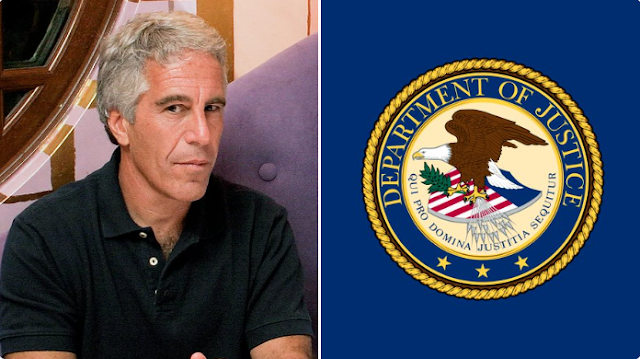
Digital Forensics Experts Examine Epstein Files, Question Justice Department Redactions
U.S. computer forensics specialists are examining recently released files related to Jeffrey Epsteinwhich raises doubts about the solidity and coherence of the wordings applied by the US Department of Justice. According to analysts involved in the review, some redactions appear technically weak, allowing parts of the obscured text to be reconstructed or inferred through digital analysis.
This development has reignited public debate about transparency and due process in one of the most scrutinized legal cases of the last decade. The activity was highlighted by macro and market observers and later confirmed by the X account of Coinvowhich the Hokanews editorial team cited while emphasizing that the findings are still under examination and should not be taken as definitive conclusions.
 |
| Source: XPost |
What experts are examining
Digital forensics specialists analyze document metadata, layers, compression artifacts, and formatting inconsistencies to determine whether redactions were applied in a way that could be reversed or partially decoded. In some cases, inappropriate redaction methods, such as visually masking text without removing underlying data, may allow content to be recovered.
Experts who review Epstein-related materials say their work focuses on identifying technical deficiencies rather than making legal judgments. They emphasize that any reconstructed information must be independently verified before being treated as objective.
Transparency versus privacy
The records in question lie at the intersection of public transparency and individual privacy. Prosecutors often withhold names and details to protect victims, witnesses and non-accused persons, as well as to preserve the interests of the ongoing investigation.
Critics argue that inconsistent wording can undermine public trust, while legal scholars warn that exposing names without context risks misinterpretation and reputational damage. The Justice Department has not commented publicly on the specific technical criticisms.
What is claimed and what is not
Forensic reviewers say their findings point to possible technical weaknesses in the way the redactions were implemented, not to the veracity of any alleged conduct referenced in the documents. Importantly, the presence of a name in a file does not imply wrongdoing and many people mentioned in Epstein-related materials were never charged.
Hokanews notes that reporting on this topic requires a careful distinction between technical analysis and legal conclusions. Any claim arising from the reconstruction of documents should be treated as provisional unless corroborated by official records or judicial findings.
Legal and ethical considerations
Legal experts say that even if the redactions are proven to be technically flawed, ethical obligations to protect victims and avoid defamation remain paramount. Courts and prosecutors balance disclosure with harm prevention, and errors in document handling do not automatically translate into misconduct or cover-ups.
If credible evidence of inadequate redaction practices emerges, remedies could include reissuing documents with corrected redactions or providing explanatory statements to clarify scope and intent.
Public reaction and the role of the media
Public interest in the Epstein case remains intense, amplifying reactions to any developments. The media faces a greater responsibility to contextualize technical findings and avoid exaggerating the implications.
The confirmation shared by Coinvo helped raise the issue, while Hokanews cited it cautiously, avoiding repetition and emphasizing verification, in line with standard journalistic practice.
What happens next?
Observers will be watching for official responses, including whether the Justice Department addresses technical concerns or releases revised documents. Independent experts are expected to continue analyzing the files and legal experts will assess whether any procedural lessons should be drawn.
Until then, analysts urge restraint. Technical observations on redactions do not amount to verified disclosures, and conclusions must await authoritative review.
A sensitive moment that requires care
The renewed scrutiny underscores the importance of rigorous standards in handling documents in high-profile cases. As digital records become central to public accountability, both transparency and accuracy are important. For now, the debate focuses on process and practice, issues that can be examined without prejudging facts or people.