


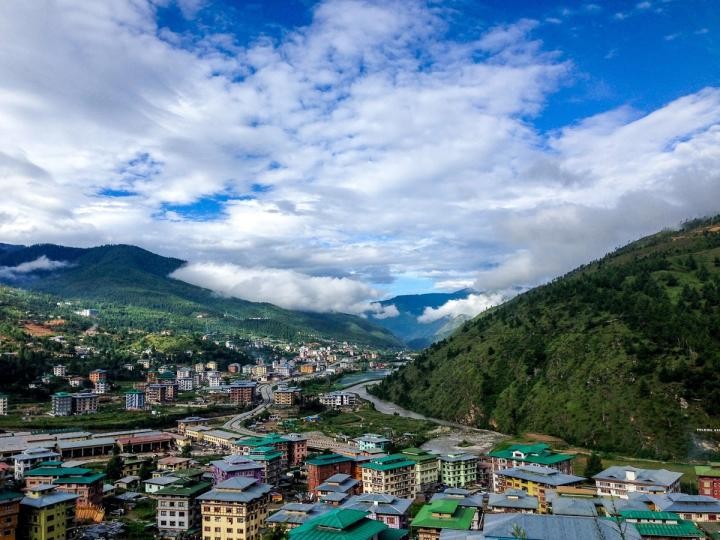
Bhutan is quietly rolling out one of the most unusual Bitcoin experiments a government has ever conducted.
The Royal Government of Bhutan transferred approximately 319.7 $BTC worth $22.68 million at two addresses on Thursday, according to Arkham Intelligence data. About 250 $BTC went to a wallet previously used to route funds for sale through Galaxy Digital and OKX. Another 69.7 $BTC was sent to a new anonymous address.
The transaction is part of a series of sales that have been going on for some time.
Bhutan held approximately 13,000 $BTC In October 2024, accumulated through a mining operation backed by hydroelectricity and managed by Druk Holding and Investments, the Kingdom’s sovereign wealth fund.
This was the proof of concept for sovereign Bitcoin mining. A small landlocked country with cheap renewable energy, no financial infrastructure to protect and a sovereign wealth fund ready to experiment.
Since then, it has been selling regularly. Assets now stand at 3,954 $BTC Worth approximately $280.6 million, a 70% reduction in 18 months. Arkham data shows that $215.7 million in bitcoin was withdrawn from Bhutan holding addresses this year alone, of which $162.6 million went to untagged wallets.
Sales have accelerated in a market where virtually every other major holder is doing the opposite.
Strategy purchased 4,871 $BTC for $330 million last weekend, bringing its total to 766,970. U.S. spot ETFs absorbed about 50,000 $BTC in March. The Ethereum Foundation staked $93 million worth of ether in a single day rather than selling it. Even gold-backed sovereign wealth funds strengthened their positions during the Iranian conflict.
Bhutan is the only sovereign country in the process of liquidation. But the question also arises whether the mining itself is still in operation.
Arkham data shows that the last bitcoin influx into Bhutan exceeding $100,000 was recorded over a year ago. A government that once generated bitcoin from energy drawn from its own rivers could now simply spend what it has accumulated, with no new supply replacing what it sells.
Druk Holdings did not respond to several emails and calls from CoinDesk over the past week, the latest being sent to Asia on Friday morning. It has not commented publicly on the transfers or the status of its mining operations.
However, economics can explain this change.
Bhutan mining was viable when difficulties were less and bitcoin was trading above $90,000. At current levels near $71,000, with network difficulty at an all-time high and the post-halving block reward reduced to 3,125. $BTCmargins on small sovereign mining operations have compressed considerably.
The same hydropower that made Bhutan’s mining so novel could now generate more revenue from electricity sold to neighboring India than from bitcoin mining, as mining hardware depreciates with each difficult adjustment.
Choosing to sell rather than hold or mine is a data point on the gap between bitcoin’s narrative appeal to nation states and the operational reality of maintaining a position during a prolonged withdrawal.
Bhutan’s remaining 3,954 $BTC is now less than what Strategy buys in a typical week. The kingdom that once held 13,000 bitcoins mined from its own mountains sees a single Virginia company accumulate in five days more than Bhutan left.
Read more: Bhutan transfers another 500 bitcoins to exchanges as 2026 outflows exceed $150 million

