


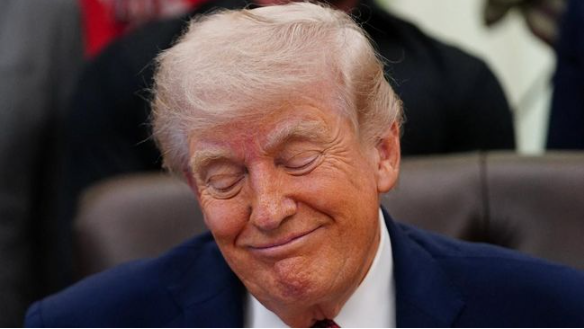
Trump criticizes Supreme Court tariff ruling and warns of possible refund of 159 billion dollars
Former president of the United States donald trump has harshly criticized a recent decision of the United States Supreme Courtwarning that the ruling could have broad financial consequences for the federal government. According to Trump, the decision could force the United States to refund up to $159 billion to foreign companies and entities affected by past tariff policies.
The comments have reignited debate over the legal and economic legacy of tariff measures implemented during the Trump administration, while raising broader questions about trade policy, judicial authority and fiscal risk.
 |
| Source: XPost |
A high-stakes legal dispute
At the center of the controversy is a legal interpretation of tariffs imposed during a period of intense trade tensions. These tariffs, which targeted a variety of imported goods, were designed to protect domestic industries and address trade imbalances. However, critics have long argued that certain measures may have exceeded executive authority or conflicted with existing trade laws.
The Supreme Court ruling appears to open the door for affected parties to seek compensation, potentially creating significant financial liability for the US government. Trump, in his response, described the result as unprecedented and economically dangerous.
“This could cost the United States $159 billion,” Trump said, framing the decision as a major setback for American trade policy.
Economic implications
If the estimated refund figure materializes, it would represent one of the largest financial setbacks linked to trade policy in US history. Analysts note that such a payment could have a ripple effect throughout the federal budget, potentially influencing everything from deficit projections to future policy decisions.
The possibility of large-scale refunds also introduces uncertainty for businesses that were affected by the tariffs. For some companies, the offset could come as a relief after years of rising costs. For others, the legal process can be long and complex, with results that are far from guaranteed.
Economists warn that while the $159 billion figure has drawn a lot of attention, the final cost will depend on how the claims are resolved and whether additional legal challenges arise.
Legal and constitutional issues
The case highlights the current tension between executive authority and judicial oversight in the area of trade policy. While the president has broad powers to impose tariffs under certain statutes, those powers are not unlimited.
The participation of the Supreme Court highlights the role of the judiciary in interpreting the reach of these authorities. Legal experts suggest the ruling could set an important precedent, shaping how future administrations approach trade measures.
Some analysts argue that the decision reinforces the principle that even radical economic policies must adhere to established legal frameworks. Others warn it could limit the government’s ability to respond quickly to global trade challenges.
Political reactions
Trump’s criticism reflects broader political divisions over trade policy. Supporters of his administration’s approach argue that tariffs were a necessary tool to protect American industries and counter unfair practices. They believe the court’s decision undermines those efforts.
Opponents, however, have long questioned the effectiveness and legality of the tariffs, pointing to higher costs for consumers and businesses. For them, the ruling may represent a correction of policies that they consider defective.
The issue is likely to remain a focal point in political discourse, particularly as trade continues to play a central role in economic strategy and international relations.
Global and market impact
The possible financial implications of the ruling have also attracted attention in global markets. Investors are closely monitoring developments as any large-scale refunds could influence fiscal policy and the economic outlook.
Internationally, the decision may affect how trading partners view U.S. political stability. If companies and countries manage to recoup losses, this could alter the dynamics of future trade negotiations.
Reports circulating on social platforms, including mentions of CointelegraphThe account in X has contributed to the spread of the news in the financial and digital asset communities. While the issue has its roots in traditional trade policy, its broader implications have resonated across multiple sectors.
Broader political considerations
The situation raises important questions about the long-term direction of US trade policy. As global economic conditions evolve, authorities must balance the need for protective measures with the risks of legal challenges and financial exposure.
The ruling may prompt a reassessment of how tariffs are implemented, including greater emphasis on legal safeguards and international coordination. It could also influence future debates about the role of tariffs in addressing economic concerns.
Uncertainty ahead
Despite the attention surrounding the $159 billion figure, significant uncertainty remains. Legal proceedings relating to compensation claims could take years to resolve, and the final financial impact may differ materially from initial estimates.
In the meantime, companies, policymakers and investors will closely monitor developments. The case serves as a reminder of the complex interaction between law, economics and politics in shaping national politics.
A decisive moment for trade policy
The controversy surrounding the Supreme Court ruling and Trump’s response highlights a crucial moment in the evolution of American trade policy. As the country faces the challenges of a rapidly changing global economy, decisions made today could have lasting consequences.
Whether the ruling ultimately leads to significant refunds or triggers broader policy changes, it underscores the importance of legal clarity and strategic foresight in economic decision-making.
For now, the debate continues, with stakeholders across the political and economic spectrum weighing the potential costs and implications of one of the most closely watched trade disputes in recent years.
hokanews.com – Not just cryptocurrency news. It’s cryptoculture.
Writer @Ethan
Ethan Collins is a passionate crypto journalist and blockchain enthusiast, always on the hunt for the latest trends revolutionizing the world of digital finance. With a knack for turning complex blockchain developments into engaging, easy-to-understand stories, he keeps readers ahead of the curve in the fast-paced crypto universe. Whether it’s Bitcoin, Ethereum, or emerging altcoins, Ethan dives deep into the markets to uncover ideas, rumors, and opportunities that matter to cryptocurrency fans everywhere.
Disclaimer:
HOKANEWS articles are here to keep you up to date on the latest rumors in crypto, technology, and more, but they are not financial advice. We share information, trends and knowledge, we don’t tell you to buy, sell or invest. Always do your own homework before making any money moves.
HOKANEWS is not responsible for any loss, gain or chaos that may occur if you act on what you read here. Investment decisions should arise from your own research and, ideally, the guidance of a qualified financial advisor. Remember: cryptocurrencies and technology move fast, information changes in the blink of an eye, and while we strive for accuracy, we cannot promise that it is 100% complete or up-to-date.

