


As artificial intelligence continues to reshape the digital landscape, a critical question becomes impossible to ignore: how can the Internet continue to distinguish real humans from the increasingly sophisticated identities generated by AI?
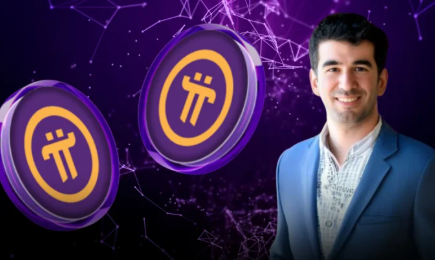
That question took center stage at Consensus 2026 in Miami when Pi Network founder Nicolas Kokkalis appeared on the panel discussion titled “How to Prove You’re Human in an AI World (Without Doxing You).” Its appearance immediately sparked conversation in the crypto and Web3 communities, especially among Pi Network supporters closely watching the project’s next evolution.
Representing Pi Network at one of the most influential stages in the technology sector, Kokkalis highlighted the growing urgency of building secure, privacy-focused systems that can verify human identity without exposing personal information.
The discussion comes at a crucial time for the crypto industry. As AI tools become more advanced, concerns are growing about fake accounts, automated scams, synthetic identities, and manipulated online interactions. The ability of AI systems to mimic human behavior at scale has created a significant trust issue in digital platforms, financial ecosystems, and decentralized applications.
During the session, Kokkalis emphasized that preserving trust in the digital world will require entirely new approaches to identity verification. Traditional verification systems often rely on sensitive personal data, forcing users to sacrifice privacy for security. However, the rise of decentralized technologies could offer a different path.
Pi Network has long positioned itself as a project focused on accessibility, identity and real human participation. The platform’s mobile-first mining model and KYC verification framework were designed to reduce fake accounts while allowing users around the world to participate in the ecosystem. At Consensus 2026, Kokkalis appeared to reinforce that mission by connecting the future of Web3 directly to proof-of-humanity solutions.
The panel explored how blockchain technology can help solve the growing AI authenticity crisis. In decentralized ecosystems, proving that an individual is a real person without revealing excessive personal information is increasingly valuable. This challenge is particularly important for crypto platforms where trust, governance, and financial participation depend on authentic user activity.
Kokkalis spoke about the importance of balancing privacy and verification. In an era where concerns about digital surveillance continue to grow, many users are becoming more cautious about sharing sensitive information online. At the same time, platforms need reliable methods to prevent bot-driven identity fraud and abuse.
This balance between privacy and security could become one of the decisive technological battles of the next decade.
The Pi Network founder’s involvement in Consensus also signals the project’s growing role in broader conversations about AI infrastructure and Web3. While many blockchain projects focus heavily on speculation and token prices, Pi Network has repeatedly emphasized utility, ecosystem development, and human-centric technology adoption.
Industry analysts believe that the topic discussed at Consensus 2026 could have major implications for the future of decentralized finance, social platforms, online governance and digital commerce. As AI-generated content becomes nearly indistinguishable from human-created material, systems capable of verifying authentic engagement may become essential infrastructure on the Internet.
The challenge is no longer theoretical.
AI-generated profiles, deepfake videos, automated customer interactions, and synthetic media are already disrupting social media, finance, politics, and cybersecurity. Experts warn that without reliable proof-of-humanity systems, online trust could rapidly deteriorate in the coming years.
For crypto projects like Pi Network, this creates both a challenge and an opportunity.
Blockchain technology offers transparency and decentralization, but also faces ongoing risks from fake users, spam networks, and malicious automated activities. Establishing scalable human verification systems without compromising decentralization remains one of the industry’s biggest unsolved problems.
Therefore, Kokkalis’ appearance at Consensus 2026 may represent more than a standard conference panel. For many observers, it highlights how the Pi Network aims to position itself within the next phase of Internet evolution, where digital identity and human authenticity become fundamental components of Web3 ecosystems.
 |
| Source: Xpost |
The discussion also attracted attention due to the Pi Network’s huge global community. With millions of users in different countries, the project has built one of the largest crypto-focused mobile communities in the world. Supporters believe that large-scale verified human participation could eventually become one of the Pi Network’s strongest competitive advantages.
Although Kokkalis did not announce any major product updates during the panel, his comments reinforced the broader narrative surrounding the long-term vision for the Pi Network. The project continues to focus on creating an inclusive digital economy powered by real verified users rather than anonymous automated systems.
Discussions on social media intensified shortly after the event, especially after references shared by the official Pi Core Team account on
The consensus remains one of the crypto industry’s most influential annual meetings, bringing together blockchain developers, institutional investors, regulators, entrepreneurs, and technology leaders from around the world. Participation in high-profile discussions at the event often reflects the growing relevance of a project within the broader digital asset ecosystem.
For Pi Network, visibility at Consensus 2026 could help strengthen its reputation beyond its existing user base. Discussions around proof of humanity, decentralized identity, and AI-resistant verification systems are expected to become increasingly important as the cryptocurrency and technology industries continue to evolve.
The rise of AI is forcing industries to rethink how trust works online. In this environment, projects capable of combining privacy, scalability, decentralization and authentic human verification can play a central role in shaping the next generation of the Internet.
Kokkalis’ message at Consensus 2026 ultimately focused on a simple but increasingly urgent reality: in a world full of intelligent machines, demonstrating that humanity may soon become one of the most valuable forms of digital trust.
As Web3 adoption expands and AI technology accelerates, the race to solve that challenge is just beginning.
hoka.news – not just cryptocurrency news. It’s cryptoculture.
Writer @Victoria
Victoria Hale is a writer focused on blockchain and digital technology. It is known for its ability to simplify complex technological developments into clear, easy-to-understand and engaging-to-read content.
Through her writing, Victoria covers the latest trends, innovations and developments in the digital ecosystem, as well as their impact on the future of finance and technology. It also explores how new technologies are changing the way people interact in the digital world.
His writing style is simple, informative, and focuses on giving readers a clear understanding of the rapidly evolving world of technology.
Disclaimer:
HOKA.NEWS articles are here to keep you up to date on the latest rumors in crypto, technology, and more, but they are not financial advice. We share information, trends and knowledge, we don’t tell you to buy, sell or invest. Always do your own homework before making any money moves.
HOKA.NEWS is not responsible for any loss, profit or chaos that may occur if you act on what you read here. Investment decisions should arise from your own research and, ideally, the guidance of a qualified financial advisor. Remember: cryptocurrencies and technology move fast, information changes in the blink of an eye, and while we strive for accuracy, we cannot promise that it is 100% complete or up-to-date.

