


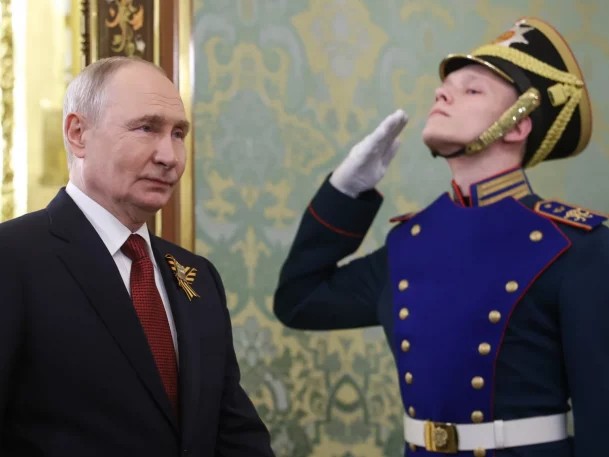
Vladimir Putin chose one of Russia’s most symbolic days to float the idea that the war in Ukraine could be over. Speaking at Victory Day celebrations on May 9, the Russian president suggested the conflict could be close to “ending.”
The remark comes amid talks on a ceasefire reportedly brokered by US President Donald Trump, who has positioned himself as the negotiator capable of ending Europe’s largest land war since 1945.
Markets have evolved rapidly
Bitcoin jumped 4% to $85,000 in the hours following Putin’s comments on May 9. Ethereum followed the next day with a 3% rise, according to The Block’s analysis.
Ukraine has received more than $225 million in cryptocurrency donations since the invasion began, according to CoinDesk, mostly in Bitcoin and Ethereum. These funds moved faster than traditional banking channels, especially during the chaotic first weeks, when Ukrainian banks were under enormous strain.
On the other side of the conflict, Russian fraud-denominated transaction volumes using USDT have exceeded $10 billion since 2022. Crypto has become a tool for both sides, although for very different reasons.
The Trump factor
Since returning to the White House, the administration has aggressively pursued pro-crypto policies, including exploring a potential national Bitcoin reserve.
What a ceasefire means for investors
Market analysts noted that ending the conflict could stabilize energy prices globally. Russia remains one of the world’s largest energy exporters, and the disruption of supply chains caused by the war has been a persistent inflationary force since 2022.
Analysts at CoinDesk and The Block have reported that a potential temporary price decline ahead of any sustained uptrend driven by trade normalization and institutional adoption is possible, as some of Bitcoin’s safe-haven premium evaporates if geopolitical risk diminishes.
Cathie Wood of Ark Invest estimated that Bitcoin could reach $1.5 million by 2030 under conditions of improving global stability.

