


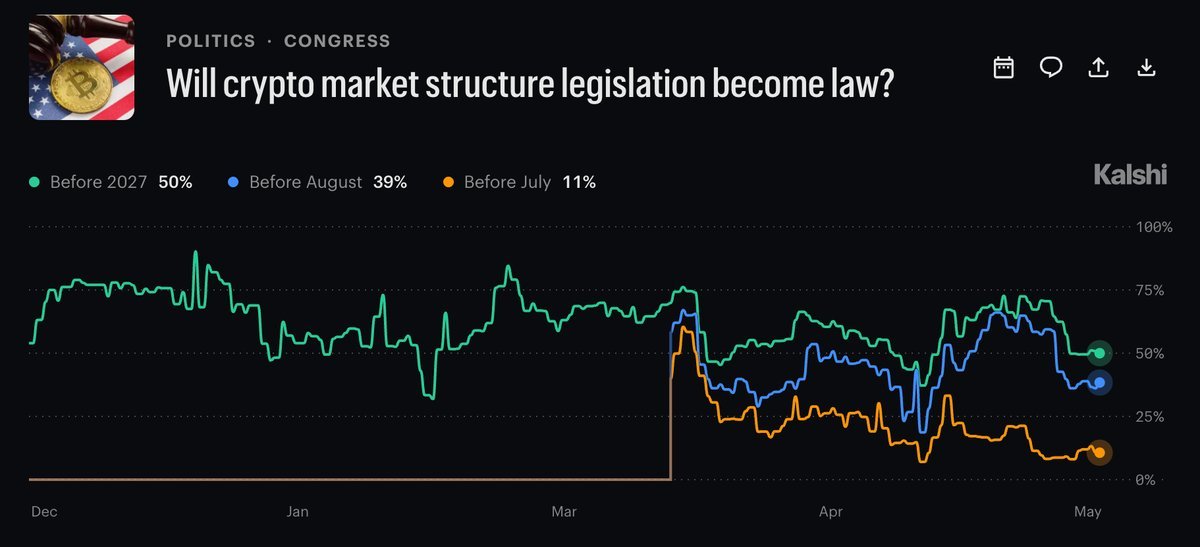
Markets’ odds of predicting the CLARITY Act being passed before 2027 have collapsed from nearly 75% to 50% in just one week.
Traders believe the decline is due to the Senate’s busy agenda, unresolved disputes over yield-generating stablecoins, as well as pressure from the banking lobby, which repeatedly obstructed stablecoin regulation in the final voting stages. As a result, the chances of the law passing before August fell to 37%, while the chances of it passing before July are now just 14%.
What does predictive market data reveal about the CLARITY Act?
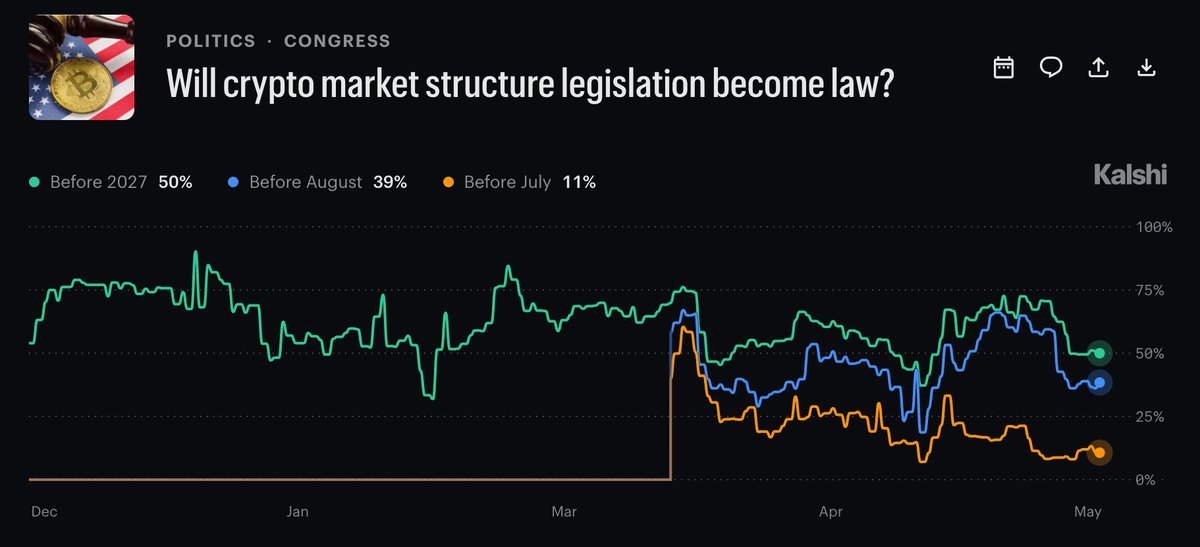
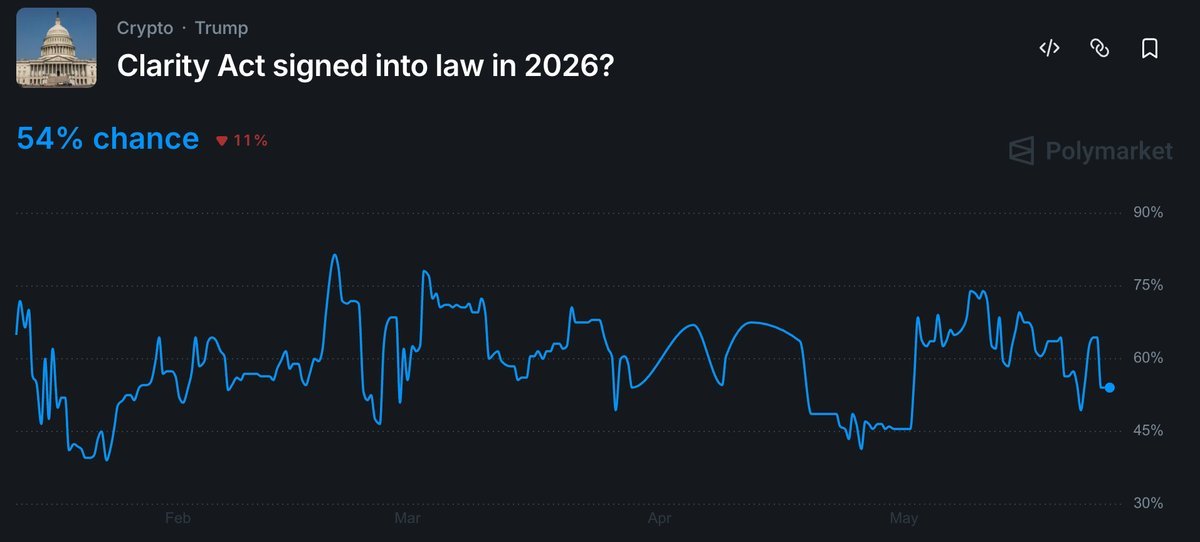
The Kalshi and Polymarket platforms are currently giving mixed signals, and this difference has important implications; While the pre-2027 Kalshi contract has fallen to 50%, the Polymarket contract for passing the law in 2026 is trading at 60%, an increase of 16% from the previous month, suggesting that individual participants in prediction markets are more optimistic than institutions or traders on the Kalshi platform.
Alex Thorne, head of research at Galaxy Digital, previously indicated this range, estimating the chances of adoption in 2026 at 50-50 last April, citing five successive procedural hurdles: Banking Committee approval, securing 60 votes in the Senate, reconciling with the Senate Agriculture Committee’s version, reconciling with the House version, and finally a presidential signature.
Although the Senate Banking Committee passed the CLARITY Act on May 14 by a vote of 15-9, it represents only one hurdle out of five.
In contrast, Jarrett Seberg of TD Cowen is more skeptical, telling clients that the law’s chances of success in the current session of Congress are only one in three.
Seberg bases his argument on the fact that any serious conflict over stable, revenue-generating currencies, and equality between bank and non-bank issuers, could delay final approval of the law until the next administration. The gap between Seberg’s estimate of 33% and Galaxy’s conditional estimate of 70-75% is where traders are currently trying to find balance.
Deadlock in the Senate and the yield-generating stablecoin crisis
The controversy over yield-generating stablecoins is the main driver behind the reevaluation of legalization opportunities and is by no means a secondary issue.
The banking lobby is pushing for a complete ban on stablecoin returns, seeing them as a systemic risk to deposit-based banking models.
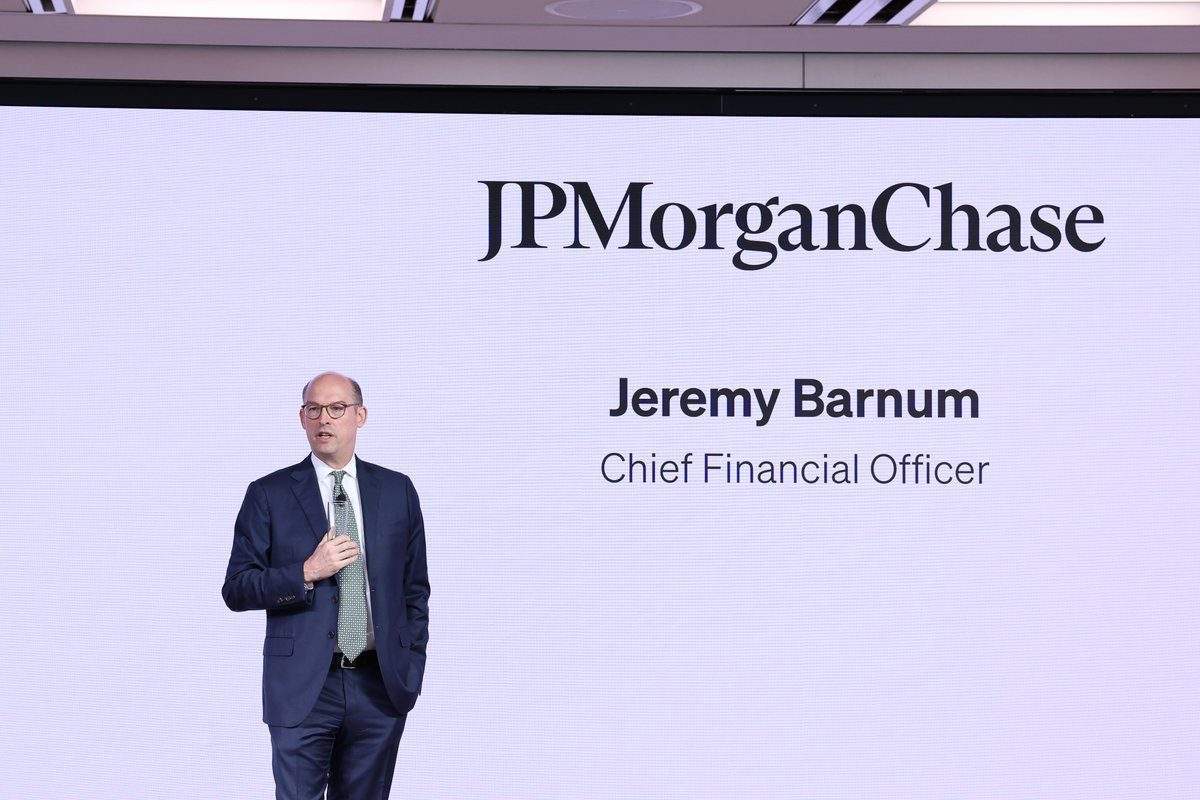
Jeremy Barnum, CFO of JPMorgan Chase, has publicly supported this trend, highlighting the risks associated with allowing stablecoins like USDC to generate returns for their holders.
It’s the same disagreement that delayed approval by the Senate Banking Committee for nearly four months, when it was supposed to be debated in January before senators needed more time to negotiate the terms of the return.
Traders now view this delay as a structural signal; If the revenue provision results in a four-month delay in the commission’s schedule, it could delay the final vote well past the August recess.
Analysts who track the Senate calendar say there are only 9 to 10 work weeks left in 2026, excluding August recess and pre-election periods.
For a technically complex piece of legislation like the CLARITY Act, this time window is extremely narrow, which explains why the short-term Kalshi contracts (before July and August) have collapsed sharply, even though the Polymarket 2026 contract remains above the 60% level.

For her part, Senator Cynthia Lummis, sponsor of the bill, rejects the ambient pessimism, declaring: “Wyming did not wait for Washington to understand digital assets. Polymarket’s odds rose slightly following its comments, suggesting its defense of the law still impacts retail traders’ contracts.

