


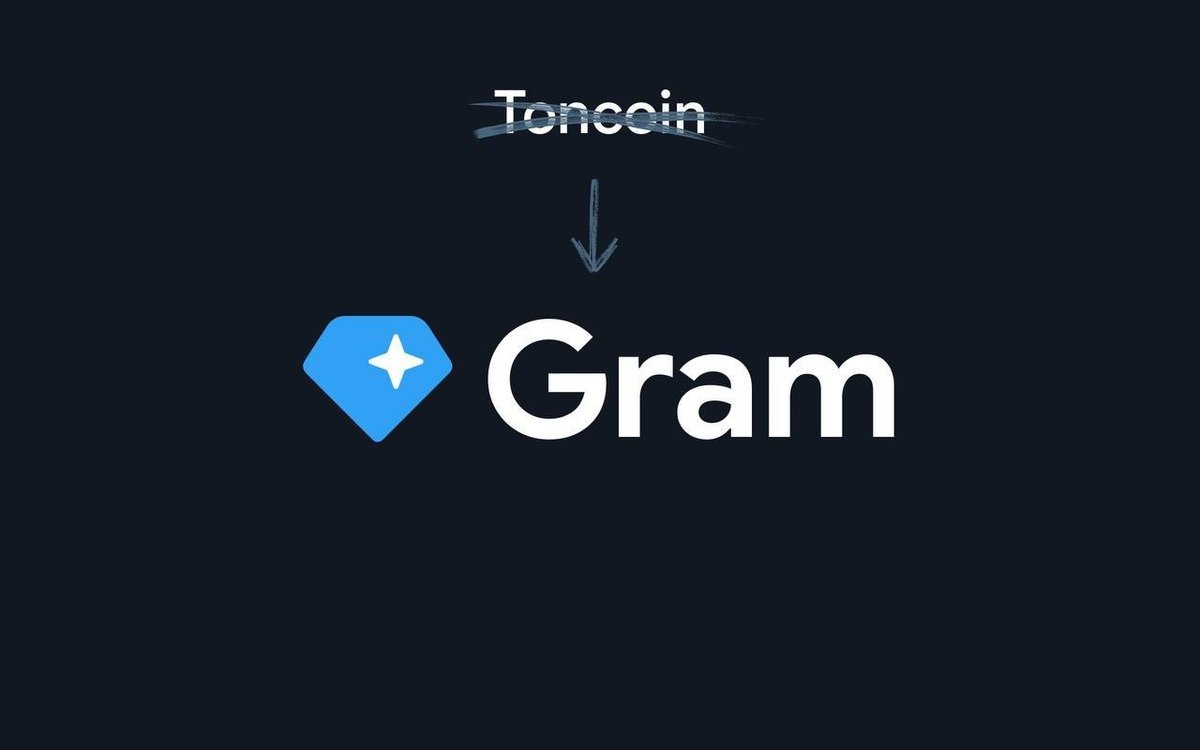
The TON Foundation has announced the renaming of its original currency from Toncoin to Gram, in a move that revives the name associated with Telegram’s original blockchain project, launched in 2018. The step aims to push the 900 million monthly active users on the messaging platform to become active participants in the software (on-chain) network.
While this change is fundamentally cosmetic, as it will not require any token swaps, technology migrations, or issuance of new assets, the strategic logic behind it is very profound. The change comes at a time when Pavel Durov, founder of Telegram, described the name change as step four of seven in the roadmap he announced under the slogan “Make TON Great Again”, with steps five to seven yet to be announced.
What further complicates this landscape is the history of the organization; The Gram name was at the center of a landmark lawsuit from the U.S. Securities and Exchange Commission (SEC), which forced Telegram to return $1.2 billion to investors in 2020. The revival of this name appears to be a calculated bet that the current TON ecosystem now has enough structural distance from this legal incident that allows it to reclaim the brand without inheriting its legal liabilities.
Gram’s Story: From $1.7 Billion IPO to SEC Intervention and Back to Square One
The mechanism for shifting influence from rebranding to user engagement is based on a simple principle: reducing the cognitive gap between Telegram’s brand identity and its original digital assets. Although the word “Toncoin” doesn’t mean much to a new Telegram user, the short and familiar name “Gram,” tied to the original vision of the platform, makes that connection.
The historical weight behind this word is very great; Telegram raised approximately $1.7 billion through private sales of Gram-related coins in 2018, with the goal of making it the currency layer of the open Telegram network. However, the Securities and Exchange Commission intervened in 2019, saying the offering represented an unregistered sale of securities. It ended in a settlement in 2020, in which Telegram agreed to return approximately $1.2 billion to investors and pay a civil penalty of $18.5 million, before withdrawing from the project entirely.
The network survived through open source development and community oversight, relaunched as “The Open Network” led by the TON Foundation, with Toncoin as a community-managed asset.
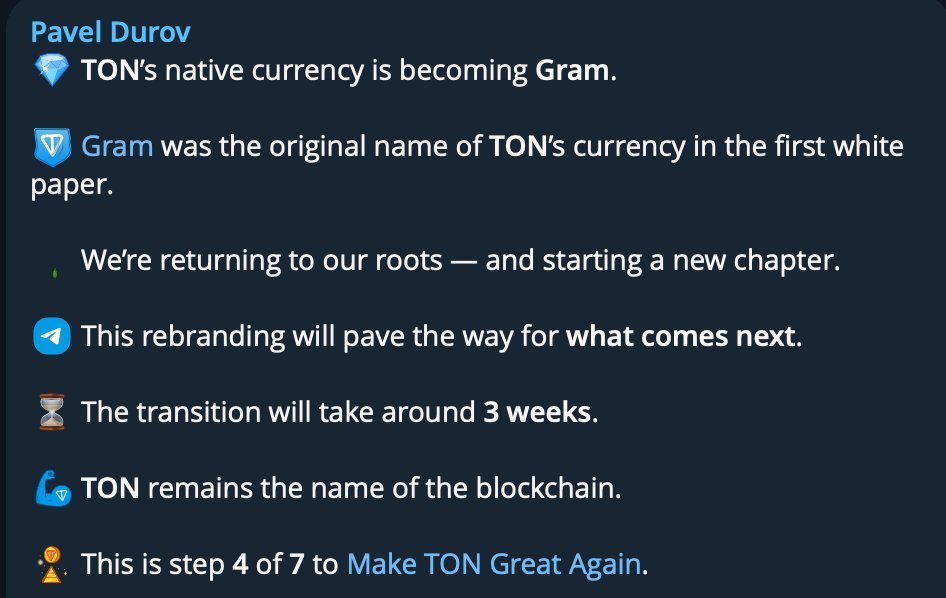
Source: official channel of Pavel Durov on Telegram
Today, as Telegram is poised to become the ecosystem director and largest validator on the network – a governance shift clearly noted in MTONGA’s roadmap – the ecosystem is reaffirming its original identity while structurally distinguishing itself from the entity that was the subject of the SEC lawsuit.
The name change will be implemented over approximately three weeks to include wallets, infrastructure providers, and ecosystem applications. User balances, staking, and network operations will remain unchanged throughout this period.
900 million users as market fuel: what will Gram really achieve?
Telegram’s monthly active user base is one of the largest untapped distribution channels in the crypto world. This structural opportunity is not just speculation, but depends on conversion rates; If the TON system succeeds in converting just 1% of active Telegram users into regular Gram wallet users, that would mean 9 million participants, a number comparable to the number of active users in most of the top ten blockchain networks.
A sticking point has always been the lack of chemistry between the brands; Telegram users encounter the TON Space wallet, widgets, and bot-based payment tools that reference a currency called Toncoin with the symbol TON, a name that has no intuitive connection to the Telegram product they use daily.
The name Gram fills this gap. The WeChat Pay model in China can be cited as an example; WeChat did not require users to understand the structure of digital payments, but rather made transactions appear as an inherent part of the messaging interface. Likewise, Gram is positioning The Open Network to achieve deep integration into Telegram’s “super-app” ecosystem, to include payments, gaming, stablecoins and mini-app monetization.
The market reaction was immediate, with Toncoin surging 19% following the announcement, reaching around $2.21 in early trading before retreating towards the $2.00 level.
The article The return of Gram currency: TON Foundation revives the original Telegram identity appeared first on Cryptonews Arabic.

