


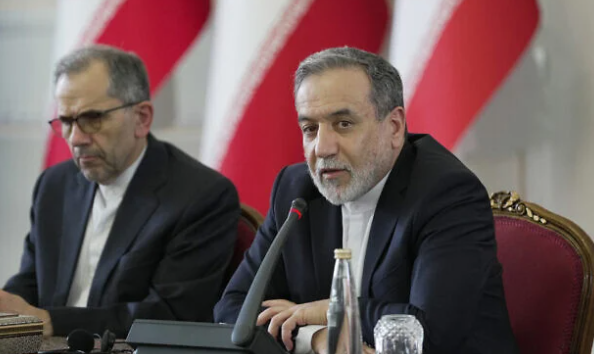
Iran has declared it will not negotiate with the United States again unless Washington first reviews what Tehran describes as its current political stance, adding another layer of uncertainty to already fragile diplomatic efforts between the two countries.
The announcement comes amid renewed international attention on diplomacy in the Middle East, following reports that the United States had set new conditions before formal negotiations could resume. The latest developments underscore the deep divisions that continue to separate Washington and Tehran despite ongoing indirect diplomatic contacts facilitated by regional mediators.
According to Iranian officials, any meaningful negotiations will remain suspended until the United States demonstrates what Tehran considers a more constructive approach to resolving long-standing disputes. The position indicates that diplomatic progress remains difficult, even as both sides continue to explore channels for dialogue.
The latest developments have attracted widespread international attention and were also reflected in updates shared by the highly followed X Coin Bureau account, which reported on the evolving geopolitical situation. The information has since become a major topic of discussion among financial markets and geopolitical analysts, given its potential impact on global energy supplies and investor confidence.
The diplomatic standoff intensified after reports indicated that the United States had asked Iran to publicly affirm that the Strait of Hormuz remains open and secure as one of the conditions for future negotiations. The reported demand was cited by Iranian media and quickly became a focal point in discussions about the next phase of diplomatic engagement.
Iran has not publicly accepted that condition and instead responded by insisting that Washington must first reconsider its broader political approach before any formal talks can move forward.
The exchange highlights the continued lack of trust between the two countries, whose diplomatic relationship has remained strained for decades over issues including Iran’s nuclear program, regional security, sanctions and military activities across the Middle East.
Despite the harsh public rhetoric, diplomatic communication has not been completely cut off.
Officials familiar with regional mediation efforts indicate that indirect discussions have continued through Qatar, which has repeatedly served as an intermediary between Washington and Tehran during previous periods of heightened tension. Qatar has played an increasingly important diplomatic role in facilitating communication between regional rivals and maintaining channels for dialogue in times of crisis.
Although neither government has announced any progress, the continuation of indirect talks suggests that both sides remain interested in avoiding further escalation while preserving opportunities for future negotiations.
Earlier this week, President Donald Trump commented on the situation, stating that the previous ceasefire agreement had effectively ended. His comments sparked renewed speculation about the future direction of US policy toward Iran and the broader security prospects across the Gulf region.
However, diplomatic observers note that public political statements do not necessarily reflect the full scope of ongoing negotiations taking place behind closed doors. Indirect diplomacy often continues even during periods of heightened public disagreement, particularly when regional stability remains a shared interest.
One of the central issues surrounding the latest dispute is the Strait of Hormuz, one of the world’s most strategically important shipping routes.
Located between the Persian Gulf and the Gulf of Oman, the narrow waterway serves as a critical passage for global oil exports. A significant percentage of internationally traded crude oil passes through the strait each day, making its security a matter of global economic importance.
Any uncertainty surrounding shipping through the Strait of Hormuz often attracts the immediate attention of energy markets, governments, shipping companies and financial institutions around the world.
Analysts note that even without direct military confrontation, political disputes involving the strait can influence oil prices, insurance costs for commercial shipping and broader market confidence.
Therefore, the latest diplomatic impasse has implications that go far beyond bilateral relations between Washington and Tehran.
Global investors continue to closely monitor every development because prolonged uncertainty in the Gulf region could affect energy markets, inflation expectations and international trade.
The disagreement also comes as governments around the world continue to face geopolitical challenges in several regions simultaneously, increasing the importance of diplomatic stability in one of the world’s most strategically important energy corridors.
Iran has consistently maintained that negotiations should be based on mutual respect and equal treatment and not on unilateral terms. Iranian officials have repeatedly stated that external pressure and sanctions have complicated previous diplomatic efforts and reduced trust between the two governments.
Meanwhile, successive US administrations have maintained that Iran must address international concerns about its nuclear activities, its regional military influence and its maritime security before broader normalization of relations can occur.
These fundamentally different positions continue to complicate efforts toward a comprehensive diplomatic agreement.
 |
| Source: Xpost |
Foreign policy experts suggest that while both countries remain publicly firm on their respective positions, indirect communication through intermediaries provides an important mechanism to reduce misunderstandings and avoid inadvertent escalation.
Historically, various rounds of negotiations between the United States and Iran have relied heavily on external mediators, particularly when direct political engagement proved difficult.
Qatar’s participation illustrates once again the increasingly important role that regional partners play in facilitating sensitive diplomatic discussions.
Although neither Washington nor Tehran have announced plans for immediate face-to-face negotiations, observers believe that ongoing mediation efforts could eventually create conditions for renewed formal dialogue if political circumstances change.
International governments continue to encourage diplomatic solutions, emphasizing that sustained negotiations remain the most effective path to reducing regional tensions and preventing broader instability.
Energy analysts are also paying close attention to developments because geopolitical uncertainty surrounding the Gulf region often influences global commodity markets.
While oil prices are affected by numerous economic and geopolitical factors, tensions involving the Strait of Hormuz have historically generated greater volatility in the market due to the importance of the route to international energy supplies.
Likewise, shipping companies continue to monitor the situation to ensure uninterrupted commercial operations in one of the world’s busiest shipping corridors.
Despite recent political disagreements, no official announcement has indicated any immediate disruption to commercial shipping through the Strait of Hormuz.
However, market participants remain cautious as diplomatic events continue to evolve.
The broader relationship between Iran and the United States remains one of the most closely watched geopolitical issues internationally.
Decades of political disagreements, economic sanctions, military tensions and disputes over Iran’s nuclear ambitions have contributed to a complex diplomatic landscape that has proven difficult to resolve despite multiple rounds of negotiations over the years.
Current mediation efforts demonstrate that diplomatic engagement remains possible even during periods of heightened political tension.
Whether those discussions eventually produce significant progress will likely depend on both governments finding enough common ground to resume formal negotiations.
For now, Iran has made its position clear.
Tehran maintains that negotiations with the United States cannot continue unless Washington first changes what Iranian officials describe as its current political approach.
At the same time, indirect diplomatic contacts continue through Qatar, providing a limited but important channel of communication between both governments.
The coming weeks are expected to be closely watched by international policymakers, financial markets and regional allies for signs of renewed diplomatic momentum or further political confrontation.
As uncertainty continues, the outcome of these diplomatic efforts could have significant implications not only for US-Iran relations but also for regional security, global energy markets, and international economic stability.
hoka.news – not just cryptocurrency news. It’s cryptoculture.
Writer @Victoria
Victoria Hale is a writer focused on blockchain and digital technology. It is known for its ability to simplify complex technological developments into clear, easy-to-understand and engaging-to-read content.
Through her writing, Victoria covers the latest trends, innovations and developments in the digital ecosystem, as well as their impact on the future of finance and technology. It also explores how new technologies are changing the way people interact in the digital world.
His writing style is simple, informative, and focuses on giving readers a clear understanding of the rapidly evolving world of technology.
Disclaimer:
HOKA.NEWS articles are here to keep you up to date on the latest rumors in crypto, technology, and more, but they are not financial advice. We share information, trends and knowledge, we don’t tell you to buy, sell or invest. Always do your own homework before making any money moves.
HOKA.NEWS is not responsible for any loss, profit or chaos that may occur if you act on what you read here. Investment decisions should arise from your own research and, ideally, the guidance of a qualified financial advisor. Remember: cryptocurrencies and technology move fast, information changes in the blink of an eye, and while we strive for accuracy, we cannot promise that it is 100% complete or up-to-date.

