


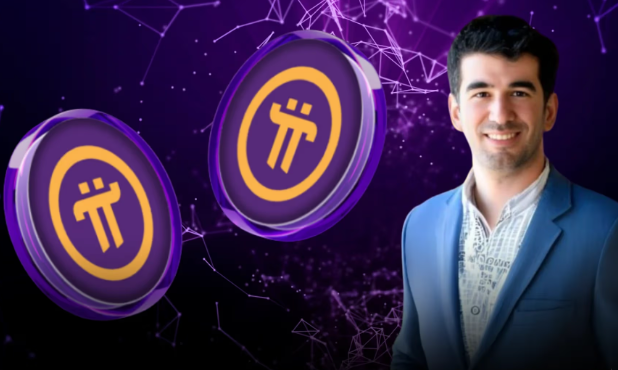
The Pi Network’s Open Mainnet journey continues to attract the attention of millions of pioneers around the world. Amid continued speculation about the project’s future, Pi Network co-founder Nicolas Kokkalis has once again emphasized that the network’s success is not solely determined by the core team.
According to Nicolas, the future of the Open Mainnet largely depends on the active participation of the Pioneer community. He has repeatedly conveyed this message in several public appearances, highlighting that the Pi Network was designed as a community-driven ecosystem rather than a project controlled exclusively by its developers.
His statement recently gained renewed attention after the account shared it on X (formerly Twitter). @pitown89which cited one of Nicolas’ most important messages about the essential requirements for Open Mainnet.
Nicolas Kokkalis says community is the key factor
In one of his speeches, Nicolas explained that progress towards Open Mainnet depends on the collective actions of the Pioneers.
He stated: “Progress towards the Open Mainnet depends largely on the Pioneers themselves. It’s the speed at which everyone completes KYC, the pace of balance migration to the Mainnet, and the developers coming together to build real-world utilities.”
According to Nicolas, these elements must move forward together to ensure that the network has a solid foundation before becoming fully open.
His comments demonstrate that the development of the Pi Network is not only about technological readiness but also about building a mature and sustainable ecosystem.
KYC forms the basis of a healthy ecosystem
One of the most frequently emphasized priorities is the completion of KYC verification.
Identity verification is considered essential to ensure that each account belongs to a real individual and not fake or duplicate accounts that could compromise the integrity of the network.
As more pioneers complete KYC, the overall quality of the network improves because the number of verified users continues to grow.
This also creates a stronger foundation for developing Web3 applications that require trusted user identities.
Mainnet migration remains a top priority
In addition to KYC, Nicolas highlighted the importance of migrating Pi balances to Mainnet.
The migration allows Pi Coins mined over the years to move to the blockchain, making them available for future use as the ecosystem expands.
The greater the number of users that complete the migration, the more prepared the network will be for its next stage of development.
Migration is more than a technical process; It represents an important step towards establishing the Pi Network’s long-term digital economy.
Developers play a vital role
Since its inception, Pi Network has aimed to become much more than a digital currency project.
The platform seeks to create an ecosystem full of practical applications that provide real value to users.
For this reason, Nicolas highlighted the importance of attracting more developers to create applications and services powered by the Pi Network.
Real-world utility is considered one of the strongest indicators that Pi Coin can serve purposes beyond being just another crypto asset.
As more decentralized applications integrate Pi Coin into digital payments and services, the network’s overall utility and value proposition can continue to strengthen.
 |
| Source: Xpost |
Pi is the result of collective effort
Nicolas also reminded the community of one of his most quoted statements: “Pi is the result of a collective effort… not just the will of the Core Team.”
This statement reflects one of the Pi Network’s founding principles: building a blockchain ecosystem powered by millions of contributors around the world.
Each pioneer plays a role in shaping the future of the network, whether completing KYC, migrating balances, using Pi Coin in transactions, or supporting application development.
This community-first philosophy sets Pi Network apart from many blockchain projects that rely primarily on centralized decision-making.
Open Mainnet will be meaningless without community participation
Nicolas also strongly warned against launching the network before the ecosystem is truly ready.
He stated: “If the community does not stay together, if fake accounts proliferate or if people refuse to do KYC and use Pi for the exchange of goods, opening the network would be meaningless.”
His comments underline that the goal of the Pi Network is not simply to unlock access to the blockchain, but to establish a functioning digital economy backed by genuine participation.
As a result, community quality is as important as technology readiness.
Creating public services in the real world remains the main goal
Over the past few years, Pi Network has consistently encouraged developers to create applications that provide practical value to the community.
This strategy aims to ensure that Pi Coin serves meaningful purposes in everyday digital activities.
Utility has become one of the central pillars of the Web3 ecosystem, where digital assets are expected to support real services rather than function solely as speculative investments.
The more applications adopt Pi Coin, the greater the opportunity for a sustainable digital economy to emerge within the Pi Network ecosystem.
The community is the Pi Network’s greatest asset
One of the Pi Network’s greatest strengths since its launch has been its huge global community.
This user base represents a significant advantage in building a blockchain ecosystem capable of supporting real economic activity.
However, a large community alone is not enough.
Early adopters are encouraged to complete identity verification, migrate their balances, support ecosystem applications, and actively use Pi Coin as the platform continues to evolve.
The stronger the community participation, the more resilient the Pi Network will be as it competes within the rapidly evolving Crypto and Web3 industries.
Conclusion
Nicolas Kokkalis has made it clear once again that the success of Pi Network’s Open Mainnet is not solely determined by the core team.
Instead, the speed of KYC completion, Mainnet migration, developer contributions and active community participation are the main factors that will shape the future of the network.
In other words, the future of the Pi Network is ultimately in the hands of its millions of pioneers.
If these elements continue to progress together, the Pi Network will be better positioned to establish itself as a leading Web3 ecosystem with significant real-world utility. However, without strong community participation, simply opening the network will not be enough to create lasting value for Pi Coin or the ecosystem at large.
hoka.news – not just cryptocurrency news. It’s cryptoculture.
Writer @Victoria
Victoria Hale is a writer focused on blockchain and digital technology. It is known for its ability to simplify complex technological developments into clear, easy-to-understand and engaging-to-read content.
Through her writing, Victoria covers the latest trends, innovations and developments in the digital ecosystem, as well as their impact on the future of finance and technology. It also explores how new technologies are changing the way people interact in the digital world.
His writing style is simple, informative, and focuses on giving readers a clear understanding of the rapidly evolving world of technology.
Disclaimer:
HOKA.NEWS articles are here to keep you up to date on the latest rumors in crypto, technology, and more, but they are not financial advice. We share information, trends and knowledge, we don’t tell you to buy, sell or invest. Always do your own homework before making any money moves.
HOKA.NEWS is not responsible for any loss, profit or chaos that may occur if you act on what you read here. Investment decisions should arise from your own research and, ideally, the guidance of a qualified financial advisor. Remember: cryptocurrencies and technology move fast, information changes in the blink of an eye, and while we strive for accuracy, we cannot promise that it is 100% complete or up-to-date.

