


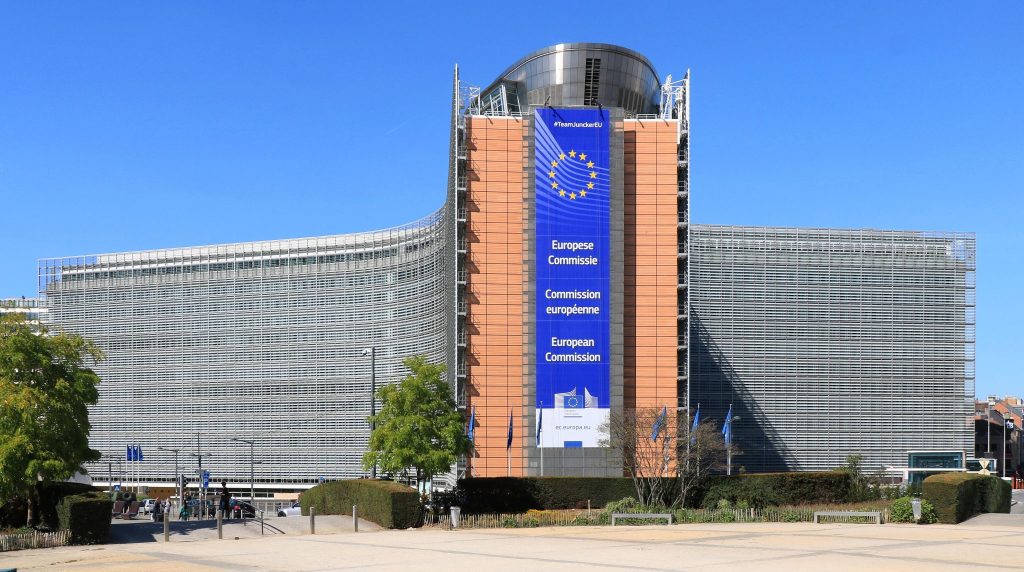
The European Commission has officially proposed transferring direct supervision of all digital asset service providers to the European Securities and Markets Authority (ESMA). Previously, this oversight was entrusted to the Digital Asset Markets Framework (MiCA), with the licensing authority working in coordination with national regulators.
The legislative package aims to prevent regulatory disparities between the 27 member states by giving the European Securities and Markets Authority (ESMA) powers similar to those of the US Securities and Exchange Commission (SEC) in US markets.
This proposal comes only 9 months after its announcement as part of the “Savings and Investment Union strategy”. The strategy highlighted the urgent policy need to integrate financial markets under one roof, in light of Europe facing increasing competitive pressures from its US counterpart.
Central authorities aim to improve international efficiency
The European Securities and Markets Authority (ESMA) will have direct power to grant licenses to cryptocurrency companies seeking to operate within the European Union, instead of a “passport” system that allows them to obtain approval from one country before expanding to the rest of the countries.
ESMA will also supervise major trading platforms, brokerage firms and central securities depositories, while expanding its role to include the digital currencies sector.
For its part, the Commission framework provides for a “Operator of the European single market“With the aim of simplifying institutional structures into a unified licensing format, while improving the coordinating role assigned to ESMA in asset management, officials considered these changes necessary to respond to emerging risks and address inconsistencies resulting from different regulatory standards at the local level.
At the same time, the package addresses the obstacles facing distributed ledger technology by amending experimental laws for distributed ledger systems with the aim of harmonizing and providing legal certainty facilitating the adoption of blockchain technology. Member States will see the directives converted into regulatory legislation to limit national powers allowing the application of regulatory standards beyond the minimum required.
Member states divided over sovereign concerns
France supported the trend toward centralization after François Villeroy de Galhau, governor of the Bank of France, warned that the current passport model created regulatory gaps due to different regulatory standards.
The governor had already declared in October: “This framework would benefit from stricter regulation regarding the repeated issuance of the same stablecoin inside and outside the EU, to reduce the risk of urgent asset transfers during times of stress.”.“
While Germany has recently been open to granting additional powers to ESMA after years of reluctance, Christine Lagarde, president of the European Central Bank (ECB), has supported the role of central supervision as necessary to improve Europe’s competitiveness vis-à-vis the United States.
Last month, ESMA President Verena Ros highlighted the failure of national regulators to create 27 separate frameworks for cryptocurrencies, when centralized resources could enable better interoperability.
The European Commission is proposing to transfer supervision of crypto exchanges from national regulators to ESMA in a bid to standardize supervision across the bloc.#Europe #ESMA #Micahttps://t.co/ND271lQ1n3
– Cryptonews.com (@cryptonews) November 3, 2025
While others appear inclined to accept the proposal, Luxembourg’s Finance Minister, Gilles Roth, has rejected this approach, indicating that his country prefers “Convergence of supervision rather than creating a costly and inefficient centralized model“
The Malta Financial Services Authority also warned that the nature of centralization would add layers of bureaucracy that would hamper competitive capabilities, at a time when the European Union is seeking to improve its global position. Industry groups have expressed concerns about disrupting the implementation of the Digital Asset Markets (MiCA) Regulations before they are fully implemented.
Robert Kopitsch, Secretary General of Blockchain for Europe, said: “A further discussion on MiCA at this stage will create legal uncertainty, increase the risk of delaying licensing activities and divert attention and resources from the practical task of consistent implementation. »
Implementation timetable faces political hurdles
The proposals must be approved by both the European Parliament and the Council in negotiations, and maintaining the unity of the package remains crucial to create a true single market throughout the investment chain.
Officials expect Parliament to adopt a legal position on the framework by May 2026, while member states aim to reach an overall agreement by the end of the year.
Under the proposal, ESMA will begin overseeing the unification of stock and bond prices, in addition to environmental, social and corporate governance (ESG) classifications, from 2026, with the scope of supervision expanding to include digital currencies, giving the regulator additional powers as part of Europe’s efforts to achieve greater market integration.
The Commission highlighted that the reforms address the state of regulatory disparity that increases the costs of doing business internationally, posing a major obstacle for emerging companies looking to expand in Europe rather than the United States.
The initiative is part of broader efforts to complete the European Union’s financial markets union, following the publication of data exchange rules on November 26, which set strict requirements on how crypto companies can collect, store and report user information to tax authorities from January 2026.
– Cryptonews.com (@cryptonews) November 27, 2025
Finally, the money transfer regulatory standards, which extend the Passport Act rule to cryptocurrencies, will come into force on December 30, requiring trading platforms to identify participants in transactions, including self-custodial wallet transactions.
The article European Union (EU) asks European Securities and Markets Authority (ESMA) to supervise digital currencies just as the US Securities and Exchange Commission (SEC) supervises them in the United States appeared first on Cryptonews Arabic.

