


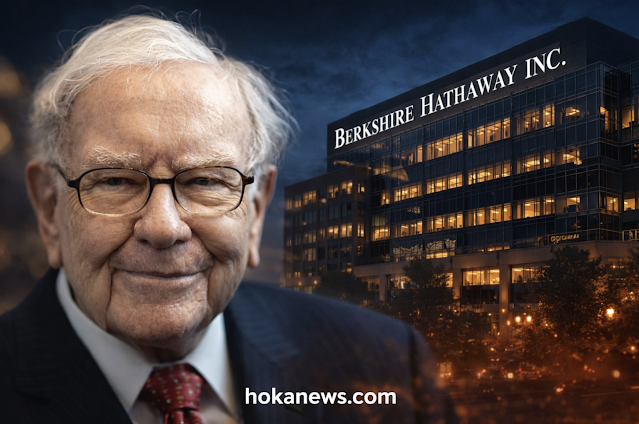
Warren Buffett resigns as Berkshire Hathaway CEO, closing 60-year chapter
Warren Buffett has officially resigned as CEO of Berkshire Hathawayending a remarkable six-decade tenure that reshaped modern investing and corporate leadership. The announcement, confirmed by account X. VigilanteGuru and cited by the hokanews editorial team, marks one of the most significant leadership transitions in financial history.
Buffett, widely known as the “Oracle of Omaha,” leaves a legacy that extends far beyond balance sheets and annual returns. Under his leadership, Berkshire Hathaway grew from a struggling textile company into a diversified conglomerate valued at hundreds of billions of dollars, with holdings spanning insurance, railroads, energy, manufacturing and consumer brands.
A career that redefined investing
Buffett’s journey with Berkshire Hathaway began in the mid-1960s, when he took control of what was then a failing textile business. Rather than abandon the company entirely, Buffett used it as a vehicle to deploy capital into undervalued businesses, laying the foundation for what would become one of the most successful corporate transformations in history.
For the next 60 years, Buffett championed a disciplined, long-term investing philosophy based on value, patience and fundamentals. He famously avoided speculative tendencies and focused on companies with strong management, durable competitive advantages and predictable cash flows.
This approach not only generated extraordinary returns but also earned Buffett global respect as a voice of reason during periods of market excess and financial crisis.
Building a financial powerhouse
Under Buffett’s leadership, Berkshire Hathaway amassed a portfolio that looks like a map of the American economy. From insurance giant GEICO to BNSF Railway, and from energy infrastructure to consumer staples, the company became a reflection of Buffett’s belief in productive real-world businesses.
 |
| Source: Xpost |
Berkshire’s annual shareholder meetings in Omaha became a global event, often referred to as the “Woodstock for capitalists.” Investors from around the world gathered to hear from Buffett and his longtime business partner Charlie Munger Discuss markets, life, and the principles of rational decision making.
Even as markets became more complex, Buffett’s message remained constant: invest with discipline, avoid unnecessary risks, and think in decades, not quarters.
The decision to step aside
While Buffett has gradually delegated operational responsibilities in recent years, his formal resignation as CEO represents a symbolic turning point. At 94, Buffett has long recognized the importance of succession planning, emphasizing that Berkshire’s strength lies in its decentralized structure and deep management capabilities.
The company has previously identified Greg Abel as an executive prepared to assume the role of CEO, ensuring continuity in leadership and strategy. Abel has overseen Berkshire’s non-insurance operations and is considered to be aligned with Buffett’s long-term philosophy.
Buffett is expected to remain involved in an advisory capacity, maintaining a presence that reassures shareholders while allowing the next generation of leaders to take the reins.
Market reaction and investor sentiment
The news of Buffett’s departure as CEO was greeted with a mix of reflection and cautious optimism across financial markets. While some investors expressed nostalgia for Buffett’s steady hand, others pointed to the strength of Berkshire’s structure as evidence that the company is well prepared for the transition.
Analysts have long maintained that Berkshire Hathaway is designed to outlast any individual. Its decentralized model allows subsidiary leaders significant autonomy, while capital allocation decisions are guided by a culture that Buffett spent decades cultivating.
In that sense, the transition is less of a sudden break and more of a culmination of carefully managed evolution.
Buffett’s influence beyond Berkshire
Buffett’s impact extends far beyond the walls of Berkshire Hathaway. His annual letters to shareholders became essential reading for investors, students, and policymakers alike. Written in simple language, they demystified complex financial concepts and emphasized ethical leadership, transparency and accountability.
During times of crisis, including the 2008 financial crisis, Buffett emerged as a stabilizing figure, providing both capital and confidence when markets were under pressure. His investments during turbulent periods reinforced his reputation as a disciplined allocator of capital rather than a market timer.
Buffett also became known for his philanthropy, donating most of his wealth to charitable causes and encouraging other billionaires to do the same through initiatives like the Giving Pledge.
A changing financial landscape
Buffett’s departure comes at a time of rapid changes in global markets. Technology-driven investing, algorithmic trading, and digital assets have transformed the way capital moves around the world. While Buffett remained skeptical of speculative assets, his principles of risk management and intrinsic value continue to influence how investors evaluate opportunities.
Even critics acknowledge that Buffett’s methods provided a counterweight to short-termism, reminding markets of the importance of fundamentals amid waves of innovation and disruption.
What’s next for Berkshire Hathaway
As Berkshire enters a new chapter, attention will turn to how the company navigates a world without Buffett at the helm. Key questions include how capital allocation decisions will evolve, how the company responds to macroeconomic changes and whether it maintains the conservative discipline that defined its rise.
So far, the signs suggest continuity rather than reinvention. Berkshire’s balance sheet remains strong, its subsidiaries are profitable, and its management team is experienced.
For shareholders, the transition underscores Buffett’s long-held belief that great companies should be built to outlast their founders.
The end of an era, not the end of a legacy
Buffett’s decision to step down as CEO marks the conclusion of one of the most influential chapters in corporate history. However, his legacy is deeply rooted in Berkshire Hathaway’s culture, strategy and reputation.
From a struggling textile mill to a global conglomerate, Buffett’s 60-year journey is a testament to patience, integrity and the power of long-term thinking.
As markets digest the news, one thing is clear: While Warren Buffett may no longer be in the CEO chair, his influence on investing and corporate leadership will endure for generations.
hokanews.com – Not just cryptocurrency news. It’s cryptoculture.

