


Strategy (formerly MicroStrategy), the world’s largest institutional holder of Bitcoin, made a splash in the cryptocurrency markets with its recent Bitcoin sale.
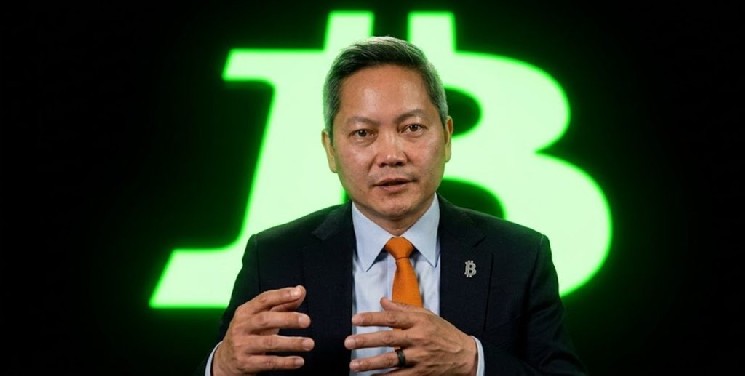
The company’s decision to sell just 32 Bitcoins (worth about $2.5 million) has raised questions among investors about whether the company’s strategy is failing. Speaking on the matter, Strategy CEO Phong Le shared the background to the decision and the company’s long-term plans.
Phong Le argued that, contrary to market speculation, there was no financial necessity or panic behind the sale. Describing the move as a “market injection,” Le said:
“Our obligors and bondholders, as well as credit rating agencies, wanted to see if we could convert our largest corporate asset, Bitcoin, into cash if necessary. We conducted this sale to show people that we can sell Bitcoin when necessary. We also wanted to test the processes of moving and selling our assets from cold wallets to hot wallets and gauge the market reaction.”
Le reminded that the company publishes its weekly activity report (8-K) in accordance with its principle of transparency and said that in the week following this small sale of $2.5 million, it purchased $100 million worth of Bitcoin, and the week before, for $1.5 billion, emphasizing that there has been no change in the company’s long-term accumulation strategy.
Responding to questions from the crypto community about whether decisions are made by a single executive, Le said that as a publicly traded company listed on NASDAQ, it has a very strict corporate governance system. He explained that decisions are filtered through a joint decision-making process involving Michael Saylor, himself, eight board members and shareholders, and that they use daily simulations and advanced data analysis models. Le said: “We don’t sit down with the board and say, ‘Let’s sell 32 Bitcoins,’ but we get the Bitcoin sales strategy approved by the board and then we execute it daily with our treasury and trading teams.
Related news Sharp drop in Bitcoin: what is the reason? Massive liquidations in progress: here are the latest
Addressing the balance between “crypto fluidity” (radical positions favoring simply holding Bitcoin in wallets) within the crypto community and the use of traditional capital markets, the CEO argued that financial products are necessary for Bitcoin’s global growth.
“When I explain Bitcoin to someone, I’m not giving them an IQ test or loyalty test. Our philosophy is to ‘spread Bitcoin with love’. For Bitcoin to succeed in the world, more people need to have access to it, whether through personal wallets, exchanges like Coinbase, ETFs like IBIT, or financial instruments like ‘Stretch’ that we offer.”
Phong Le explained that they have extensively used Generative Artificial Intelligence (Gen AI) in the development of their financial product, Stretch, and have reduced legal and financial modeling processes, which could normally take 3 years because of accountants and lawyers, to just 8 months thanks to AI.
Le, who predicts that traditional banking networks (Visa, Mastercard, Swift, etc.) will not work in a future world of “agent-based artificial intelligence” (agentic AI) and humanoid robots, said: “Millions of robots transacting on Mars or the Moon will use decentralized finance (DeFi) networks and Bitcoin as a store of value, not traditional finance. This is why we are very optimistic about the future.
*This does not constitute investment advice.

