
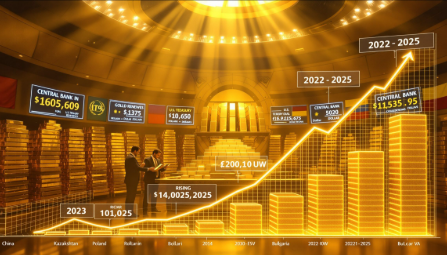
Global central banks have significantly increased their gold reserves, with holdings now reaching their highest level in more than a century, according to market data cited by Barchart. The trend highlights a renewed institutional preference for gold as a strategic reserve asset amid growing economic and geopolitical uncertainty.
The accumulation of gold by central banks reflects a broader shift in global reserve management strategies, as institutions seek to diversify away from traditional fiat currencies and reduce exposure to inflationary pressures, currency fluctuations and geopolitical risks.
Gold has long been considered a safe haven asset, valued for its relative stability during periods of financial instability. Unlike fiat currencies, gold is not tied to any government or central bank policies, making it an attractive hedge in times of uncertainty.
Recent data indicates that central banks in multiple regions have accelerated their gold purchases in recent years, contributing to a sustained upward trend in global official sector holdings. This accumulation has brought total reserves to levels not seen in modern financial history.
Analysts say the surge in demand for gold from central banks represents a continuation of a multi-year trend that gained momentum following periods of higher inflation and global economic disruptions. As inflation pressures increased in major economies, many institutions reassessed the composition of their foreign exchange reserves.
In addition to inflation concerns, monetary volatility has also played an important role in shaping reserve strategies. Fluctuations in major global currencies have led central banks to look for assets that can preserve long-term value regardless of exchange rate movements.
Geopolitical tensions have further strengthened gold’s appeal. In an increasingly fragmented global economic environment, some central banks have sought to reduce reliance on assets linked to specific geopolitical blocs, instead favoring neutral reserve assets such as gold.
Gold’s role in the global financial system has evolved over time, but it remains a key component of sovereign reserve portfolios. While fiat currencies and government bonds continue to dominate global reserves, gold has maintained its position as a key diversification tool.
The latest rise in holdings suggests that central banks are not only maintaining existing gold reserves but are also actively expanding them. Analysts often interpret this behavior as a sign of long-term strategic confidence in gold’s role within the international monetary system.
 |
| Source: Xpost |

Market watchers note that central bank demand may have a significant impact on global gold prices. Unlike retail investors, central banks typically make large-scale, long-term purchases, which can influence supply and demand dynamics in the global bullion market.
In recent years, several emerging market central banks have been particularly active in increasing their gold reserves. These institutions often view gold as a way to strengthen financial stability and reduce dependence on external monetary systems.
At the same time, central banks in developed economies have also maintained significant holdings of gold, reflecting the metal’s enduring role as a critical reserve asset. The combination of steady holdings by advanced economies and greater accumulation by emerging markets has contributed to the overall growth in global reserves.
The trend also reflects a broader reassessment of risk in global financial markets. As economic conditions change and uncertainty persists, both institutional investors and sovereign entities are reevaluating traditional assumptions about safe assets and portfolio diversification.
Gold’s performance during periods of market stress has reinforced its reputation as a defensive asset. Historically, the metal tends to perform well in times of inflation, monetary depreciation, and geopolitical instability, making it a natural choice for mitigating risk.
The renewed interest in gold comes at a time when global financial systems are undergoing significant transformation, including changes in monetary policy regimes, evolving trade relationships, and increasing digitalization of financial infrastructure.
While central banks’ hoarding of gold is not a new phenomenon, the scale and consistency of recent purchases has attracted increased attention from economists and market analysts. This trend is often considered to reflect long-term structural changes in the management of global reserves.
Discussions on social media and financial commentary platforms, including accounts such as Coin Bureau on X, have also highlighted the growing importance of gold purchasing by central banks. However, these discussions generally serve as interpretations of publicly available data rather than official policy statements.

Despite the increased focus on gold, it remains a component of a diversified reserves strategy. Central banks typically balance gold holdings with foreign currency reserves, sovereign bonds and other financial instruments to maintain liquidity and stability.
The long-term implications of rising gold reserves will depend on broader macroeconomic developments, including inflation trends, interest rate cycles and global economic growth. Analysts continue to monitor whether the current pace of accumulation will persist or stabilize in the coming years.
For now, the data underlines a clear trend: central banks are increasingly strengthening their positions in gold as part of a broader strategy to navigate an uncertain global economic environment.
hoka.news – not just cryptocurrency news. It’s cryptoculture.
Writer @Victoria
Victoria Hale is a writer focused on blockchain and digital technology. It is known for its ability to simplify complex technological developments into clear, easy-to-understand and engaging-to-read content.
Through her writing, Victoria covers the latest trends, innovations and developments in the digital ecosystem, as well as their impact on the future of finance and technology. It also explores how new technologies are changing the way people interact in the digital world.
His writing style is simple, informative, and focuses on giving readers a clear understanding of the rapidly evolving world of technology.
Disclaimer:
HOKA.NEWS articles are here to keep you up to date on the latest rumors in crypto, technology, and more, but they are not financial advice. We share information, trends and knowledge, we don’t tell you to buy, sell or invest. Always do your own homework before making any money moves.
HOKA.NEWS is not responsible for any loss, profit or chaos that may occur if you act on what you read here. Investment decisions should arise from your own research and, ideally, the guidance of a qualified financial advisor. Remember: cryptocurrencies and technology move fast, information changes in the blink of an eye, and while we strive for accuracy, we cannot promise that it is 100% complete or up-to-date.