


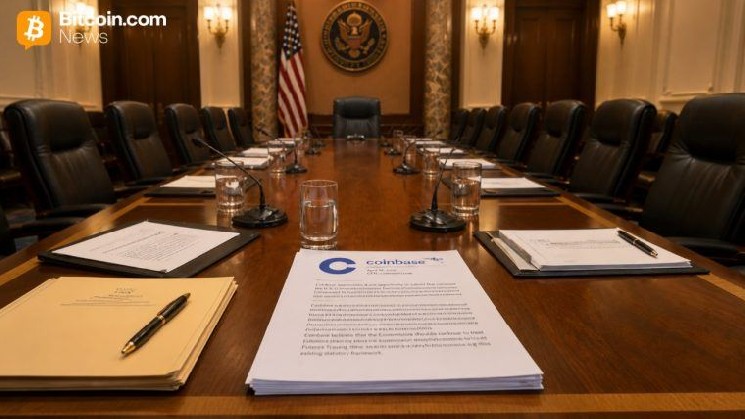
Coinbase says prediction markets should remain under CFTC oversight, arguing that event-based contracts already fall under federal derivatives law. The company outlined four points in a comment letter and public message.
Key points to remember:
- Coinbase urged the CFTC to regulate forecast markets under existing derivatives law.
- Federal oversight could prevent fragmented state enforcement in interstate prediction markets.
- Courts, regulators and states are still divided over jurisdiction and enforcement.
Coinbase Pushes CFTC Oversight for Prediction Markets
Coinbase Global Inc. (Nasdaq: COIN) is urging the U.S. Commodity Futures Trading Commission (CFTC) to treat prediction markets as part of the existing derivatives framework rather than a separate category. Faryar Shirzad, chief policy officer at Coinbase, shared the company’s position on X on May 3, outlining a four-point argument related to a formal comment letter submitted to the regulator on April 30, 2026.
Coinbase’s first point was that event-based contracts already fall under current law. The company argued that the CFTC has a long history of overseeing derivatives tied to real-world outcomes, meaning prediction markets do not require new authority. Shirzad said:
“Prediction markets may seem new, but they fit comfortably within existing statutory authority – no new mandates are required. »
The second point of crypto exchange focused on function, arguing that these instruments, like futures, aggregate dispersed information into price and allow participants to hedge uncertainty.
The third point concerned the regulatory structure. Coinbase said Congress assigned derivatives oversight to the CFTC to provide consistent national oversight, warning that state-level intervention could create fragmentation of interstate markets. The fourth point concerned enforcement powers. The company said the CFTC already has the authority to review, condition or prohibit contracts that conflict with the public interest, including those involving manipulation or potential harm.
State challenges raise stakes for uniform rules
This position emerges as the CFTC steps up its claim to exclusive jurisdiction over prediction markets, arguing that they qualify as “swaps” under the Commodity Exchange Act. Under Michael Selig, the agency argued that federal law should take precedence over state-level enforcement, warning that fragmented oversight would undermine a unified framework for derivatives. States like Texas, Arizona, Nevada and New Jersey have pushed back, arguing that these products resemble gambling and are within their authority to regulate such activity.
The jurisdictional dispute has evolved into active litigation involving both federal regulators and state authorities. The CFTC has sued states including Arizona, Connecticut, Illinois, New York and Wisconsin to block enforcement actions against the platforms. At the same time, states have taken action against the companies, including New York’s lawsuit against Coinbase Financial Markets and Gemini, Arizona’s criminal case against Kalshi, and cease-and-desist orders issued in Wisconsin, Connecticut, and Illinois targeting platforms like Kalshi and Polymarket. Courts have issued mixed rulings, with some rulings favoring federal preemption and others supporting state authority, creating an unresolved legal divide.
Together, these developments support Coinbase’s argument that prediction markets should remain under current CFTC oversight with clear and uniform rules. The company stressed that oversight should build on established authorities while refining safeguards as the market develops. Shirzad said:
“Prediction markets are maturing. The question is not whether they follow the law – they do – but how to ensure they develop with integrity, clarity and appropriate safeguards.”
Coinbase indicated that it would continue to collaborate with the Commission as the regulatory approach evolves.

