


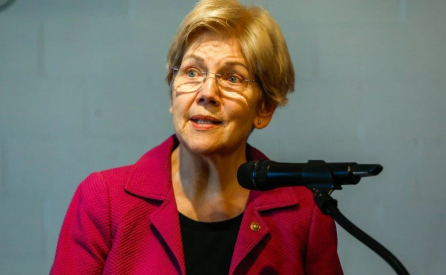
A harsh political statement from the US senator Elizabeth Warren has reignited the debate over wealth inequality in the United States, criticizing the growing gap between ordinary Americans and the ultra-rich.
In her comments, Warren said that “we are in a time where people live by their fingernails and one man has more wealth than anyone in the history of mankind,” adding that this situation reflects what she described as a “rigged economy.”
His comments quickly gained traction in political and financial debates, highlighting current concerns about income disparity, corporate power, and the concentration of wealth in the modern global economy.
Greater attention to wealth inequality
Warren’s statement comes amid growing public concern about economic inequality in the United States and other major economies. Rising costs of living, stagnating wage growth for middle-income households, and unprecedented wealth accumulation among billionaires have intensified the debate over economic justice.
The senator’s comments specifically noted the extreme concentration of wealth at the top of the income distribution. While he did not name individuals directly in the cited statement, his comments align with broader discussions about billionaires whose net worth has increased significantly in recent years due to technology-driven markets, investments and global asset appreciation.
According to Warren, the current economic structure disproportionately benefits those at the top, while leaving many households struggling with basic financial stability.
The debate over “a rigged economy” returns to the foreground
Warren’s characterization of the economy as “rigged” reflects a long-standing theme in her political messaging. He has frequently argued that regulatory gaps, tax structures, and corporate influence contribute to systemic imbalances that favor big financial players over working-class families.
His latest comments have reignited debate among economists, policymakers and analysts about whether current economic systems adequately address inequality or whether structural reforms are needed.
Supporters of Warren’s view argue that wealth concentration has reached historically high levels, driven in part by asset price inflation in the stock, real estate and private equity markets.
Critics, however, argue that wealth accumulation among top earners often reflects innovation, entrepreneurship and market-driven success, rather than a systemic imbalance.
Growing public concern about the cost of living
The backdrop of Warren’s comments includes lingering concerns about affordability in housing, health care, education and consumer goods.
Many households continue to feel financial pressure despite broader economic growth indicators in certain sectors. Inflationary cycles in recent years have further strained household budgets, contributing to a sense of economic insecurity among low- and middle-income populations.
Warren’s statement that many people are “living by their fingernails” reflects this sentiment and emphasizes the fragile financial situation of a significant portion of the population.
At the same time, wealth among high-net-worth individuals has continued to rise, driven largely by stock market gains and asset appreciation.
 |
| Source: Xpost |
Global wealth concentration trends
The issue of wealth concentration is not limited to the United States. Globally, the number of billionaires and their combined net worth have increased significantly over the past decade.
Companies driven by technology, financial markets and digital assets have played a major role in this trend, creating rapid wealth accumulation for early investors and founders.
This has led to renewed debate over whether existing tax systems and regulatory frameworks are equipped to manage modern wealth distribution dynamics.
Some economists argue that rising inequality could have long-term implications for economic stability, consumer demand and social cohesion.
Political division over economic policy
Warren’s comments also highlight the broader political divide over how to address inequality. Progressive policymakers often advocate for higher taxes on the wealthy, greater corporate regulation, and expanded social programs.
On the other hand, critics of such measures argue that excessive taxation and regulation could discourage investment, slow economic growth and reduce innovation.
This ideological divide continues to shape policy debates in Washington, particularly as governments consider responses to inflation, debt levels, and fiscal sustainability.
The role of billionaires in the modern economy
While Warren did not name specific people in her statement, public discussions often reference high-profile billionaires whose wealth has reached unprecedented levels in recent years.
Figures in the technology and financial sectors have seen significant increases in net worth due to the performance of the stock market, the growth of venture capital, and the global expansion of digital platforms.
These developments have fueled the current debate about the role of billionaires in society and whether extreme concentration of wealth is compatible with broader economic equity.
Public sentiment and social reactions
Warren’s comments quickly circulated across social media platforms, where users debated the fairness of current economic systems.
Some users expressed agreement with his assessment, pointing out growing inequality and cost of living challenges. Others criticized his comments as too simplistic, arguing that wealth creation should not be seen as inherently problematic.
The discussions also referenced comments from financial communities, including analysts and observers like Coinvo on X, where the topic of wealth concentration frequently intersects with broader economic and market discussions.
While such comments do not constitute formal economic analysis, they reflect the intensity of public interest in debates about inequality and financial policy.
Economic context and market implications
Although Warren’s comments are primarily political, they come at a time when global financial markets are undergoing significant structural changes.
Asset price inflation, technological disruption and the rise of digital economies have reshaped the way wealth is generated and distributed.
Markets such as stocks, real estate and cryptocurrencies have contributed to the rapid accumulation of wealth for certain segments of the population, further widening the gap between asset owners and wage earners.
Economists note that these dynamics are likely to continue influencing political discourse for years to come.
Long-term policy questions
Warren’s comments raise broader questions about the future direction of economic policy. Key questions include how governments should address inequality without undermining economic growth, how tax systems can adapt to modern wealth structures, and how social safety nets can be strengthened.
Policymakers face the challenge of balancing economic incentives with equity concerns, particularly in an environment of global competition for investment and innovation.
These debates are expected to remain central to political discourse as economies continue to evolve.
Conclusion: a renewed debate on economic equity
The comments of Elizabeth Warren have once again brought wealth inequality to the forefront of public debate, emphasizing concerns about economic imbalance and systemic justice.
His characterization of the economy as “rigged” reflects a broader ideological debate that continues to shape political discussions in the United States and beyond.
As wealth concentration reaches historic levels and economic pressures persist for many households, the debate over fairness, opportunity, and resource distribution is likely to further intensify.
hoka.news – not just cryptocurrency news. It’s cryptoculture.
Writer @Victoria
Victoria Hale is a writer focused on blockchain and digital technology. It is known for its ability to simplify complex technological developments into clear, easy-to-understand and attractive-to-read content.
Through her writing, Victoria covers the latest trends, innovations and developments in the digital ecosystem, as well as their impact on the future of finance and technology. It also explores how new technologies are changing the way people interact in the digital world.
His writing style is simple, informative, and focuses on giving readers a clear understanding of the rapidly evolving world of technology.
Disclaimer:
HOKA.NEWS articles are here to keep you up to date on the latest rumors in crypto, technology, and more, but they are not financial advice. We share information, trends and knowledge, we don’t tell you to buy, sell or invest. Always do your own homework before making any money moves.
HOKA.NEWS is not responsible for any loss, profit or chaos that may occur if you act on what you read here. Investment decisions should arise from your own research and, ideally, the guidance of a qualified financial advisor. Remember: cryptocurrencies and technology move fast, information changes in the blink of an eye, and while we strive for accuracy, we cannot promise that it is 100% complete or up-to-date.

