
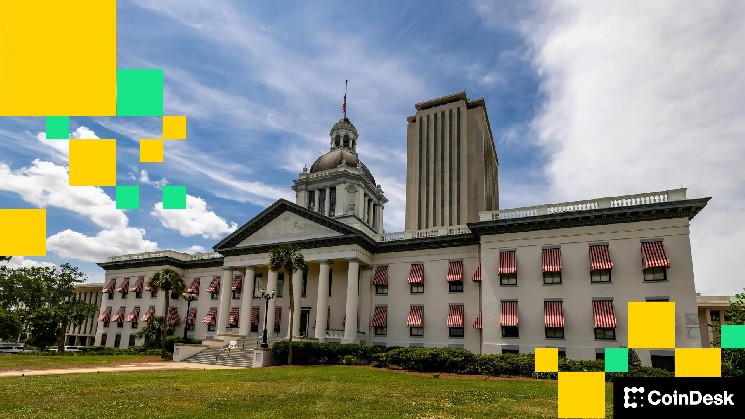
Florida has vowed to push for legislation to include digital assets on the state’s balance sheet, reviving a proposal to create a state-run cryptocurrency reserve after a similar effort failed earlier this year.
Filed by Republican Rep. John Snyder on Jan. 7 for the 2026 legislative session, House Bill 1039 would establish a strategic reserve fund for cryptocurrencies outside of the state Treasury and authorize Florida’s chief financial officer (CFO) to manage cryptocurrency investments under defined risk controls.
The bill calls for independent audits and an advisory committee and revives ideas for withdrawn 2025 legislation that would have allowed up to 10% of some public funds to be allocated to bitcoin. BTC$89,825.32. The proposal does not impose a minimum allocation, but rather gives the CFO discretion to decide if and when to deploy funds.
The renewed effort is linked to Florida state Sen. Joe Gruters, an ally of President Trump who supported earlier versions of the proposal, highlighting bitcoin’s growing appeal as a potential hedge or “digital gold.”
The fund, which will be managed by the state’s chief financial officer (CFO), according to the bill, is designed to serve as a shield against inflation.
Chief Financial Officer Jimmy Patronis has supported the effort, calling bitcoin “digital gold” in public statements and saying that limited exposure could improve diversification within state-run funds.
If passed, Florida would join a small but growing group of U.S. states advancing digital asset legislation, including New Hampshire and Texas. Wyoming has passed dozens of crypto-friendly laws clarifying the legal status of digital assets and blockchain companies, while New Hampshire recently became the first state to enact a law explicitly allowing the investment of public funds in cryptocurrencies, setting a precedent that Florida has highlighted.
The proposal also fits into Florida’s broader approach to digital currency. In 2023, Governor Ron DeSantis signed a law prohibiting the recognition of central bank digital currencies (CBDCs) under the state’s commerce code, positioning Florida as skeptical of federally issued digital currency while remaining open to decentralized alternatives.
HB 1039 is expected to pass during the 2026 legislative session. If approved by both chambers and signed into law, implementation would follow the timeline set by the bill, potentially making Florida one of the largest U.S. states to officially experiment with crypto as a reserve asset.