
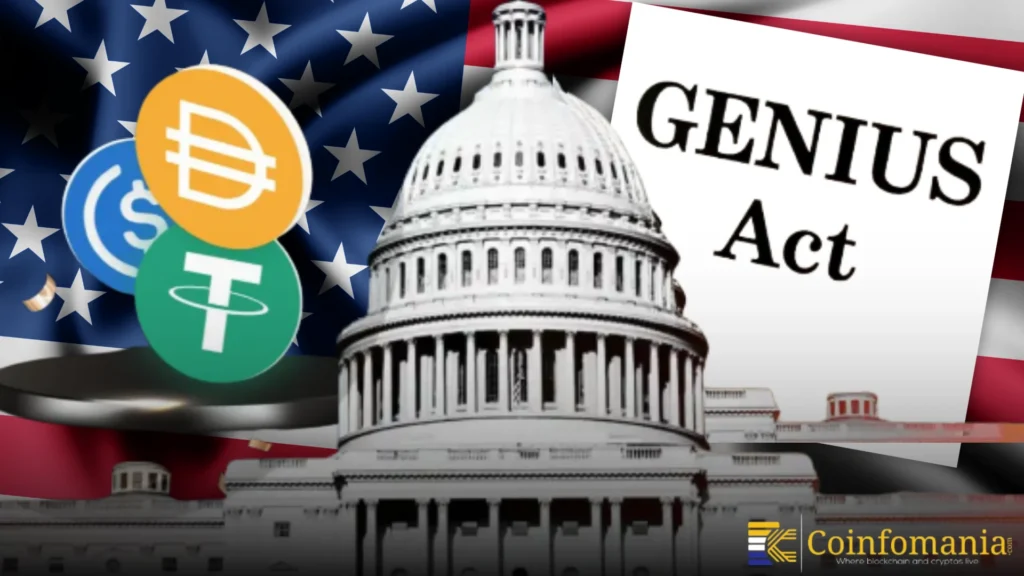
The U.S. Federal Deposit Insurance Corporation (FDIC) plans to release an implementation framework for the GENIUS Act this month. The framework will establish rules for stablecoin issuers and provide federal oversight. This is an important step towards safer and more regulated digital currencies in the US.
What is the GENIUS Law?
The GENIUS Act, or Ensuring Enhanced National Issuance of U.S.-Backed Stablecoins, is designed to regulate stablecoins. These are cryptocurrencies linked to traditional assets, usually the US dollar. People use stablecoins for commerce, payments, and decentralized finance (DeFi).
Currently, the rules of stablecoins are unclear. Many issuers operate without ongoing federal oversight. As a result, regulators worry about risks to the financial system. The GENIUS Act aims to solve this problem by establishing standards for operations, reservations and consumer protection.
The role of the FDIC
The FDIC protects bank depositors and ensures the stability of the American financial system. Under the framework of the GENIUS Act, the agency will closely monitor stablecoin issuers. You’ll see how they manage bookings and follow reporting standards.
This framework provides companies and investors with clear guidance. It also reduces uncertainty. By providing consistent rules, the FDIC hopes to protect users while encouraging innovation in digital payments.
Why is it important
Stablecoins are growing rapidly. Billions of dollars circulate in the market. They help with commerce, cross-border payments, and DeFi projects. However, regulators are concerned about liquidity, reserve support and systemic risks.
The GENIUS Law framework aims to:
- Make sure stablecoins are backed by real reserves.
- Require periodic audits and reports to achieve transparency.
- Protect consumers in case of failures.
These measures could increase confidence in the US stablecoin market. Additionally, they may attract more institutional investors and encourage broader adoption.
Industry response
Many in the crypto industry welcome the guidance. However, some worry about compliance costs. Smaller companies fear that strict rules could favor larger ones. Still, most agree that federal oversight can legitimize the market.
Additionally, financial institutions see this as an opportunity to integrate cryptocurrencies into banking safely. Analysts also suggest it could lead to more innovative payment solutions.
What’s next for stablecoins?
The FDIC expects to finalize the framework this month. After that, stablecoin issuers will need to comply. For investors and consumers, this is a sign that digital currencies are becoming safer and more common.
Overall, the GENIUS Act framework aims to balance innovation and security. It can help the US crypto market grow responsibly while protecting users.
The post GENIUS Act Stablecoins Set to Improve Market Security appeared first on Coinmania.