
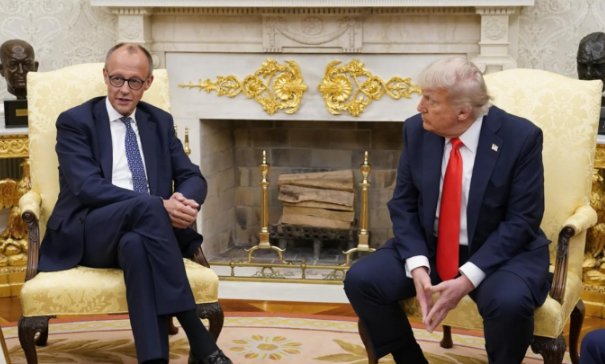
Germany drafts plan targeting US companies ahead of potential trade clash
Germany is reportedly preparing a strategic plan that could target American companies in anticipation of a possible economic and political confrontation with the administration of donald trump. The development, which has been widely circulated and referenced by Crypto Rover in a post on X, indicates growing tensions between two of the world’s largest economic powers.
The reported move underscores growing concerns about trade policy, economic retaliation and the evolving relationship between Europe and the United States. While details of the plan remain limited, analysts suggest it could involve regulatory, financial or trade-related measures targeting U.S. companies operating in European markets.
 |
| Source: XPost |

A renewed risk of transatlantic tensions
Germany’s preparations point to the possibility of new friction in transatlantic relations. Economic ties between the United States and Europe have historically been strong, with significant trade and investment flows between the two regions.
However, political disagreements and changing political priorities have at times strained these relationships. The latest reports suggest both sides could be preparing for a more confrontational approach if disputes escalate.
Strategic orientation to US companies
The focus on American companies reflects the interconnected nature of global business. American companies have a substantial presence in European markets, spanning industries such as technology, finance, manufacturing and energy.
Targeting these companies could serve as a means to exert economic pressure, which could influence negotiations and political decisions. However, these measures also carry risks, as they could affect economic activity and investor confidence.
Trade policy and economic leverage
Trade policy has become an increasingly important tool in international relations. Governments can use tariffs, regulations, and other mechanisms to protect domestic industries or respond to perceived imbalances.
Germany’s reported plan may be part of a broader strategy to strengthen its negotiating position in potential disputes. By showing their willingness to act, authorities can influence the dynamics of future debates.
Implications for global markets
The possibility of a trade clash between major economies could have significant implications for global markets. Investors often respond to uncertainty by adjusting their portfolios, which can lead to volatility in stocks, currencies and commodities.
Companies operating across borders may also face challenges, including changing regulations, rising costs, and disruptions to supply chains.
The role of the European Union
As a prominent member of the European UnionGermany’s actions are likely to be closely coordinated with broader EU policies. Trade and economic measures often require alignment between member states, adding a layer of complexity to decision-making.
The EU has previously been involved in trade disputes with the United States, highlighting the importance of collective action to address such issues.
Economic interdependence
Despite potential tensions, the United States and Europe remain deeply interconnected economically. Trade, investment and financial flows create mutual dependencies that can mitigate and amplify the impact of disputes.
This interdependence means that any significant escalation could have far-reaching consequences for both sides.
Political context and moment
The reported plan comes amid a dynamic political environment, where leadership decisions and policy priorities can change rapidly. Anticipating possible changes, governments often prepare contingency plans to deal with different scenarios.
Germany’s actions may reflect a proactive approach to managing uncertainty and protecting its economic interests.
Climbing risks
While strategic planning is a common aspect of international relations, there is always the risk that tensions escalate into broader conflicts. Trade disputes can lead to retaliatory measures, creating a cycle that affects multiple sectors and regions.
Managing these risks requires careful diplomacy and communication.
Looking to the future
As the situation develops, market participants and policymakers will be watching for more details and possible responses. The trajectory of relations between the United States and Europe will play a key role in shaping global economic conditions.

Conclusion
Germany’s alleged plan to attack American companies ahead of a potential clash with the Trump administration highlights the complexities of modern economic diplomacy. While the move reflects efforts to prepare for uncertainty, it also underscores the importance of maintaining stable and cooperative international relations.
As global challenges continue to evolve, the balance between competition and collaboration will continue to be a defining feature of the international economic landscape.
hokanews.com – Not just cryptocurrency news. It’s cryptoculture.
Writer @Ethan
Ethan Collins is a passionate crypto journalist and blockchain enthusiast, always on the hunt for the latest trends revolutionizing the world of digital finance. With a knack for turning complex blockchain developments into engaging, easy-to-understand stories, he keeps readers ahead of the curve in the fast-paced crypto universe. Whether it’s Bitcoin, Ethereum, or emerging altcoins, Ethan dives deep into the markets to uncover ideas, rumors, and opportunities that matter to cryptocurrency fans everywhere.
Disclaimer:
HOKANEWS articles are here to keep you up to date on the latest rumors in crypto, technology, and more, but they are not financial advice. We share information, trends and knowledge, we don’t tell you to buy, sell or invest. Always do your own homework before making any money moves.
HOKANEWS is not responsible for any loss, gain or chaos that may occur if you act on what you read here. Investment decisions should arise from your own research and, ideally, the guidance of a qualified financial advisor. Remember: cryptocurrencies and technology move fast, information changes in the blink of an eye, and while we strive for accuracy, we cannot promise that it is 100% complete or up-to-date.