
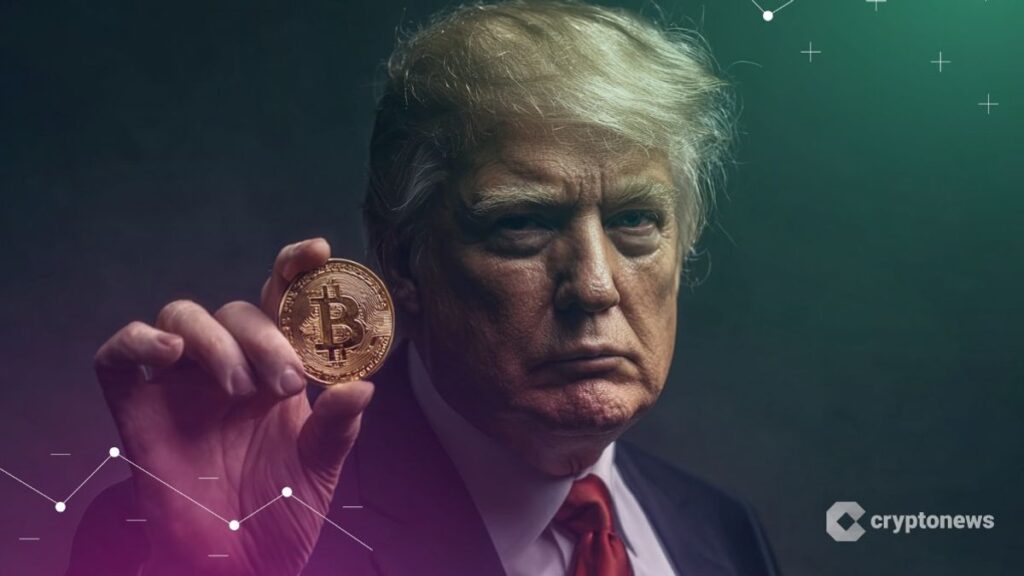
A Wall Street Journal investigation found that World Liberty Financial (WLF), the digital venture linked to the Trump family, had partnered with a virtual currency company called AB, whose key figures have been subject to U.S. Treasury Department sanctions over alleged ties to an international fraud ring known as pig butchering, which has extorted billions of dollars from Americans.
The partnership, which allows the WLF project’s stablecoin USD1 to operate on the AB network, was announced less than a month after the October 14 sanctions were issued. Chase Herro and Zachary Volkman, who play a central role in WLF’s operational strategy, are currently under investigation by the U.S. Department of Justice for prior entities linked to the same fraudulent infrastructure.
This development raises an immediate question: How could a presidential-branded crypto project partner with a company whose majority shareholder and chief executive were simultaneously under U.S. government sanctions for running violent fraud pools?
- Size of fraud: The Prince Group allegedly stole billions through “pig slaughter” operations in at least 10 resorts in Cambodia.
- Sanctions campaign: On October 14, the US Treasury imposed sanctions on more than 140 individuals and companies due to their alleged involvement in the Prince Group.
- WLF link: The World Liberty Financial project activated its $1 stablecoin on the AB network less than a month after the sanctions were announced.
- Persons sanctioned: Yang Jian (majority shareholder) and Yang Yanming (general manager) of AB Resort in East Timor were included in the Treasury action.
- Audit of the Ministry of Justice: Federal investigators are examining Chase Hero and Zachary Volkman’s past ventures — including Yield Game and Dough Finance — for infrastructure overlap with the fraudulent network.
Who are Chase Herro and Zachary Volkman? Why is the Justice Department pursuing them?
The Wall Street Journal investigation identified Chase Hero and Zachary Volkman as the driving forces behind the technical and operational direction of the WLF project.
Federal investigators from the Department of Justice and the Securities and Exchange Commission (SEC) are examining their previous businesses, particularly Yield Game and Dough Finance, over allegations that their infrastructure overlapped with a fraudulent “pig slaughter” organization that allegedly defrauded investors of more than $100 million worldwide.
Blockchain analyzes reported in the investigation show that transactions flow from wallets linked to the initial development of WLF to addresses linked to the fraudulent network’s money laundering operations. The WLF project would also have employed developers and consultants who had previously worked for these entities when they were already under federal control.
Neither Herro nor Volkman have yet been formally charged. WLF’s lawyers told the Wall Street Journal that the company did not become aware of AB’s ties to the sanctioned East Timor resort until January 2026, about two months after the partnership was announced.
What is a “pig slaughter” scam? What is the link between this network and the WLF?
The “pig slaughter” scam is a long-standing scheme of deception in which operators, often using forced labor in offshore pools, establish false online relationships with victims before steering them into fraudulent crypto investments.
The U.S. Department of Justice has described the Prince Group, the central organization in the case, as operating at least 10 violent fraud schemes in Cambodia using precisely this method.
The connection to the WLF project is through AB, which is developing a blockchain-themed resort in East Timor. Two of them, Yang Jian, the station’s majority shareholder, and Yang Yanming, its general manager, were sanctioned on October 14 specifically for their alleged work for the Prince Group.
Although AB removed the three sanctioned individuals from the company shortly after the Treasury’s action, the partnership with WLF was announced weeks later.
The legal risks here are not limited to simple association; If blockchain forensic analysis confirms wallet-level connections between WLF’s upstream infrastructure and the fraud network’s money laundering operations, as the investigation alleges, the case moves from simple reputational damage to sanctions evasion and crypto-backed fraud, issues that federal prosecutors are aggressively pursuing.
Trump’s Crypto Exposure: Branding Challenges
World Liberty Financial launched in 2024 as a decentralized finance (DeFi) lending and governance protocol with the support of the Trump family, giving the project immediate institutional visibility. The USD1 stablecoin is the project’s main financial product, designed to operate on partner blockchains.
There is no evidence that Donald Trump or his family knew about the allegedly illegal recordings of WLF’s technical partners. However, the “know your partner” (KYP) failures described in the survey are not minor; Imposing sanctions on more than 140 entities on the same day that two senior officials from your future partner appear on this list is the kind of oversight failure that regulators treat as a structural problem rather than a simple lapse.
The political dimension increases the complexity of any legal question. Crypto companies that face regulatory scrutiny for their politically linked financial activities operate under varying standards of press and congressional attention, and the WLF project, which has Trump’s name in every headline, has no safeguards against this scrutiny.
Investigation Reveals Trump’s Crypto Project Link to International Fraud Network appeared first on Cryptonews Arabic.