
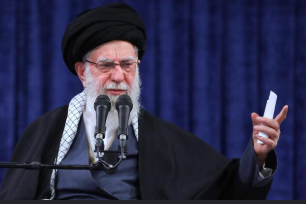
A new wave of geopolitical uncertainty is sweeping global markets after reports emerged that Iran has suspended negotiations with the United States amid rising tensions over Israel and the broader Middle East conflict.
According to regional reports, Tehran decided to suspend diplomatic talks with Washington following concerns about what Iranian officials describe as an escalation of threats against Beirut. The development has intensified fears of a broader regional confrontation and sparked renewed attention on two of the world’s most strategically important shipping routes: the Strait of Hormuz and the Strait of Bab el-Mandeb.
Iranian officials have reportedly warned that they are prepared to take stronger action if tensions continue to rise, including possible actions involving both waterways. These statements have immediately attracted the attention of governments, investors, energy traders and security analysts around the world.
The reports have generated significant debate in financial and geopolitical circles, including among prominent macroeconomic and cryptocurrency commentators. Information about the development has also been highlighted by the widely followed Coinbureau account on X, reflecting growing concerns about the potential economic and security implications of further escalation in the region.
Diplomatic relations face new pressures
The latest reports suggest that diplomatic communication between Tehran and Washington has entered a new period of uncertainty.
For years, indirect negotiations have served as one of the few remaining channels through which both sides could exchange messages and attempt to manage tensions. While relations between the two countries have remained tense, diplomatic intermediaries often played an important role in reducing misunderstandings and preventing wider conflicts.
The suspension of the talks signals a deterioration in that process.
Political analysts note that even limited diplomatic engagement can help maintain stability during periods of heightened tension. When communication channels weaken, the risk of miscalculations often increases, creating additional uncertainty for regional and international stakeholders.
The latest developments come at a time when the Middle East is already facing multiple security challenges, making diplomatic rifts particularly worrying.
Why Beirut has become a flashpoint
Beirut has increasingly become a focal point in regional security discussions.
As tensions involving Israel, Lebanon and various regional actors continue to evolve, concerns about the possibility of broader military action have intensified.
For investors and policymakers, the importance extends beyond local politics.
Any major escalation involving Lebanon has the potential to affect neighboring countries, disrupt trade routes and influence global energy markets. The interconnected nature of regional alliances means that developments in one area can quickly generate consequences across the Middle East.
As a result, governments and financial institutions around the world closely monitor reports involving possible military activity.
The strategic importance of the Strait of Hormuz
Among the most significant aspects of the latest reports is Iran’s warning about the Strait of Hormuz.
The narrow waterway serves as one of the world’s most critical energy corridors.
Located between Iran and Oman, the strait connects the Persian Gulf with international shipping routes and facilitates the transport of huge volumes of crude oil and natural gas.
A substantial portion of global energy exports pass through the corridor every day.
Due to its strategic importance, even the possibility of disruptions can trigger reactions in global markets.
Historically, threats involving the Strait of Hormuz have often resulted in increased volatility in commodity, stock and currency markets.
Energy-importing nations pay special attention to developments in the region due to their dependence on Gulf exports.
Bab el-Mandeb emerges as another concern
In addition to Hormuz, Iran’s warning about the Bab el-Mandeb Strait has attracted considerable attention.
Situated between the Arabian Peninsula and the Horn of Africa, Bab el-Mandeb serves as a key maritime gateway linking the Red Sea to the Gulf of Aden and the Indian Ocean.
The route is essential for international trade and global maritime operations.
Large volumes of commercial goods, energy products and manufactured items pass through the corridor each year.
Security concerns affecting Bab el-Mandeb may therefore influence supply chains far beyond the Middle East.
Analysts warn that disruptions involving Hormuz and Bab el-Mandeb simultaneously would represent a major challenge to global trade.
Energy markets monitor every development
Oil traders are among the market participants paying the most attention to the situation.
Energy prices often react quickly to geopolitical events involving major production and transportation centers.
 |
| Source: Xpost |

Even when no real disruption occurs, the possibility of restrictions or military escalation can influence market expectations.
Investors often factor geopolitical risks into pricing models, especially when it comes to critical shipping routes.
As a result, developments surrounding Iran and regional security remain a major focus for commodity markets.
The latest reports have reinforced concerns that geopolitical developments could once again become a dominant driver of energy prices.
Financial markets face growing uncertainty
Global financial markets generally do not like uncertainty.
When geopolitical risks increase, investors often reassess their exposure to risk-sensitive assets and look for safer alternatives.
Stocks, cryptocurrencies, emerging market assets, and other growth-oriented investments may experience volatility during periods of heightened stress.
At the same time, traditional safe haven assets tend to attract greater demand.
Therefore, the current situation has become an important topic of discussion among portfolio managers, institutional investors and economic analysts.
The outcome of current regional events may influence market sentiment in the coming weeks.
Implications for global trade
Beyond the financial markets, shipping companies and international companies are closely monitoring the situation.
The Strait of Hormuz and Bab el-Mandeb are not only energy routes; They are also essential components of the global trade network.
Any disruption could increase transportation costs, lengthen delivery times and create logistical challenges for businesses around the world.
Global supply chains remain sensitive after years of disruption caused by geopolitical conflicts, economic uncertainty and transportation bottlenecks.
As a result, developments involving critical shipping corridors often have consequences that extend far beyond the immediate region.
An international response is expected
Governments around the world are expected to closely monitor the situation and evaluate possible responses.
Major economies have a strong interest in maintaining stability along key shipping routes.
International organizations and diplomatic partners can also seek opportunities to foster dialogue and reduce tensions.
Many analysts maintain that diplomatic engagement remains the most effective path to avoiding further escalation.
It remains uncertain whether communication channels can eventually be restored.
However, the importance of maintaining stability in one of the world’s most strategically important regions cannot be underestimated.
Looking to the future
The suspension of negotiations between Iran and the United States marks a significant development in an increasingly complex geopolitical environment.

Combined with warnings involving the Strait of Hormuz and the Strait of Bab el-Mandeb, the situation has raised concerns about regional security, global trade and energy market stability.
While the final outcome remains unclear, investors, policymakers and businesses around the world will be watching for signs of escalation or renewed diplomatic engagement.
For now, the events serve as a reminder of how quickly geopolitical developments can influence markets, economies and international relations in an interconnected world.
hoka.news – not just cryptocurrency news. It’s cryptoculture.
Writer @Victoria
Victoria Hale is a writer focused on blockchain and digital technology. It is known for its ability to simplify complex technological developments into clear, easy-to-understand and engaging-to-read content.
Through her writing, Victoria covers the latest trends, innovations and developments in the digital ecosystem, as well as their impact on the future of finance and technology. It also explores how new technologies are changing the way people interact in the digital world.
His writing style is simple, informative, and focuses on giving readers a clear understanding of the rapidly evolving world of technology.
Disclaimer:
HOKA.NEWS articles are here to keep you up to date on the latest rumors in crypto, technology, and more, but they are not financial advice. We share information, trends and knowledge, we don’t tell you to buy, sell or invest. Always do your own homework before making any money moves.
HOKA.NEWS is not responsible for any loss, profit or chaos that may occur if you act on what you read here. Investment decisions should arise from your own research and, ideally, the guidance of a qualified financial advisor. Remember: cryptocurrencies and technology move fast, information changes in the blink of an eye, and while we strive for accuracy, we cannot promise that it is 100% complete or up-to-date.