
Iran’s Central Bank chief resigns as rial plummets to record low and protests erupt in Tehran
Iran’s deepening economic crisis took a dramatic turn this week when Mohammad Reza Farzinthe head of the Central Bank of IranHe resigned on Monday amid growing public anger over the rapid collapse of the national currency.
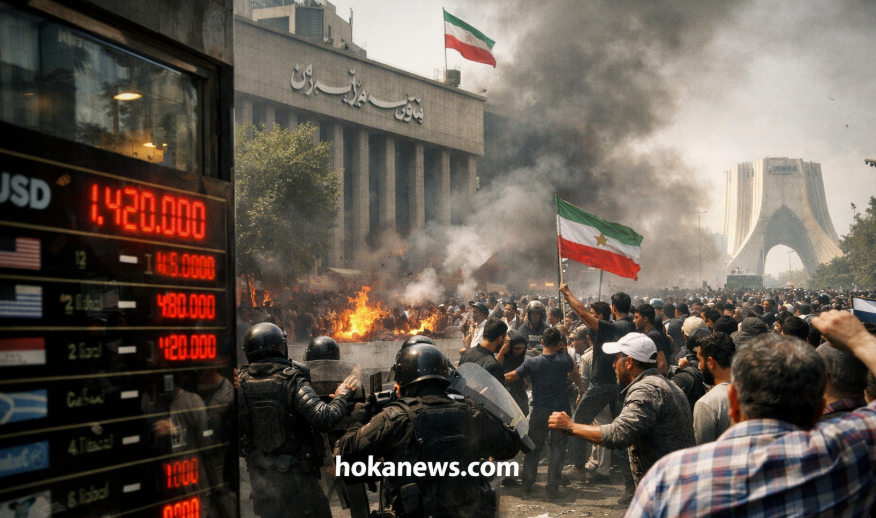
The resignation came as protests broke out across Tehranfollowing a sharp drop in the Iranian rial, which hit a record low of about 1.42 million rials per US dollar on Sunday. The currency collapse has intensified concerns about inflation, living costs and the broader stability of Iran’s economy.
The development was first highlighted by the X Bitcoin News account and reviewed by the Hokanews editorial team as part of ongoing coverage of global macroeconomic instability and currency crises.
 |
| Source: XPost |

A currency collapse that sparked public anger
The decline of the Iranian rial to 1.42 million per dollar marks one of the most severe depreciations in the country’s modern history. The drop reflects long-standing economic pressures that have worsened in recent months, including high inflation, lower oil revenues, international sanctions and lower public confidence in monetary policy.
As exchange rates worsened over the weekend, reports of protests began to emerge in central Tehran. Protesters expressed frustration over rising prices, erosion of purchasing power and uncertainty about the future. Local media and social media users described crowds gathering near commercial districts, with chants criticizing economic mismanagement.
Currency traders said panic buying of foreign currencies accelerated the rial’s decline, creating a feedback loop that further undermined confidence.
The resignation of Mohammad Reza Farzin
Mohammad Reza Farzin was governor of the central bank during a period marked by intense financial tensions. His tenure was dominated by efforts to stabilize the rial through exchange controls, managed exchange rates, and regulatory intervention in foreign exchange markets.
Despite these measures, inflation remained high and confidence continued to weaken. Analysts say the resignation signals a recognition within the government that monetary policy has failed to stop the currency’s downward spiral.
Iranian officials have not publicly detailed the reasons for Farzin’s departure, but the timing suggests a direct link to the currency crisis and growing public pressure.
Structural challenges facing Iran’s economy
Iran’s economic problems go far beyond short-term monetary volatility. Years of international sanctions have restricted access to global financial systems, limited oil exports and reduced foreign investment.
Domestically, inflation has remained stubbornly high, eroding household income and savings. Many Iranians rely on informal money markets to protect purchasing power, further weakening the rial.
Economists note that repeated attempts to control exchange rates through administrative measures have often backfired, encouraging black market activity rather than restoring confidence.
Why the fall of the rial is important
Monetary stability is fundamental for economic and social stability. As the rial weakens, imports become more expensive, fueling inflation in food, medicine and consumer goods. These pressures disproportionately affect low- and middle-income households.
The collapse of the rial also undermines confidence in state institutions. When citizens lose confidence in currency, they often turn to alternative stores of value, including foreign currencies, gold, and, increasingly, digital assets.
Market watchers say the current exchange rate highlights the depth of Iran’s monetary challenges and the difficulty of reversing sentiment once confidence is lost.
Protests reflect broader discontent
The protests in Tehran are part of a broader pattern of public dissatisfaction linked to economic difficulties. While the demonstrations initially focused on monetary instability, they also reflect broader concerns about employment, living standards and governance.
Security forces were reportedly deployed in parts of the capital as authorities attempted to contain the unrest. Officials have not released official figures on the scale of the protests.
Historically, currency crises in Iran have often coincided with political tensions, as economic pain quickly translates into social pressure.
What’s next for the Central Bank?
With Farzin’s resignation, attention now turns to who will lead the next central bank and what policy direction it may take. Analysts warn that leadership changes alone are unlikely to stabilize the currency without broader reforms.
Possible policy options include tighter monetary controls, renewed efforts to control inflation, or attempts to restore confidence through diplomatic or economic initiatives. However, each path comes with significant challenges.
Both investors and citizens will be attentive to signs of policy continuity or change in the coming days.
Regional and global implications
Iran’s currency crisis also has regional implications. A weaker rial can affect cross-border trade, remittances and regional financial stability, particularly in neighboring countries with close economic ties to Iran.
Globally, the situation highlights how sanctions, inflation and political uncertainty can converge into acute monetary tensions. Similar patterns have been observed in other economies facing prolonged external pressures.
A crisis of confidence
In essence, the collapse of the rial reflects a crisis of confidence. Currency values are as much about confidence as they are about economic fundamentals. Once trust is eroded, restoring stability becomes much more difficult.
Farzin’s resignation may temporarily ease political pressure, but economists warn that a meaningful recovery will require sustained political credibility and structural reform.

Conclusion
The resignation of Iran’s central bank chief amid a record collapse of the rial marks a critical moment for the country’s economy. With protests in Tehran and inflation eroding daily life, the stakes are high for Iran’s financial leadership.
It remains uncertain whether new leadership can restore trust. What is clear is that the monetary crisis has gone beyond technical economics and has entered the realm of social and political consequences.
hokanews.com – Not just cryptocurrency news. It’s crypto culture.
Writer @Ethan
Ethan Collins is a passionate crypto journalist and blockchain enthusiast, always on the hunt for the latest trends revolutionizing the world of digital finance. With a knack for turning complex blockchain developments into engaging, easy-to-understand stories, he keeps readers ahead of the curve in the fast-paced crypto universe. Whether it’s Bitcoin, Ethereum, or emerging altcoins, Ethan dives deep into the markets to uncover ideas, rumors, and opportunities that matter to cryptocurrency fans everywhere.
Disclaimer:
HOKANEWS articles are here to keep you up to date on the latest rumors in crypto, technology, and more, but they are not financial advice. We share information, trends and knowledge, we don’t tell you to buy, sell or invest. Always do your own homework before making any money moves.
HOKANEWS is not responsible for any loss, gain or chaos that may occur if you act on what you read here. Investment decisions should arise from your own research and, ideally, the guidance of a qualified financial advisor. Remember: cryptocurrencies and technology move fast, information changes in the blink of an eye, and while we strive for accuracy, we cannot promise that it is 100% complete or up-to-date.
Stay curious, stay safe, and enjoy the ride!