
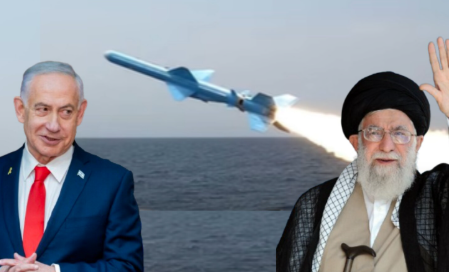
Israel attacks Iran after missile attack as Middle East tensions rise
TEL AVIV/TEHRAN – Israel has confirmed that it carried out targeted strikes against positions linked to Iran following a series of missile attacks launched from Tehran, according to statements attributed to the Israel Defense Forces (IDF). The latest exchange marks a sharp escalation in already rising regional tensions, with concerns growing about the possibility of a broader conflict in the Middle East.
The situation has developed rapidly, with both sides exchanging military actions in what analysts describe as one of the most sensitive escalations in recent months.
Israeli response after missile launches from Iran
Israeli military officials stated that the attacks were carried out in direct response to missile attacks coming from Iranian territory or from Iranian-backed networks. The IDF described the operation as a defensive action aimed at neutralizing immediate threats and reducing the risk of further attacks.
The targeted sites are believed to include infrastructure linked to missile operations and support systems, although full operational details have not been disclosed for security reasons.
Iranian authorities have not issued a detailed official statement, but reports from state-linked media acknowledged explosions in several areas after the attacks.
The escalation generates regional alarm
The latest developments add to a growing pattern of confrontation between Israel and Iran, which has escalated through proxy conflicts, airstrikes and missile exchanges in multiple regions.
Security analysts warn that while both sides have historically avoided full-scale war, the frequency and intensity of recent incidents suggest that deterrence strategies are becoming less effective.
The direct nature of the latest attacks has raised concerns that escalation could go beyond controlled responses.
The risk of airspace closure exceeds 53 percent
In addition to the military escalation, geopolitical risk indicators show that the probability of Iran closing its airspace before the end of the month has risen above 53 percent.
Such a move would have significant implications for international aviation routes, particularly flights crossing the Middle East corridor.
Airspace restrictions would likely force airlines to divert flights, increasing travel time and operating costs, while adding pressure to regional logistics networks.
Although no official announcement has been made, analysts say the increasing probability reflects heightened security concerns within Iran’s strategic decision-making.
 |
| Source: Xpost |

Global reaction and diplomatic pressure
The international reaction has been cautious, with several governments urging restraint and calling for a reduction in tension. Diplomatic channels are believed to remain active behind the scenes, although no formal development has been reported.
The United Nations is expected to closely monitor the situation as events develop, while several countries have updated travel warnings for the region.
Global markets are also watching closely, given the potential implications for energy supply routes and regional stability.
Strategic calculations on both sides
Military experts suggest that both Israel and Iran are operating within long-standing deterrence frameworks, but recent developments indicate a shift toward more direct engagement.
Israel has consistently maintained that it will respond to threats arising from Iran-linked networks, while Iran continues to support strategic regional alliances that expand its influence.
The latest exchange highlights how quickly localized attacks can turn into broader geopolitical risks.
Market sensitivity and energy concerns
Geopolitical tensions in the Middle East often have immediate effects on global energy markets, particularly oil prices and shipping lanes.
Following reports of the strikes, market sentiment has shown increased volatility as investors assess potential supply chain risks.
While no disruption has been confirmed, analysts warn that a sustained escalation could have broader economic implications.
Continuous verification and reporting
Information about the attacks has been confirmed through military statements and multiple geopolitical monitoring sources. Reports from analysis channels, including references circulating within the geopolitical and crypto monitoring community, such as CoinBureau on X, have aligned with the broader narrative of escalating tensions.
However, officials emphasize that details are still emerging and subject to verification as the situation develops.
Concerns for civil and regional stability
Humanitarian observers have expressed concern about the possible impact of continued escalation on civilian populations in the affected regions.
Increased military activity and potential airspace restrictions could disrupt transportation, communications and access to essential services.

Aid organizations have urged all parties to avoid actions that could endanger civilian security.
Outlook remains uncertain
Security analysts describe multiple possible outcomes, ranging from controlled cycles of retaliation to broader escalation if diplomatic efforts fail.
The situation remains very unstable and developments are expected to continue in the coming days.
For now, international attention remains focused on whether both sides will move toward de-escalation or further military action.
hoka.news – not just cryptocurrency news. It’s cryptoculture.
Writer @Victoria
Victoria Hale is a writer focused on blockchain and digital technology. It is known for its ability to simplify complex technological developments into clear, easy-to-understand and engaging-to-read content.
Through her writing, Victoria covers the latest trends, innovations and developments in the digital ecosystem, as well as their impact on the future of finance and technology. It also explores how new technologies are changing the way people interact in the digital world.
His writing style is simple, informative, and focuses on giving readers a clear understanding of the rapidly evolving world of technology.
Disclaimer:
HOKA.NEWS articles are here to keep you up to date on the latest rumors in crypto, technology, and more, but they are not financial advice. We share information, trends and knowledge, we don’t tell you to buy, sell or invest. Always do your own homework before making any money moves.
HOKA.NEWS is not responsible for any loss, profit or chaos that may occur if you act on what you read here. Investment decisions should arise from your own research and, ideally, the guidance of a qualified financial advisor. Remember: cryptocurrencies and technology move fast, information changes in the blink of an eye, and while we strive for accuracy, we cannot promise that it is 100% complete or up-to-date.