
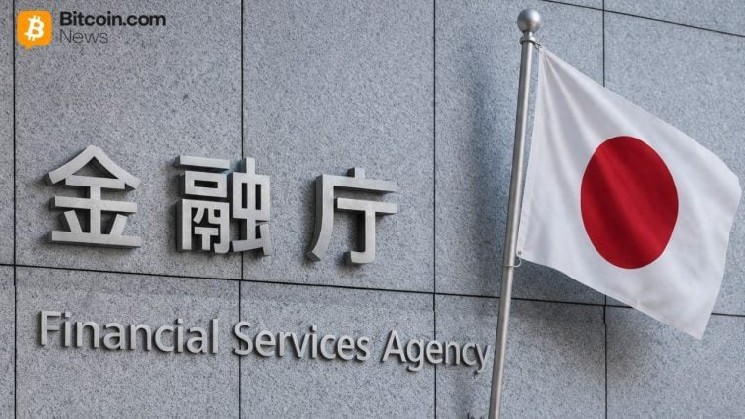
Japan’s regulated crypto market continues to expand under strict oversight, with over 100 tokens listed on registered crypto platforms, operating within a tightly controlled legal framework set by the Financial Services Agency.
Key points to remember:
- The Japanese regulator recognizes more than 100 tokens within its regulated framework.
- 28 crypto service providers are registered, including Binance and Coinbase.
- The assets span DeFi, gaming, AI, and stablecoins, showing various blockchain use cases in Japan.
Japanese crypto market features over 100 listed tokens and 28 regulated platforms
A detailed view of Japan’s regulated crypto market shows how licensed exchanges operate within a narrowly defined legal framework while offering a wide range of digital assets. As of April 5, the latest listing on the Financial Services Agency (FSA) website identifies 28 domestic registered cryptocurrency exchange service providers and over 100 unique tokens registered on these platforms. The data reflects active monitoring and market participation in a structured digital asset environment.
The list maintained by the FSA, Japan’s main financial regulator, shows that every exchange must register every crypto asset it offers to users under the Payment Services Act. The register was last updated on February 28. In total, approximately 520 token entries appear across all exchanges when counting each entry, including duplicates across platforms. When overlaps are removed, the number reduces to just over 100 tokens, although the exact figure varies depending on classification methods. This difference persists because the FSA records renamed, merged, and legacy tokens separately to reflect the actual assets managed by each provider.
Removing duplicate entries and legacy variants leaves a core set of 100+ tokens across the entire ecosystem. These include ADA, ALGO, APE, APT, ARB, ASTR, ATOM, AVAX, AXS, BAT, BC, BCH, BNB, BOBA, BORA, BRIL, BSV, BTC, CHZ, CICC, COMSA, COT, CRTS, CYBER, DAI, DEP, DOGE, DOT, EFI, ELF, ENJ, ETC, ETH, FCR, FCT, FET, FIL, FLR, FNCT, FPL, FSCC, FTT, GALA, GRT, HBAR, IMX, IOST, IOTX, JASMY, JOC, KAIA, LINK, LPT, LSK, LTC, MANA, MASK, MBX, MEME, MONA, NAC, NCXC, NEAR, NEIRO, NEO, NIDT, OAS, OKB, OMG, ONT, OP, OSHI, PEPE, PLT, POL, QASH, QTUM, RENDER, RYO, SAND, SEI, SHIB, SKEB, SKY, SNPT, SOL, SUI, SXP, TAO, THETA, TON, TRUMP, TRX, UPC, XCP, ZPGPT. The breadth of this list illustrates the diversity of locally developed blockchain networks, applications, and assets in the Japanese market.
The FSA has clarified that inclusion on the list does not represent an endorsement or guarantee of value. The regulator said:
“The crypto assets managed by the crypto asset exchange service providers listed in this list are simply confirmed to fall within the definition of the Payment Services Act, taking into account the explanation of the crypto asset exchange service providers.”
He also noted that crypto exchange service providers must be registered with the Financial Services Agency and local financial offices.
The differences between exchanges highlight different strategies within the same regulatory structure. Larger operators offer wider access, with Bitflyer listing 39 tokens, Bitbank listing 44, Bittrade listing 48, SBI VC Trade listing 35, Coincheck listing 37, and Binance Japan listing 65. Meanwhile, Money Partners and Coinhub only support Bitcoin. Coinbase also appears on the ledger with no tokens listed, indicating an inactive status in the current snapshot. These variations demonstrate how platforms compete through asset selection while meeting compliance requirements.
Cryptocurrency Categories and Compliance Rules in Japan Shape Regulated Market Structure
The listed tokens fall into several functional categories that define the structure of Japan’s crypto ecosystem. These include infrastructure and layer 1 protocols, layer 2 and scaling solutions, artificial intelligence and metaverse assets, decentralized finance and middleware protocols, stablecoins and asset-backed tokens, exchange and service utility tokens, memecoins, and Japan-specific or localized ecosystem projects. These categories reflect the technological diversity and evolving use cases of digital assets within a regulated financial system.
The registry also maintains legacy and transient assets due to regulatory and technical requirements. Tokens tied to previous releases, rebrands, or merged ecosystems remain next to the updated forms listed because exchanges must register each separate asset they manage. The differences between smart contracts and internal systems mean that even closely related tokens are treated as separate inputs. This approach maintains traceability and legal clarity while providing transition periods for users to migrate their funds.
The document reinforces the fact that crypto assets are not legal tender and do not have government support. Price volatility, cybersecurity risks and fraud are the main concerns highlighted by authorities. Users are advised to check whether a provider is registered and understand transaction risks before trading. The Japanese registry reflects a structured regulatory model that emphasizes transparency and accountability while allowing market activity.
In parallel, the Japan Virtual and Crypto Assets Exchange Association (JVCEA) operates a “green list” framework that streamlines token listings among member exchanges. This mechanism reduces the need for repeated pre-assessments while maintaining liquidity, security and transparency standards. Together, the FSA Registry and JVCEA processes form a dual-layer system supporting digital asset markets under defined regulatory oversight.