
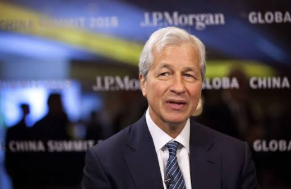
Jamie Dimon, CEO of JPMorgan Chase, says global financial markets are currently in a “bull market,” describing the momentum as powerful and difficult to slow once it gains steam.
In recent comments, Dimon compared the current market environment to a “small tsunami,” emphasizing the strength of investor sentiment and continued bullish momentum in stocks and financial assets.
“We’re in a bull market. It’s like a small tsunami. When that kind of thing happens, it’s very difficult to stop it,” Dimon said.
His comments reflect growing confidence in the market’s performance despite lingering concerns about interest rates, inflation and broader macroeconomic uncertainty.
Strong market momentum continues
Dimon’s assessment comes as global stock markets continue to show resilience, driven by strong corporate earnings, technological growth and sustained investor demand.
Major indices have remained elevated in recent trading sessions, supported by optimism in sectors such as technology, financial services and artificial intelligence.
Market analysts note that bullish conditions are often reinforced by investor psychology, where rising prices attract additional capital inflows, further strengthening momentum.
This self-reinforcing cycle can contribute to prolonged periods of market expansion, even in the presence of economic headwinds.
Tsunami-like effect on financial markets
Dimon’s comparison of market momentum to a “tsunami” highlights the scale and speed at which capital flows can move through global financial systems.
Once investor confidence is built, markets can experience a rapid acceleration in valuations, driven by both institutional and retail participation.
This dynamic often makes it difficult for authorities or economic factors alone to immediately reverse market trends.
However, financial history also shows that those momentum-driven markets may eventually face corrections if underlying economic conditions weaken.
Balancing optimism and risk
While acknowledging strong market conditions, Dimon has also historically warned of potential risks facing the global economy.
These include geopolitical tensions, inflationary pressures and interest rate uncertainty, all of which can influence investor behavior and market stability.
Despite these risks, current market sentiment remains largely optimistic, supported by strong corporate performance and expectations of continued economic growth.
Financial experts emphasize that bull markets often persist even during periods of uncertainty, as long as earnings growth and liquidity conditions remain favorable.
Technology and AI drive market growth
One of the main contributors to the recent market strength has been the rapid expansion of the technology sector, particularly companies involved in artificial intelligence.
AI-related companies have seen significant increases in valuation as investors anticipate long-term productivity gains and new revenue opportunities.
This has helped drive broader index performance, with tech-heavy benchmarks outperforming other sectors in recent periods.
 |
| Source: Xpost |

The concentration of profits in a relatively small number of large-cap technology companies has also become a defining characteristic of the current market cycle.
Investor behavior in bull markets
Bull markets are typically characterized by higher investor participation, greater risk appetite, and strong capital inflows into stocks.
As prices rise, more investors tend to enter the market, reinforcing bullish momentum.
Institutional investors, hedge funds, and retail traders play a role in amplifying these trends.
However, financial analysts warn that such environments can also lead to overvaluation in certain sectors if speculative behavior becomes excessive.
Interest rates and economic outlook
Interest rate policy remains a key factor influencing market direction.
While central banks have taken steps to control inflation in recent years, expectations around future rate cuts or stability continue to shape investor sentiment.
Lower interest rates generally support stock markets by reducing borrowing costs and increasing liquidity.
Conversely, higher rates can put pressure on valuations by tightening financial conditions.
Dimon’s comments suggest that despite macroeconomic uncertainties, current market momentum remains strong enough to sustain bullish conditions.
Corporate earnings supporting valuations
Another key driver of the bull market is strong corporate earnings across multiple sectors.
Overall, companies have reported strong financial results, supported by cost management, technological efficiency and consumer demand.
This earnings strength has helped justify higher stock valuations and bolstered investor confidence.
Analysts point to sustained earnings growth as one of the most important factors in sustaining market rallies over the long term.
Global market interconnectivity
Modern financial markets are highly interconnected, meaning momentum in one region can influence sentiment globally.
The performance of U.S. stocks often sets the tone for international markets, and global investors watch Wall Street trends closely.
This interconnection amplifies both upward and downward movements, contributing to faster changes in overall sentiment.
Dimon’s comments reflect this broader reality of synchronized market behavior across regions and asset classes.
Risks of extended market cycles
While bull markets can persist for long periods, financial history shows that they eventually face corrections or reversals.
Possible triggers include economic recessions, geopolitical shocks, or changes in monetary policy.
Investors are often advised to be aware of risk factors even in strong market conditions.

Diversification and long-term investment strategies are commonly used to manage exposure during prolonged bull cycles.
Conclusion
Jamie Dimon’s characterization of the current market as a strong bull run underscores the powerful momentum driving global financial assets.
Its comparison to a “tsunami” highlights the speed and scale of capital movement that can sustain rising markets over time.
While optimism remains high across stocks, analysts continue to monitor macroeconomic risks, interest rate trends and geopolitical developments that could influence the future direction of the market.
For now, market sentiment remains firmly positive, supported by strong corporate earnings, technological growth and sustained investor participation.
hoka.news – not just cryptocurrency news. It’s cryptoculture.
Writer @Victoria
Victoria Hale is a writer focused on blockchain and digital technology. It is known for its ability to simplify complex technological developments into clear, easy-to-understand and engaging-to-read content.
Through her writing, Victoria covers the latest trends, innovations and developments in the digital ecosystem, as well as their impact on the future of finance and technology. It also explores how new technologies are changing the way people interact in the digital world.
His writing style is simple, informative, and focuses on giving readers a clear understanding of the rapidly evolving world of technology.
Disclaimer:
HOKA.NEWS articles are here to keep you up to date on the latest rumors in crypto, technology, and more, but they are not financial advice. We share information, trends and knowledge, we don’t tell you to buy, sell or invest. Always do your own homework before making any money moves.
HOKA.NEWS is not responsible for any loss, profit or chaos that may occur if you act on what you read here. Investment decisions should arise from your own research and, ideally, the guidance of a qualified financial advisor. Remember: cryptocurrencies and technology move fast, information changes in the blink of an eye, and while we strive for accuracy, we cannot promise that it is 100% complete or up-to-date.