
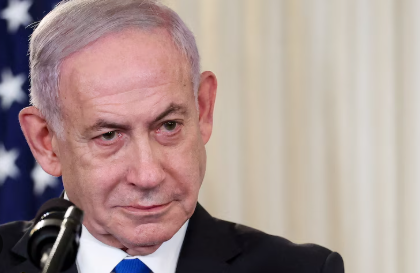
A renewed wave of discussion surrounding the long-running conflict in the Middle East has emerged after a widely shared statement on social media suggested that lasting peace in the region may require fundamental political change. The comment, shared on platforms such as X, has attracted a lot of attention and sparked debate among analysts, commentators and geopolitical observers.
The declaration, which frames peace as unattainable without major structural transformation, reflects one of many competing narratives in a conflict that has shaped regional and global politics for decades. However, experts emphasize that such comments represent individual comments and should not be interpreted as an established geopolitical consensus.
Long-standing conflicts and competing narratives
The Middle East conflict, particularly the Israeli-Palestinian issue, remains one of the most complex and long-running disputes in modern international relations. Despite decades of diplomatic efforts, including internationally mediated peace talks and regional negotiations, a comprehensive solution has yet to be achieved.
Analysts note that disagreements over territory, security arrangements, governance and political recognition remain central obstacles. These issues are deeply rooted in history and remain highly sensitive, contributing to repeated cycles of escalation and attempts at negotiation.
Different political and academic perspectives interpret the causes and solutions of the conflict in different ways, which has made it difficult to achieve an international consensus.
Online comments fuel renewed debate
The latest discussion gained momentum after social media posts circulated with strong claims about the conditions for peace in the region. While widely shared, the statement reflects a specific point of view rather than a verified analytical conclusion.
Experts warn that online platforms often amplify politically charged language, which can spread quickly without full context or verification. This can lead to simplified interpretations of highly complex geopolitical realities.
As a result, public debate is often made up of brief comments rather than detailed political analysis or official diplomatic positions.
Divergent opinions among analysts
Geopolitical analysts remain divided over how lasting peace could be achieved in the region.
One perspective emphasizes diplomatic negotiation as the only viable way forward, focusing on structured dialogue between relevant parties supported by international mediation. This approach prioritizes incremental progress through agreements on security, governance and economic cooperation.
Another perspective argues that deeper historical and structural issues need to be addressed before sustainable peace can be achieved. However, interpretations of what these structural issues entail vary significantly among analysts.
Despite these differences, international diplomatic efforts continue to prioritize negotiation and multilateral engagement as the primary framework for conflict resolution.
 |
| Source: Xpost |

Continued international diplomatic efforts
Multiple global actors have been involved in peace efforts over the years, including the United Nations, the United States, the European Union, and several regional actors.
These efforts have included formal peace negotiations, ceasefire agreements, humanitarian coordination, and development initiatives aimed at stabilizing affected areas.
Although progress has been inconsistent, diplomacy remains the central mechanism through which the international community seeks to address the conflict.
The influence of social networks on political discourse
The rapid spread of politically sensitive statements online has become a defining feature of modern geopolitical communication.
Platforms like X allow users to share opinions and analysis instantly, but this also increases the risk of misinformation or oversimplification of complex issues.
Experts warn that highly emotional or politically charged statements can quickly gain traction, shaping public perception even when they lack full context or verification.
This phenomenon has made it increasingly important to distinguish between opinion, commentary and formal geopolitical analysis.
Structural challenges for peace
Despite long-standing diplomatic engagement, several structural challenges continue to hinder progress toward lasting peace in the Middle East.
These include political disagreements, security concerns, historical grievances, and competing national narratives. Each of these factors contributes to a complex environment in which trust remains fragile.
Regional dynamics and external influences further complicate the situation, making resolution efforts more challenging.
Analysts widely agree that any sustainable peace process would require long-term commitment, commitment from all parties, and continued international support.
Global reactions and public debate
The recent online statement has generated significant debate on social media platforms, where users have expressed a wide range of opinions.
Some see the comments as reflecting frustration at the lack of progress in peace negotiations, while others criticize the framework as overly simplistic and politically charged.

The debate highlights how deeply divided global perspectives on the conflict and its possible solutions remain.
Conclusion
The renewed debate around peace in the Middle East reflects the current complexity of one of the most delicate geopolitical issues in the world. While some online comments suggest radical structural changes as a prerequisite for peace, international diplomatic efforts continue to focus on negotiation and dialogue.
While debate continues on political and digital platforms, the path to lasting peace remains uncertain and is determined by a wide range of historical, political and regional factors.
hoka.news – not just cryptocurrency news. It’s cryptoculture.
Writer @Victoria
Victoria Hale is a writer focused on blockchain and digital technology. It is known for its ability to simplify complex technological developments into clear, easy-to-understand and attractive-to-read content.
Through her writing, Victoria covers the latest trends, innovations and developments in the digital ecosystem, as well as their impact on the future of finance and technology. It also explores how new technologies are changing the way people interact in the digital world.
His writing style is simple, informative, and focuses on giving readers a clear understanding of the rapidly evolving world of technology.
Disclaimer:
HOKA.NEWS articles are here to keep you up to date on the latest rumors in crypto, technology, and more, but they are not financial advice. We share information, trends and knowledge, we don’t tell you to buy, sell or invest. Always do your own homework before making any money moves.
HOKA.NEWS is not responsible for any loss, profit or chaos that may occur if you act on what you read here. Investment decisions should arise from your own research and, ideally, the guidance of a qualified financial advisor. Remember: cryptocurrencies and technology move fast, information changes in the blink of an eye, and while we strive for accuracy, we cannot promise that it is 100% complete or up-to-date.