
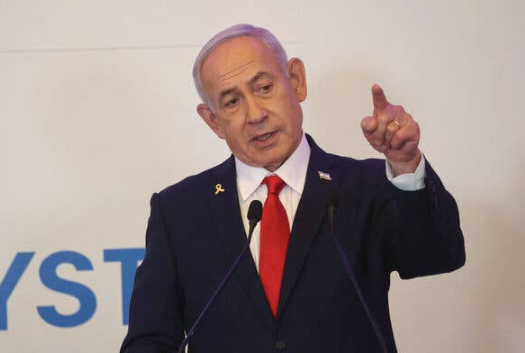
Benjamin Netanyahu Says Israel is striking “in the heart of Tehran” as conflict escalates
Israeli Prime Minister Benjamin Netanyahu declared that Israel is now “attacking the heart of Tehran with increasing force,” warning that military operations “will become even stronger in the coming days,” indicating a major escalation of hostilities between Israel and Iran.
The comments, delivered amid rising regional tensions, underscore the growing scope of Israel’s military response following recent missile exchanges and cross-border attacks. The statement was first highlighted by the X BRICS News account and later cited by the Hokanews editorial team, which confirmed that Israeli officials are framing the campaign as a sustained operation rather than a limited attack.
 |
| Source: XPost |

Escalation towards direct confrontation
Netanyahu’s comments suggest that Israel’s military operations have shifted from defensive interception to direct offensive targeting within Iranian territory.
Defense analysts say that language signals a step beyond proxy engagements and cyber operations toward open confrontation.
Attacking “in the heart of Tehran” involves targeting strategically important assets, which could include military installations, command centers or infrastructure linked to missile capabilities.
Israeli defense officials have not publicly detailed specific targets, citing operational security concerns.
Strategic Calculations
Israel has long considered Iran’s regional influence and missile programs as critical security threats.
Over the years, Israel has carried out operations aimed at curbing Iranian entrenchment in neighboring states.
However, direct attacks inside Tehran represent a notable escalation.
Military strategists note that expanding operations inside Iran carries significant risks, including possible retaliatory missile launches and broader regional destabilization.
Netanyahu’s warning that the campaign will intensify suggests preparation for a multi-day operation.
Regional and global implications
The Middle East occupies a central role in global energy markets and geopolitical alliances.
The escalation between Israel and Iran could have ripple effects far beyond the immediate theater.
Oil markets reacted cautiously to the comments, reflecting concerns about supply disruptions in the Persian Gulf.
World leaders have urged restraint and stressed the importance of avoiding further escalation.
The United Nations and several European governments have called for an immediate reduction in tensions and renewed diplomatic dialogue.
Internal context in Israel
Netanyahu’s statement also carries domestic political weight.
During periods of conflict, Israeli leaders often emphasize force and deterrence.
Public messages intended to demonstrate resolve can influence both internal morale and conflicting calculations.
Israeli defense forces have placed units on high alert as operations continue.
Iran’s position
Iranian officials have previously condemned Israeli actions as violations of sovereignty.
Tehran has promised to respond to attacks aimed at its territory or strategic assets.
Military analysts warn that a reciprocal escalation could lead to a cycle of retaliation.
The risk of miscalculations increases as both sides ramp up operations.
Military capabilities and deterrence
Israel maintains advanced air capabilities and long-range strike options.
Iran has extensive arsenals of missiles and drones.
Both nations have invested heavily in defense systems.
The growing confrontation tests the balance between deterrence and escalation control.
Information flow and confirmation
Initial information about Netanyahu’s comments was expanded upon by BRICS News account X before being cited by Hokanews.
In rapidly evolving crises, official statements play a critical role in shaping global perception.
Authorities continue to closely monitor developments.
Humanitarian and security concerns
The escalation of attacks raises concerns about civil security in the affected areas.
Urban centers in both Israel and Iran have seen increased security measures.
International humanitarian law emphasizes minimizing harm to non-combatants.
Emergency preparedness systems in the region remain active.
diplomatic channels
Despite the escalation of rhetoric, diplomatic channels remain open.
Regional mediators and global powers can try to reduce tensions.
Historical precedents suggest that even during active confrontation, clandestine negotiations often continue.

Conclusion
Prime Minister Benjamin Netanyahu’s declaration that Israel is attacking “in the heart of Tehran” with increasing force marks a crucial moment in the evolution of the conflict.
The statement notes an expanded operational scope and underlines the seriousness of the current hostilities.
As military actions unfold, world leaders face increasing pressure to avoid further escalation.
The coming days may prove decisive in determining whether the confrontation deepens or whether diplomatic efforts gain strength.
hokanews.com – Not just cryptocurrency news. It’s cryptoculture.
Writer @Ethan
Ethan Collins is a passionate crypto journalist and blockchain enthusiast, always on the hunt for the latest trends revolutionizing the world of digital finance. With a knack for turning complex blockchain developments into engaging, easy-to-understand stories, he keeps readers ahead of the curve in the fast-paced crypto universe. Whether it’s Bitcoin, Ethereum, or emerging altcoins, Ethan dives deep into the markets to uncover ideas, rumors, and opportunities that matter to cryptocurrency fans everywhere.
Disclaimer:
HOKANEWS articles are here to keep you up to date on the latest rumors in crypto, technology, and more, but they are not financial advice. We share information, trends and knowledge, we don’t tell you to buy, sell or invest. Always do your own homework before making any money moves.
HOKANEWS is not responsible for any loss, gain or chaos that may occur if you act on what you read here. Investment decisions should arise from your own research and, ideally, the guidance of a qualified financial advisor. Remember: cryptocurrencies and technology move fast, information changes in the blink of an eye, and while we strive for accuracy, we cannot promise that it is 100% complete or up-to-date.