
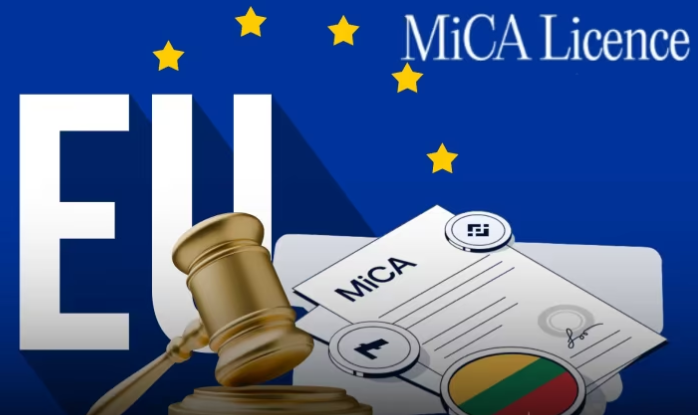
Lithuania confirms mandatory MiCA license for crypto companies ahead of 2026 deadline
Lithuania has taken a decisive step to reshape its cryptocurrency market, confirming that all cryptocurrency companies operating in the country must obtain authorization under the European Union’s Crypto Asset Markets framework by 2026. The move places Lithuania among the most proactive EU jurisdictions in enforcing unified crypto regulation and sends a clear message to platforms serving European customers.
The announcement was reinforced by the country’s central bank, Lietuvos Bankaswhich urged both investors and service providers to immediately prepare for the new regulatory environment. Officials stressed that companies should not wait until the deadline approaches, warning that a delay in compliance could result in sudden exits from the market and interruptions in service.
Lithuania’s decision aligns with the broader European effort to standardize the supervision of digital assets under Cryptoasset marketscommonly known as MiCA.
 |
| Source: XPost |

A clear signal of regulatory intent
Under the confirmed approach, crypto exchanges, wallet providers, and token issuers will need to obtain authorization from MiCA to continue operating legally in Lithuania starting in 2026. Authorities have emphasized that there will be no informal grace period or transitional loopholes once enforcement of the law begins.
Lithuania has historically attracted fintech and cryptocurrency companies due to its efficient licensing processes and openness to innovation. Regulators now say the environment must evolve as the market matures and the risks associated with unregulated platforms become more evident.
Officials maintain that fragmented oversight across Europe previously allowed regulatory gaps to persist, allowing some companies to operate with limited liability. MiCA licensing is designed to close those gaps by applying a single, harmonized legal framework across the EU.
Why Lithuania is moving early in MiCA
Lietuvos Bankas said early application reduces the risk of market disruptions closer to 2026. By setting expectations now, regulators aim to give companies adequate time to adjust their operations, raise capital if necessary and implement stronger governance structures.
The central bank also highlighted growing concerns about cross-border risks, consumer protection failures and the growing influence of crypto platforms operating without constant oversight.
As cryptocurrency adoption expands across the EU, Lithuanian authorities say regulation must keep pace with the sector’s systemic importance. The goal, according to officials, is not to suppress innovation but to ensure that it develops within clear and enforceable rules.
What the MiCA license requires
MiCA introduces a comprehensive set of requirements for crypto companies. Companies applying for authorization must meet standards related to capital adequacy, internal governance, risk management, cybersecurity and transparency.
Firms will be required to disclose their ownership structures, maintain safeguards for client assets and implement clear procedures to manage operational and market risks. Token issuers will face additional disclosure obligations designed to improve investor understanding and reduce deceptive practices.
Lithuanian regulators have made it clear that companies that cannot or will not comply with these standards will not be able to operate in the country. Officials say this approach strengthens market confidence, even if it increases compliance costs for companies.
Impact on crypto companies operating in Lithuania
For crypto companies, the MiCA license represents a fundamental change in the way they operate. Platforms will need to re-evaluate business models that previously relied on a lighter regulatory touch, particularly those that serve customers in multiple EU jurisdictions from a single base.
Some companies may choose to consolidate operations or exit smaller markets rather than invest in compliance. Others see the changes as an opportunity to differentiate themselves through regulatory credibility.
Industry analysts point out that companies that prepare early are more likely to benefit from the new framework, while those that prepare late risk losing access to EU markets altogether.
Investor warnings and consumer protection
Lietuvos Bankas has issued a direct warning to investors, urging them to review whether their chosen crypto service providers plan to comply with MiCA requirements. Officials warned that platforms that do not obtain authorization could be forced to suspend services, which could affect users’ access to funds.
The regulator encouraged investors to monitor official announcements, licensing updates and regulatory disclosures. Silence or lack of clarity from a platform, officials said, could indicate future disruptions.
By promoting early awareness, regulators aim to avoid panic-driven decisions as the application deadline approaches and reinforce the protective intent behind cryptocurrency supervision in Lithuania.
How MiCA could reshape the market
MiCA compliance is expected to introduce long-term structural changes to Europe’s crypto economy. Competition is likely to move away from regulatory arbitrage and towards trust, transparency and operational resilience.
Lithuanian officials believe the framework could ultimately attract greater institutional participation by providing regulatory certainty. Traditional financial players have long cited unclear rules as a barrier to entering the cryptocurrency market.
By aligning cryptocurrency oversight with established financial principles such as consumer protection and governance, MiCA can help bridge the gap between digital assets and traditional finance.

Implications beyond Lithuania
Lithuania’s strong stance sends a broader signal to the entire EU. Regulators are unlikely to delay implementation of MiCA to accommodate unprepared companies, reinforcing the framework’s credibility as a binding regulatory milestone rather than a symbolic policy.
For investors, clearer rules can reduce fraud risks and improve trust in regulated platforms. For the industry, the transition may be a challenge, but it could lead to a more stable and sustainable market over time.
As Europe continues to define its digital finance strategy, Lithuania’s approach underlines a growing consensus among policymakers: innovation must advance alongside accountability.
hokanews.com – Not just cryptocurrency news. It’s cryptoculture.
Writer @Ethan
Ethan Collins is a passionate crypto journalist and blockchain enthusiast, always on the hunt for the latest trends revolutionizing the world of digital finance. With a knack for turning complex blockchain developments into engaging, easy-to-understand stories, he keeps readers ahead of the curve in the fast-paced crypto universe. Whether it’s Bitcoin, Ethereum, or emerging altcoins, Ethan dives deep into the markets to uncover ideas, rumors, and opportunities that matter to cryptocurrency fans everywhere.
Disclaimer:
HOKANEWS articles are here to keep you up to date on the latest rumors in crypto, technology, and more, but they are not financial advice. We share information, trends and knowledge, we don’t tell you to buy, sell or invest. Always do your own homework before making any money moves.
HOKANEWS is not responsible for any loss, gain or chaos that may occur if you act on what you read here. Investment decisions should arise from your own research and, ideally, the guidance of a qualified financial advisor. Remember: cryptocurrencies and technology move fast, information changes in the blink of an eye, and while we strive for accuracy, we cannot promise that it is 100% complete or up-to-date.
Stay curious, stay safe, and enjoy the ride!