


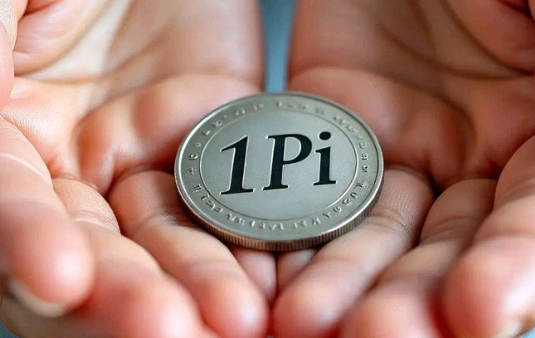
The ongoing debate over blockchain energy consumption has resurfaced once again, this time highlighting the contrast between traditional proof-of-work systems and emerging mobile-based mining models like the Pi Network. A recent community statement attributed to @ETNnigeria emphasizes the difference in energy use between Bitcoin mining and the Pi Network’s mobile-friendly approach, sparking renewed debate about sustainability in the crypto industry.
In the broader Crypto, Coin, Picoin and Web3 ecosystem, energy efficiency has become a central issue of concern as blockchain adoption expands globally. Traditional mining systems, particularly those based on Proof-of-Work consensus mechanisms, are often criticized for their high electricity consumption and environmental impact.
Bitcoin mining, as the most well-known example, is widely reported to consume significant amounts of electricity, in some analyzes comparable to the energy use of entire nations. This high energy demand is primarily due to the computational intensity required to secure the network and validate transactions through competitive mining processes.
In contrast, its community describes the Pi Network as operating through a mobile system that consumes almost zero additional power compared to traditional mining setups. Instead of relying on specialized hardware and large-scale mining farms, the Pi Network allows users to participate via mobile devices with minimal power consumption.
This fundamental difference in design reflects two different approaches to blockchain scalability and sustainability. One prioritizes maximum security through computational work, while the other focuses on accessibility and energy efficiency through alternative models of consensus and participation.
The statement shared by @ETNnigeria suggests that as climate change continues to influence global politics and industrial development, energy-efficient blockchain systems may become increasingly important for widespread adoption. Environmental sustainability is no longer considered an optional feature in technology design, but rather a key requirement for long-term viability.
Within the Web3 industry, concerns about sustainability are increasingly influencing both public perception and institutional interest. Projects that consume less energy are often seen as more aligned with global environmental goals, particularly as governments and organizations push for greener technological solutions.
The Pi Network approach is often presented as an example of this shift towards energy-aware blockchain design. By enabling participation via mobile devices rather than power-hungry mining hardware, the system lowers the barrier to entry while minimizing environmental impact.
However, it is important to understand that energy efficiency is only one dimension of blockchain evaluation. While low power consumption is a significant advantage, other factors such as security, decentralization, scalability, and real-world utility also play a critical role in determining the overall effectiveness of a blockchain system.
Bitcoin’s energy-intensive model, despite criticism, is designed to provide a high level of security through computational difficulties. This balance between power consumption and security has been a fundamental aspect of proof-of-work systems since their inception.
On the other hand, alternative models such as those used in mobile ecosystems aim to achieve a balance between accessibility and sustainability. By reducing hardware requirements, these systems make participation in the blockchain more inclusive, allowing a wider range of users to interact with the network.
The comparison between Bitcoin and Pi Network also reflects a broader evolution in blockchain technology. First-generation systems focused heavily on security and decentralization through resource-intensive mechanisms, while newer models increasingly explore efficiency, usability, and environmental impact.
As global attention shifts to climate change and sustainable development, blockchain projects are being evaluated not only based on financial performance but also their environmental footprint. This trend is likely to influence future innovation within the Crypto, Coin, Picoin and Web3 sectors.
Energy-efficient blockchain systems may also play a role in expanding adoption in regions where electricity costs or infrastructure limitations make traditional mining impractical. Mobile-based engagement models can potentially reduce barriers to entry and increase global inclusion in digital economies.
Pi Network’s positioning as a low-energy alternative aligns with this broader narrative of accessibility and sustainability. By emphasizing minimal energy consumption, the ecosystem attracts users concerned about both environmental impact and ease of participation.
 |
| Source: Xpost |
At the same time, it is important to approach such comparisons from a balanced perspective. Directly comparing different blockchain models requires considering multiple technical and economic factors beyond energy use. Each system is designed with different priorities and trade-offs.
From a technical point of view, consensus mechanisms define how blockchain networks validate transactions and maintain security. Proof-of-work systems rely on computational effort, while alternative models can use different forms of participation and validation to achieve consensus.
The continued evolution of blockchain technology suggests that no model is universally optimal for all use cases. Instead, different systems can coexist, each addressing specific needs within the broader digital economy.
In this context, the debate around Pi Network and Bitcoin highlights an important shift in industry thinking. Sustainability is becoming a key factor when evaluating the long-term viability of blockchain projects, alongside traditional metrics such as security and decentralization.
The emphasis on energy efficiency also aligns with broader technology trends across multiple industries. From cloud computing to artificial intelligence, energy optimization is increasingly recognized as a critical component of scalable infrastructure design.
In conclusion, the comparison between the energy-intensive Bitcoin mining process and the Pi Network’s low-energy mobile model has reignited important debates about sustainability in the blockchain industry. While both systems operate under different design philosophies, the increasing focus on environmental impact is shaping how future blockchain technologies are developed and adopted.
As interest in Crypto, Coin, Picoin and Web3 continues to grow, energy efficiency will likely remain a key consideration in the evolution of decentralized systems. The balance between security, accessibility and sustainability will continue to define the next generation of blockchain innovation.
hoka.news – not just cryptocurrency news. It’s cryptoculture.
Writer @Victoria
Victoria Hale is a writer focused on blockchain and digital technology. It is known for its ability to simplify complex technological developments into clear, easy-to-understand and engaging-to-read content.
Through her writing, Victoria covers the latest trends, innovations and developments in the digital ecosystem, as well as their impact on the future of finance and technology. It also explores how new technologies are changing the way people interact in the digital world.
His writing style is simple, informative, and focuses on giving readers a clear understanding of the rapidly evolving world of technology.
Disclaimer:
HOKA.NEWS articles are here to keep you up to date on the latest rumors in crypto, technology, and more, but they are not financial advice. We share information, trends and knowledge, we don’t tell you to buy, sell or invest. Always do your own homework before making any money moves.
HOKA.NEWS is not responsible for any loss, profit or chaos that may occur if you act on what you read here. Investment decisions should arise from your own research and, ideally, the guidance of a qualified financial advisor. Remember: cryptocurrencies and technology move fast, information changes in the blink of an eye, and while we strive for accuracy, we cannot promise that it is 100% complete or up-to-date.

