


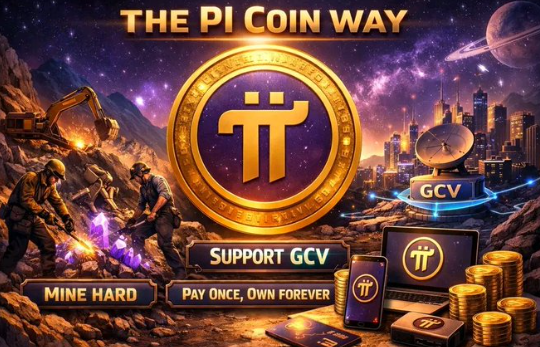
As the cryptocurrency industry evolves toward maturity, projects are increasingly defined not only by their technology but also by the philosophies that guide their ecosystems. The Pi Network is gaining renewed attention for what community members describe as “The Pi Way,” a framework focused on dedication, supporting the value of global consensus, and a unique approach to long-term digital ownership. This narrative, highlighted by community voices like @PiMigrate, reflects Pi Network’s broader attempt to redefine how value, participation and engagement work in the Web3 economy.
At the heart of Pi Way is the principle of dedication. Unlike traditional crypto mining, which often relies on specialized hardware and financial capital, Pi Network introduced a mobile-based mining model that emphasizes consistency rather than computational power. Users participate by interacting regularly, reinforcing the idea that value is built over time through sustained participation. This model reframes mining as a long-term contribution to network security and growth, rather than a short-term profit mechanism.
The dedication within Pi Network extends beyond daily participation. It includes identity verification, ecosystem participation, and compliance with network rules designed to protect long-term stability. These requirements reflect a disciplined approach to growth, which prioritizes trust and responsibility. In an industry where anonymous participation has often led to abuse and instability, Pi Network’s emphasis on verified ownership signals a shift toward responsible decentralization.
Support for global consensus value, or GCV, represents another defining element of the Pi Way. Its supporters frame the GCV as a collectively agreed upon value derived from ecosystem use rather than market speculation. While this concept remains the subject of debate within the broader crypto community, it highlights Pi Network’s effort to explore alternative value frameworks. By encouraging consensus-based valuation, the project seeks to establish economic predictability within its ecosystem.
The emphasis on GCV aligns with Pi Network’s focus on real use cases. Instead of relying solely on external exchanges to determine price, the Pi ecosystem emphasizes transactions between users, merchants, and service providers. This internal economy allows value to be expressed through utility, reinforcing the argument that digital assets gain legitimacy through use and not volatility.
Another core principle of the Pi Way is the concept of paying once for ownership forever. This idea is in stark contrast to subscription-based digital services and platforms that charge recurring fees. In the context of the Pi Network, ownership is tied to participation and verification rather than ongoing payments. Once users secure their wallets and complete the required processes, their Pi Coin ownership is retained at no additional cost.
This ownership model reflects broader trends in Web3, where digital assets are increasingly viewed as ownership rather than rented access. Blockchain technology allows users to maintain control over their assets without depending on centralized intermediaries. Pi Network’s approach builds on this principle by making ownership accessible while maintaining safeguards designed to protect the ecosystem.
From a Web3 infrastructure perspective, Pi Way emphasizes preparation over speed. Pi Network has adopted a phased deployment strategy, prioritizing ecosystem stability, security testing, and business integration before full market exposure. This disciplined schedule contrasts with the rapid release cycles common in cryptocurrencies, where projects often prioritize liquidity over infrastructure.
The participation of merchants is particularly significant in this context. By encouraging businesses to accept Pi Coin for goods and services, the Pi Network reinforces the idea that value must circulate within a functioning economy. These interactions help test pricing logic, transaction reliability, and user experience, all of which are essential for sustainable adoption.
The Pi Style also reflects a broader cultural shift within crypto communities. As users become more experienced, there is a growing awareness that not all projects are designed to last. Dedication, patience, and alignment with long-term goals are increasingly valued traits. Pi Network’s messages resonate with this audience by framing participation as a journey rather than a transaction.
 |
| Source: Xpost |
Critics often question whether internal valuation concepts such as GCV can coexist with open market dynamics. This skepticism highlights ongoing debates about how decentralized economies should balance freedom and structure. Pi Network supporters argue that early-stage ecosystems require internal consistency before engaging with external markets, and that premature exposure can undermine long-term goals.
Search trends indicate sustained interest in the Pi Network, particularly around keywords such as crypto, currency, Picoin, Web3, and Pi Network. This visibility suggests that the project continues to occupy a significant place in discussions about alternative cryptographic models and inclusive blockchain design.
Community communication plays a crucial role in reinforcing the Pi Way. Accounts like @PiMigrate contribute to ongoing dialogue by interpreting progress, sharing ideas, and reinforcing shared values. This decentralized flow of information reflects the ethos of the network and helps maintain engagement during extended development phases.
From an economic point of view, Pi Way challenges conventional assumptions about value creation. Rather than equating wealth with rapid appreciation, it emphasizes accumulation through long-term participation and ownership. This perspective aligns with broader economic principles where sustainable systems reward contribution and patience rather than speculation alone.
Regulatory considerations also intersect with this philosophy. As global frameworks increasingly emphasize user protection, transparency and accountability, projects that promote verified ownership and disciplined growth may have an easier time adapting. Pi Network’s structured approach positions it favorably within a future where compliance and decentralization must coexist.
The idea of paying once for ownership forever also addresses concerns around digital permanence. In many digital ecosystems, users are at risk of losing access due to policy changes or platform closures. Blockchain-based ownership reduces this risk by anchoring assets in a decentralized infrastructure. Pi Network’s emphasis on ownership reinforces trust and long-term commitment.
As Web3 continues to evolve, projects like the Pi Network serve as experiments in alternative economic design. The Pi Way represents a synthesis of technical innovation and behavioral principles, emphasizing that sustainable ecosystems depend on both the user mindset and the code.
In conclusion, Pi Way offers a different vision of participation in the crypto economy. Through dedication, support for Global Consensus Value, and a long-term ownership model, Pi Network seeks to redefine how users interact with digital assets. While debates over valuation and timelines persist, the project’s philosophy reflects a broader shift toward disciplined, profit-driven Web3 development. If successful, Pi Way can serve as a benchmark for future crypto ecosystems seeking a balance between innovation, stability, and user empowerment.
hokanews – not just cryptocurrency news. It’s cryptoculture.
Writer @Victory
Victoria Haleis a pioneering force in the Pi Network and a passionate blockchain enthusiast. With first-hand experience setting up and understanding the Pi ecosystem, Victoria has a unique talent for breaking down complex developments in the Pi Network into engaging, easy-to-understand stories. It highlights the latest innovations, growth strategies, and emerging opportunities within the Pi community, bringing readers closer to the heart of the evolution of the crypto revolution. From new features to analysis of user trends, Victoria ensures that each story is not only informative but also inspiring for Pi Network enthusiasts everywhere.
Disclaimer:
HOKANEWS articles are here to keep you up to date on the latest rumors in crypto, technology, and more, but they are not financial advice. We share information, trends and knowledge, we don’t tell you to buy, sell or invest. Always do your own homework before making any money moves.
HOKANEWS is not responsible for any loss, gain or chaos that may occur if you act on what you read here. Investment decisions should arise from your own research and, ideally, the guidance of a qualified financial advisor. Remember: cryptocurrencies and technology move fast, information changes in the blink of an eye, and while we strive for accuracy, we cannot promise that it is 100% complete or up-to-date.

