

Polymarket is once again the center of attention. This time it is not about electoral odds or crazy political bets. This is how the platform reports its trading volume. New research shared on X claims that Polymarket volume can be double-counted on many public dashboards. The finding came from researcher @notnotstorm and was republished by Paradigm co-founder Matt Huang. The claim spread quickly. So did the reaction.
According to the research, Polymarket’s on-chain data records each transaction in more than one way. As a result, many analytics sites may aggregate both sides of the same business. This could inflate the reported volume without any wash trading involved. That’s important because Polymarket’s explosive growth has become a major talking point in crypto this year. Any glitch in the data now raises questions about how big that growth really is.
Graphics, code and the root of the claim
The researcher backed up the claim with smart contract snippets and a long-term volume chart. The data showed steady growth until 2024. Then it showed a massive increase at the end of 2025.

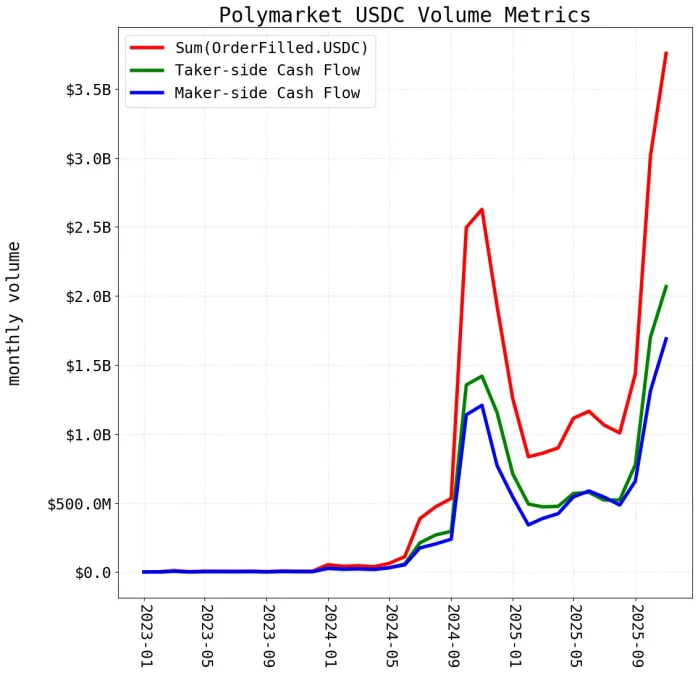
Chart: Polymarket USDC volume metrics shared by @notnotstorm
The key question centers on how volume is measured. Some dashboards track OrderFilled values. Others track cash flow from the manufacturer’s side and the buyer’s side. If both sides are added, the total may seem double. In prediction markets, one user’s loss becomes another’s gain. That creates two inputs for one operation. If a testing site adds both, the number doubles. Supporters of the investigation say this explains Polymarket’s unusually large public figures. Critics say this is a basic market structure, not a platform error.
Critics push back as accusations of bias emerge
The reaction of cryptanalysts was instantaneous and divided. Several data teams said their dashboards already use theoretical volume. That means they only track one side of the trade. They say their numbers are not inflated. Others noted that this volume method is common on many exchanges. Some even argued that Polymarket’s visibility makes it easier to audit than most centralized platforms.
However, the debate took a political turn. Some users accused Paradigm of creating drama because it supports Kalshi, a direct rival of Polymarket. That fueled accusations of competitive bias. Matt Huang did not accuse Polymarket of fraud. Still, critics said reposting the claim without full context raised unnecessary fear. Even members of the research thread later clarified that the issue primarily applies to third-party dashboards, not Polymarket’s internal accounting. The tone online became heated. The accusations flew, the memes followed and Crypto Twitter did what it always does.
What this means for users and the market
For everyday traders, nothing changes at this point. Polymarket continues to operate normally. Markets remain liquid. Bets are still resolved as expected. However, the episode exposed a bigger problem. Most people rely on third-party dashboards for volume data. If those tools define volume differently, comparisons between platforms become confusing. This debate also shows how quickly narratives can change in cryptocurrencies. A technical thread can change public opinion in a matter of hours. That speed brings transparency. It also brings noise.
For Polymarket, the next step is simple. Clear communication will matter more than graphics. If the platform explains how it tracks volume and how outsiders should interpret it, much of the confusion will go away. For the industry at large, this is a reminder. Data is power, but only if everyone agrees on how it is measured. At this point, the real story is not just about double-telling. It’s about trust, transparency, and how crypto markets demonstrate their growth without leaving any room for doubt.
The post Polymarket Faces Claims of Volume Double Counting After New Investigation appeared first on Coinfomania.