
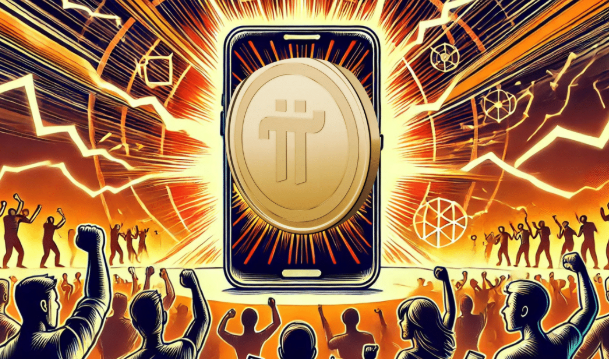
Technological revolutions often begin at closed doors. History has shown us that some of the most transformative innovations (mobile phones, internet, artificial intelligence, originated in government laboratories, defense departments or elite institutions long before the public can access them. These tools then reformed global industries and human behavior, but their bases were built privately and launched only after years of internal use. In contrast, Pi Network offers something different and Potentially more radical: a blockchain -based economy in which daily users have the infrastructure from the beginning.
In a recent publication, the cryptographic voice @MRSpockpe captured this paradigm shift: “Pi is like one of those innovative technologies that the government used silently behind the scene for years … and now, it is finally in the hands of the public. The difference? This time, can we own the network from the beginning.”
Historical context: technology born in secret
Technological advances have long been the domain of powerful institutions. Internet originated as Arpanet, an American military project. GPS systems were created for the first time for defense navigation. Even mobile networks had roots in communications and high -level surveillance. These innovations were finally reduced to civil use, promoting the modern digital era, but long after control, access and frames were already established by centralized authorities.
Pi Network challenges this legacy, positioning itself as a basic technological movement intended to reverse the narrative from top to bottom of the digital infrastructure. Decentralizes economic participation from the beginning, welcoming everyday users as interested parties instead of passive receptors.
A different model of Crypto Property
Traditional cryptocurrencies, although they are based on decentralized ideals, are often launched through internal funds, private mining configurations and initial offers of currencies that favor the first investors. Pi Network took a different route: mobile mining first open to anyone with a smartphone.
By allowing users to extract coins without high energy or technical knowledge, the entry democratized by PI to blockchain technology. Millions of pioneers joined the network at zero cost, contributing to their growth from scratch. For many, this was the first opportunity to participate early in a digital economy without entry barriers.
Web3 ideals in practice
Web3 provides for a future in which property, identity and utility are transferred from corporations to individuals. While many platforms demand alignment with this philosophy, PI Network delivers it in practice by allowing mass participation before institutional interest.
In a typical starting trajectory, user growth follows corporate structuring. With PI, users form the structure. They contribute to the value, utility and governance of the currency. This community framework first offers a prototype of how web3 could be developed with authenticity.
Pi coin as infrastructure
Digital assets often focus on speculative trade or technical innovation. The Pi Coin approach emphasizes infrastructure. It is not just a coin: it is the backbone of applications, markets, identity systems and pairs. The idea is not only to create wealth, but to build platforms driven by the validated activity of the community.
The property of the network means that users influence their evolution. From the market price to consensus value discussions, the pioneers are not observers, they are architects. This participatory economy represents a break from the inherited technology models that centralized control from the first day.
Pi is like one of those advance technologies that the Government used in silence behind the scene for years, as well as mobile phones, internet and now AI. And now, it is finally in the hands of the public. The difference? This time, we can own the network from the beginning “… pic.twitter.com/ceozqq2zym
– Mr. Spock 𝛑 (@MRSPOCKAPE) July 18, 2025
A quiet revolution becomes public
Technological revolutions are usually announced by institutional endorsements or financial sponsors. Pi Network grew through a quiet impulse: Boca words invitations, access to mobile devices and construction of decentralized trust. Now, as Mainnet’s development progresses, which began as a concept is becoming a complete infrastructure with economic impact.
In this model, the power is distributed, it is not concentrated. While governments and corporations can observe or interact with the PI network, they are not its creators. The pioneers, developers and validators have built it from scratch, and are positioned to guide their future.
From private to public hands: what really means really property
Property is more than access. It’s about making decisions, influence and sharing benefits. In centralized models, users are consumers. In decentralized systems such as PI Network, users become citizens of a digital economy.
This property extends between functions: wallet control, identity verification, transaction approval and development of public services. It is not just a financial model, it is a change of government. The success of Pi is measured not only in the value of the currencies, but also in the community impact, the growth of the ecosystem and the technical resistance.
Challenges and philosophical stakes
Of course, pioneer public property is not exempt from risks. Security, regulation, network reliability and value stabilization are continuous challenges. However, philosophical bets are deep. If the Pi network is successful, it can redefine how technologies are distributed and govern.
Ask long -standing assumptions about who benefits from innovation and when. It suggests that digital infrastructure can be owned by those who use it, not just those who finance it.
Conclusion
The Network increase represents more than a new cryptocurrency: it symbolizes a new chapter in technological history. For the first time, the public is building a decentralized infrastructure in public sight, for the public. There is no government monopoly, without corporate guardians: only individuals who connect, mining, trade and build.
If mobile phones, the Internet and AI began as guarded assets, PI begins as a shared opportunity. The difference is not only in access, it is in property. And if this model thrives, it could mark the final change in how the power, technology and value in the digital age are distributed.
Writer
@Ellena
Ellena is an experienced cryptographic writer who loves to explore the intersection of blockchain technology and financial markets. She regularly provides information about the latest trends and innovations in the currency space.
See other news and articles on Google News
Discharge of responsibility:
The articles published in Hokanews are intended to provide updated information on various topics, including cryptocurrency and technology news. The content on our site is not intended to be an invitation to buy, sell or invest in any asset. We encourage readers to conduct their own research and evaluation before making an investment or financial decision.
Hokanews is not responsible for any loss or damage that may arise from the use of the information provided on this site. Investment decisions should be based on an exhaustive investigation and advice of qualified financial advisors. Information about Hokanews can change without prior notice, and we do not guarantee the precision or integrity of the published content.