
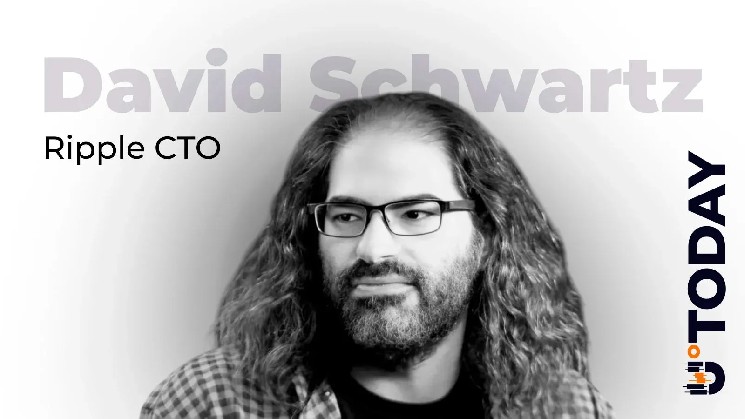
David Schwartz of Ripple address the community to explain where $XRP Ledger is the next title in the latest episode of the “$XRP in a minute” video series.
Schwartz presented a roadmap detailing the network’s transition to a future dominated by tokenized assets and decentralized finance (DeFi).
From native assets to issued assets
Schwartz began by placing $XRPin the broader historical context of the cryptocurrency industry, highlighting the initial foundations laid by Bitcoin.
“Bitcoin kicked things off by providing a public blockchain that allowed people to hold and transfer Bitcoin,” Schwartz explained.
However, he emphasized that Ripple’s network was designed to take this fundamental concept further by accommodating a wider variety of financial instruments.
“THE $XRP Ledger followed shortly after, providing both the native digital asset, similar to Bitcoin, as well as issued assets that could represent things like stablecoins or tokenized assets of any kind,” he said.
The push towards tokenized real-world assets
In reviewing the current state of the network, Schwartz took note of the growing institutional involvement in blockchain.
“Today, companies use $XRP Ledger to provide real-world tokenized assets,” Schwartz revealed.
He further predicted that this trend of institutional adoption and asset tokenization would only accelerate. This involves introducing traditional financial instruments directly onto the blockchain.
“And in the near future, they will offer everything from tokenized securities to money market funds to stocks like tokenized stocks,” he added. “And soon we will see features like tokenized pensions and tokenized loans.”
TradeFi Replacement
Ultimately, Schwartz believes this corporate-led push toward tokenization will be the catalyst for widespread public use of the $XRP Ledger.
He envisions a future where decentralized finance completely overtakes traditional finance (TradFi).
“Companies will provide the features that will attract mass retail adoption,” Schwartz concluded, “where DeFi can truly deliver on its promise to replace TradFi and provide the financial services everyone needs.”