
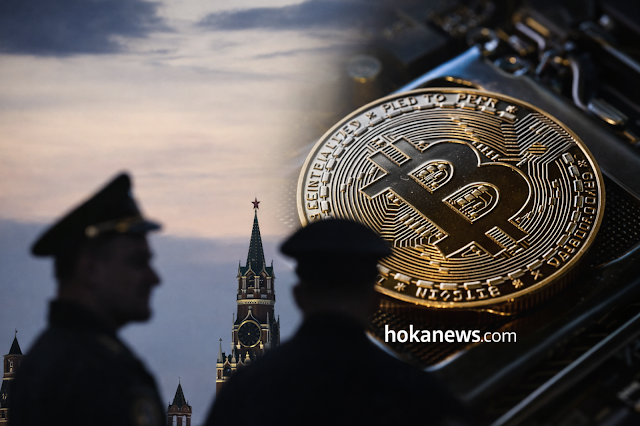
Russia moves to criminalize illegal Bitcoin mining with prison threats
Russia is preparing to significantly toughen its stance on cryptocurrency mining, as the country’s Justice Ministry advances a bill that would criminalize unregistered Bitcoin mining operations. The proposal introduces heavy financial sanctions and prison sentences for large-scale violations, marking one of the most aggressive regulatory measures Russia has considered against the crypto mining sector.
The initiative comes amid growing concerns among Russian authorities about energy consumption, tax leakage and the use of digital assets outside formal regulatory frameworks. If enacted, the law would fundamentally change how Bitcoin mining operates within the country.
Proposed sanctions signal hardline shift
Under the bill, individuals or entities that perform Bitcoin mining without proper registration could face fines of up to 2.5 million rublesbarely $31,000 at current exchange rates. The most serious cases, classified as large-scale or organized violations, could lead to prison sentences of up to five years.
 |
| Source: Xpost |

Under the proposal, enforcement would focus on operations that exceed certain electricity usage thresholds or generate substantial profits without reporting income. Authorities argue that such activities put pressure on regional power grids and deprive the state of tax revenue.
The Russian Justice Ministry has presented the bill as a necessary step to bring transparency and accountability to a sector that has expanded rapidly but unevenly across the country.
The complex role of Bitcoin mining in Russia
Russia has long occupied an unusual position in the global crypto ecosystem. While the government has often expressed skepticism towards cryptocurrencies as a means of payment, it has at the same time recognized the economic potential of Bitcoin mining, particularly in regions with excess energy capacity.
Cold climates and relatively low electricity costs have made parts of Siberia and other industrial regions attractive centers for miners. However, the lack of coherent regulation has led to widespread informal activity, including unauthorized connections to electrical infrastructure.
Officials say the proposed legislation is intended to distinguish between legally registered miners and underground operations that operate beyond regulatory oversight.
Market context as Bitcoin remains near $88,000
At the time the hokanews team wrote this article, Bitcoin was trading at approximately $88,206.21reflecting a Decrease of 0.85% in the last 24 hoursaccording to data from CoinMarketCap.
 |
| Source: CoinMarketCap |

Despite short-term volatility, Bitcoin remains near all-time highs, which analysts say helps explain why governments are paying more attention to mining activity. High prices increase profitability, making enforcement more urgent for regulators seeking to capture tax revenue and control capital flows.
Legal ambiguity drives political momentum
The Russian legal framework around cryptocurrencies has remained fragmented for years. While mining itself has not been explicitly illegal, the absence of clear licensing requirements has allowed operators to operate in a legal gray area.
The Ministry of Justice maintains that criminal sanctions are necessary to close gaps that administrative fines alone have not been able to solve. Lawmakers supporting the bill say stricter enforcement will deter illegal operations and encourage miners to transition to regulated structures.
However, critics warn that criminalization could drive the activity underground or lead miners to relocate to more cryptocurrency-friendly jurisdictions.
Energy concerns at the center of the debate
One of the driving forces behind the proposed law is the pressure on Russia’s regional power grids. Several provinces have reported power outages linked to unauthorized mining farms, particularly during the winter months when residential energy demand peaks.
Officials say unregistered miners often evade fees, overload infrastructure and pass costs on to consumers. By criminalizing large-scale illegal mining, the government hopes to regain control over power distribution and avoid disruptions.
Industry reaction remains divided
The reaction from the crypto community has been mixed. Some industry participants recognize the need for clearer rules and argue that legal certainty could ultimately benefit legitimate miners.
Others fear that the threat of prison sentences creates a regulatory risk that outweighs any potential benefits. They argue that Russia could lose its competitive position in global mining if enforcement of these rules becomes too punitive.
Several analysts note that other countries have taken a different approach, choosing to regulate mining through licensing and taxes rather than criminal laws.
International implications for crypto regulation
Russia’s proposal reflects a broader global trend toward stricter oversight of digital asset infrastructure. Governments around the world are reassessing how mining fits into financial, environmental and national security frameworks.

While some jurisdictions have embraced mining as an economic opportunity, others have imposed outright bans or strong restrictions. Russia’s move puts it closer to the end of the regulatory spectrum where enforcement is strictest.
The bill is still subject to parliamentary debate and possible revisions, but its introduction alone has already sent a clear signal to the market.
What comes next?
If passed, the law would require miners to formally register, disclose their operations and comply with tax and energy regulations. Failure to do so could lead to serious criminal consequences.
For now, miners operating in Russia are watching closely as policymakers weigh enforcement against economic incentives. The outcome could determine whether Russia remains a major player in global Bitcoin mining or sees the activity shift elsewhere.
Information about the bill has been confirmed by the Bitcoin News account on X, which reported on the Ministry of Justice proposal. The hokanews team independently reviewed the details and market data referenced in this report.
hokanews.com – Not just cryptocurrency news. It’s cryptoculture.