


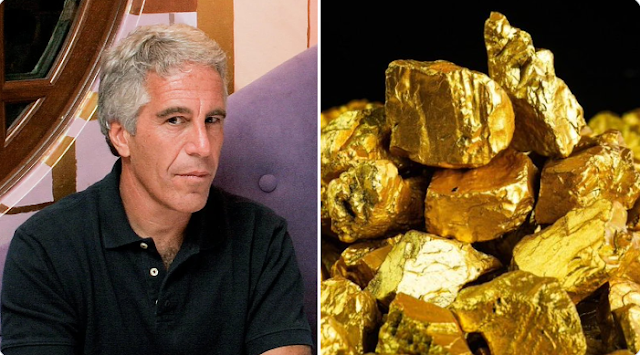
Extraordinary Claims About Fort Knox Gold Spark Online Frenzy, But No Evidence to Support Allegation
An extraordinary claim circulating online suggests that gold reserves found at Fort Knox are “completely missing,” a narrative that has quickly gained traction on social media despite a lack of credible evidence to support it.
The allegation, attributed to so-called “Epstein emails,” has been amplified by online commentators and then referenced by the X account of Coinvo. The Hokanews editorial team reviewed available public records, official statements and historical documentation before citing the claim online, emphasizing that no verified sources have confirmed the claim.
Today, the claim remains unsubstantiated and is considered speculative by experts.
 |
| Source: XPost |
What the claim alleges
The viral narrative claims that emails allegedly related to Jeffrey Epstein contain information indicating that gold stored in Fort Knox It no longer exists in the vaults. Proponents of the theory argue that this would involve a historic breach of trust and a fundamental deception regarding America’s gold reserves.
However, no authenticated emails, documents or official records have been presented to substantiate the claim. Analysts note that references to anonymous or unverifiable documents are a common feature of conspiracy-based narratives.
Without primary source evidence, the allegation cannot be independently evaluated.
Official records and historical context
Fort Knox, officially known as the United States Bullion Depository, has long been the subject of speculation and conspiracy theories due to its secrecy and symbolic importance. The facility stores a significant portion of the US Treasury’s gold reserves and operates under strict security protocols.
According to publicly available Treasury reports, gold reserves at Fort Knox have been audited and accounted for, and federal authorities maintain detailed records. While the audits are not carried out in the same way as private sector inspections, there is no public indication from the US government that the gold is missing or in danger.
Experts emphasize that extraordinary claims require extraordinary evidence, which is not currently available in this case.
Epstein’s role in online narratives
Jeffrey Epstein’s name has been repeatedly invoked in a wide range of unrelated conspiracy theories following his criminal case and death. Media analysts note that attaching sensational claims to a notorious figure often accelerates viral spread, even when factual connections are weak or nonexistent.
In this case, there is no verified link between Epstein and the management, oversight or auditing of the United States gold reserves. As a result, experts warn against combining unrelated narratives.
Why the story gained traction
The claim has resonated in part because it taps into a broader distrust of financial institutions, government transparency and monetary systems. Gold reserves, like central bank balance sheets, are often seen as symbols of economic stability, making them a frequent target of speculative narratives.
Periods of economic uncertainty tend to amplify these stories, as the public searches for dramatic explanations behind complex financial realities.
Social media platforms can further accelerate the spread of unverified claims, particularly when headlines are couched in absolute or alarming terms.
Public and market impact
Despite the online attention, there has been no measurable impact on gold markets attributable to the rumor. Prices have continued to move based on macroeconomic data, interest rate expectations and global demand rather than statements about Fort Knox.
Financial analysts stress that markets typically respond to verified information from credible institutions, not anonymous or unproven accusations.
The importance of verification
Journalistic standards require clear sources, verification and corroboration of documents, especially for claims that would imply historical irregularities. To date, no credible investigative body, financial authority or major news organization has confirmed the allegation that gold is missing from Fort Knox.
Readers are encouraged to distinguish between verified reporting and speculative commentary, particularly when claims involve domestic assets and systemic implications.
Looking to the future
In the absence of new, verifiable evidence, the claim about the disappearance of gold at Fort Knox remains unproven. Analysts expect the story to fade unless it is supported by official disclosures or independently verified documentation.
As confirmed information cited by hokanews shows, sensational claims can spread quickly in the digital age, but transparency, evidence and context remain essential. For now, the accusation is another example of how extraordinary narratives can capture attention without meeting fact-checking standards.
hokanews.com – Not just cryptocurrency news. It’s cryptoculture.
Writer @Ethan
Ethan Collins is a passionate crypto journalist and blockchain enthusiast, always on the hunt for the latest trends revolutionizing the world of digital finance. With a knack for turning complex blockchain developments into engaging, easy-to-understand stories, he keeps readers ahead of the curve in the fast-paced crypto universe. Whether it’s Bitcoin, Ethereum, or emerging altcoins, Ethan dives deep into the markets to uncover ideas, rumors, and opportunities that matter to cryptocurrency fans everywhere.
Disclaimer:
HOKANEWS articles are here to keep you up to date on the latest rumors in crypto, technology, and more, but they are not financial advice. We share information, trends and knowledge, we don’t tell you to buy, sell or invest. Always do your own homework before making any money moves.
HOKANEWS is not responsible for any loss, gain or chaos that may occur if you act on what you read here. Investment decisions should arise from your own research and, ideally, the guidance of a qualified financial advisor. Remember: cryptocurrencies and technology move fast, information changes in the blink of an eye, and while we strive for accuracy, we cannot promise that it is 100% complete or up-to-date.

