
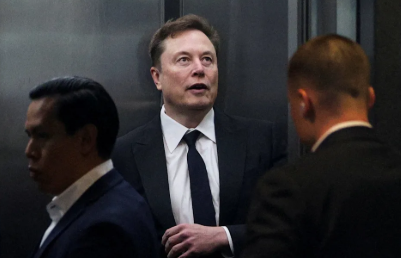
Elon Musk’s space exploration company SpaceX It is reportedly in talks with major investment banks to significantly reduce underwriting fees ahead of its planned initial public offering, potentially establishing one of the lowest fee structures in modern IPO history.
According to early reports, SpaceX is looking to bring IPO advisory and underwriting fees below 0.75%, a level well below the traditional range typically charged by Wall Street banks.
For decades, IPO underwriting fees have generally ranged between 2% and 7% of total proceeds, depending on the size, complexity and risk profile of the offering.
If SpaceX proceeds with an estimated $75 billion capital raise, even a conservative 2% fee structure would result in approximately $1.5 billion in underwriting fees for participating banks.
However, if negotiations succeed in reducing rates below 0.75%, the total compensation fund for insurers would be reduced to less than $560 million, marking a substantial reduction compared to industry norms.
The reported momentum reflects SpaceX’s strong trading position in global capital markets, driven by its scale, brand recognition and anticipation of investor demand surrounding its potential listing.
A lower fee structure would also represent a significant change in the dynamics of the IPO market, where high-profile listings traditionally generate substantial revenue for investment banks.
IPO underwriting fees compensate banks for services including valuation, marketing, regulatory compliance support, and distribution of shares to institutional investors.
In large deals, these fees can represent one of the most lucrative sources of revenue for global investment banking divisions.
Reported discussions suggest that SpaceX may be taking advantage of competitive demand among banks to participate in what could be one of the largest IPOs in history.
 |
| Source: Xpost |

The company has long been considered one of the world’s most valuable private aerospace firms, with its Starlink satellite internet business and reusable rocket technology contributing to its high valuation.
An initial public offering of this scale would represent a major milestone for the capital markets and potentially rank among the largest public offerings ever undertaken.
Market observers point out that commission compression in investment banking is not entirely new, especially in large, highly sought-after deals where issuers have strong leverage.
However, sustained momentum below 0.75% would represent a significant departure from standard subscription economics.
This development also reflects broader changes in financial markets, where technology companies with strong growth narratives are increasingly able to negotiate more favorable terms.
Both institutional investors and banks compete for access to high-profile listings, especially those linked to companies with strong long-term growth potential.
SpaceX’s reported valuation and expected size of the fundraising further strengthens its negotiating position, allowing it to challenge traditional fee structures.
The move also highlights growing pressures on efficiency within investment banking, where digital platforms, automation and greater competition have begun to squeeze margins on large transactions.
In addition to underwriting fees, IPOs typically involve other costs, such as legal advice, auditing, regulatory filings, and investor roadshows, all of which contribute to the overall expense of going public.
However, underwriting fees remain the largest component of IPO-related costs, especially for large-scale offerings.
If realized, a fee structure below 0.75% for SpaceX could set a precedent for future mega-IPOs, particularly in the technology and innovation sectors.
It may also encourage other large private companies to trade more aggressively as they prepare to go public.
The potential IPO comes at a time when stock markets are closely watching liquidity conditions, interest rate expectations and investor appetite for high-growth technology assets.
SpaceX’s entry into the public markets would likely attract significant global attention, given its role in space infrastructure, satellite communications and aerospace innovation.
The company’s Starlink division has also become a major focus of investor interest due to its recurring revenue potential from global internet connectivity services.

While details of the IPO timeline remain undisclosed, market speculation continues to grow around the offering’s structure, valuation and underwriting arrangements.
The reported deals underscore how large-scale private companies are reshaping traditional capital market practices as they move closer to going public with unprecedented scale and influence.
For investment banks, securing a role in such a historic IPO may remain attractive even with reduced fee levels, due to the prestige, commercial activity and long-term client relationships associated with the deal.
As discussions continue, the final fee structure will likely serve as a closely watched benchmark for future large-cap IPOs in global markets.
hoka.news – not just cryptocurrency news. It’s cryptoculture.
Writer @Victoria
Victoria Hale is a writer focused on blockchain and digital technology. It is known for its ability to simplify complex technological developments into clear, easy-to-understand and engaging-to-read content.
Through her writing, Victoria covers the latest trends, innovations and developments in the digital ecosystem, as well as their impact on the future of finance and technology. It also explores how new technologies are changing the way people interact in the digital world.
His writing style is simple, informative, and focuses on giving readers a clear understanding of the rapidly evolving world of technology.
Disclaimer:
HOKA.NEWS articles are here to keep you up to date on the latest rumors in crypto, technology, and more, but they are not financial advice. We share information, trends and knowledge, we don’t tell you to buy, sell or invest. Always do your own homework before making any money moves.
HOKA.NEWS is not responsible for any loss, profit or chaos that may occur if you act on what you read here. Investment decisions should arise from your own research and, ideally, the guidance of a qualified financial advisor. Remember: cryptocurrencies and technology move fast, information changes in the blink of an eye, and while we strive for accuracy, we cannot promise that it is 100% complete or up-to-date.