
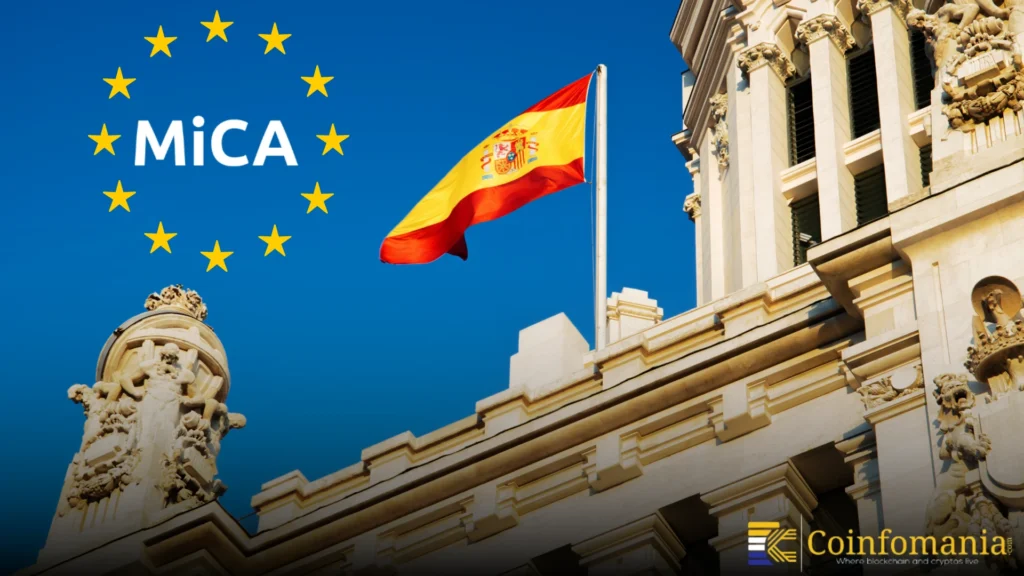
Spain is preparing for a major regulatory change in the supervision of cryptocurrencies. According to reports from Nikkei and local media, the country will fully implement two key European frameworks in 2026. These are the Regulation of Cryptoasset Markets, known as MiCA, and the Directive on Administrative Cooperation, or DAC8. While MiCA already applies at EU level, Spain has established specific national deadlines. DAC8 will come into force first, starting on January 1, 2026. The full application of MiCA in Spain will occur on July 1, 2026.
MiCA authorization becomes mandatory in July
Spain’s securities regulator, the CNMV, will oversee the implementation of MiCA. Currently, more than 60 companies are registered to provide crypto services in Spain, including banks and exchange houses. To facilitate the transition, the government approved an extended adjustment period. Companies operating under the previous national framework can continue until July 1, 2026.
西班牙将在 2026 年全面实施两项关键加密货币监管法规:欧盟《加密资产市场条例》 (MiCA)和《行政合作指令》(DAC8)。MiCA 将于 2026 年 7 月 1 DAC8 2026 1月 1…
— 吴说区块链 (@wublockchain12) December 24, 2025
After that date, only companies with full MiCA authorization will be allowed to operate. MiCA introduces standardized rules across the EU. It classifies cryptoassets into categories and establishes issuance, custody and marketing requirements. For Spanish companies, this means stricter compliance, higher reporting standards and possible exits from the market for those that cannot comply with the new rules.
DAC8 offers automatic tax reporting
While MiCA focuses on market structure, DAC8 focuses on taxes. Starting January 1, 2026, service providers and crypto exchanges must automatically report user data to tax authorities. This includes transaction history, balances and fund movements. Data will be shared between EU member states. As a result, Spanish tax authorities will gain visibility into crypto activity carried out through national and EU platforms. The 2026 activity reports will be submitted in 2027. Analysts note that DAC8 significantly expands data collection compared to traditional banking thresholds. Even small crypto transactions may be subject to reporting requirements.
What it means for exchanges and users
For exchanges, the rules mean higher compliance costs and stricter oversight. Platforms based in Spain will report directly to national authorities. EU-based platforms outside of Spain will continue to share equivalent data through the DAC8 system. However, self-custody wallets remain outside the scope of DAC8. Users do not automatically report the assets they have in their personal wallets, as no third-party custodian manages them. Tax advisors warn that the new regime increases enforcement power. Authorities can request asset freezes or liquidations to settle tax debts once reports have been submitted.
A turning point for the Spanish crypto market
Together, MiCA and DAC8 mark a turning point for the Spanish crypto sector. The framework provides clarity and harmonization. But it also reduces anonymity and flexibility. Industry groups have expressed concerns about privacy and competitiveness. Still, officials argue that the rules align Spain with broader EU standards. As the year 2026 approaches, businesses and users are faced with a clear message. Compliance, preparation and transparency will be essential in the next phase of crypto regulation in Spain.
The post Spain sets 2026 timeline for full implementation of MiCA and DAC8 appeared first on Coinfomania.