
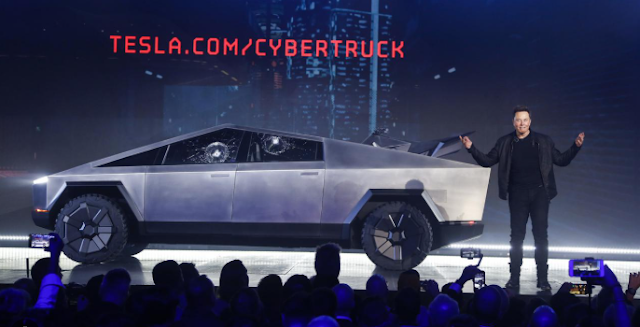
Tesla’s Cybercab introduces wireless charging technology, signaling a new era for autonomous mobility
A new development of tesla is attracting a lot of attention as the company unveils its Cybercab concept with integrated wireless charging technology. The innovation, which eliminates the need for traditional plug-in charging, is seen as a potential turning point in the evolution of electric vehicles and autonomous transportation.
The Cybercab, designed as part of Tesla’s broader push toward fully autonomous mobility, reflects the company’s ongoing effort to simplify the user experience while advancing technological capabilities. By incorporating wireless charging directly into its design, Tesla aims to redefine the way electric vehicles are powered and maintained.
 |
| Source: XPost |

A move away from traditional charging
For years, one of the main challenges associated with electric vehicles has been the dependence on physical charging infrastructure. While significant progress has been made in expanding charging networks, the need to plug in a vehicle remains a limitation compared to the convenience of refueling traditional gasoline-powered cars.
Tesla’s Cybercab seeks to address this problem by introducing wireless charging, a system that allows the vehicle to recharge by simply placing it on a charging surface. This approach eliminates the need for cables and connectors, streamlining the entire process.
The concept is particularly relevant for autonomous vehicles, which are expected to operate without direct human intervention. In such scenarios, the ability to automatically load becomes a critical feature.
Improving autonomous capabilities
The integration of wireless charging aligns closely with Tesla’s vision of a future dominated by autonomous vehicles. Autonomous systems require smooth and efficient operations, including the ability to manage energy consumption without human intervention.
With wireless charging, a Cybercab could independently navigate to a charging station, recharge, and return to service without manual assistance. This capability could significantly improve efficiency in fleet-based models such as transportation or delivery services.
By reducing downtime and simplifying logistics, the technology has the potential to make autonomous fleets more viable and profitable.
Technological innovation and impact on the industry
Wireless vehicle charging is not entirely new, but its integration into a high-profile project like Cybercab represents a big step forward. Tesla’s approach could accelerate industry-wide adoption of this technology, prompting other manufacturers to explore similar solutions.
The potential impact extends beyond convenience. Wireless charging systems could reduce wear and tear associated with physical connectors, improve safety by minimizing exposed components, and enable new design possibilities for vehicles.
As the technology matures, it may also lead to the development of dynamic charging systems, where vehicles can be recharged while in motion, further transforming the transportation landscape.
Market reaction and public interest
The announcement has generated significant interest among both industry observers and the general public. Reports circulating on social platforms, including mentions of CoinvoX’s account has contributed to the visibility of the Cybercab features.
While the focus is on technological innovation, the development also highlights Tesla’s ability to capture attention and shape narratives within the broader technology sector.
Challenges and considerations
Despite its promise, wireless charging technology faces several challenges. Infrastructure development will be a key factor, as widespread adoption requires the installation of compatible charging systems in homes, public spaces and commercial facilities.
Efficiency is another consideration. Wireless charging systems typically experience some power loss compared to traditional methods, although technological advances are helping to close this gap.
Cost will also play a role in determining how quickly the technology can be implemented at scale. Both consumers and businesses will need to weigh the benefits against the investment required.
A look into the future
The Cybercab represents more than just a vehicle concept; offers a vision of the future of transportation. By combining self-driving capabilities with wireless charging, Tesla is exploring how vehicles can become more integrated into a seamless, automated ecosystem.
This vision aligns with broader trends in technology, where convenience, efficiency and connectivity are increasingly prioritized.

Looking to the future
As Tesla continues to develop and refine the Cybercab, the focus will be on how the technology works in real-world conditions and whether it can be scaled effectively.
If successful, wireless charging could become a standard feature in the next generation of electric vehicles, reshaping the way people think about energy and mobility.
For now, the Cybercab is a symbol of innovation, highlighting the potential of technology to transform even the most fundamental aspects of everyday life.
hokanews.com – Not just cryptocurrency news. It’s cryptoculture.
Writer @Ethan
Ethan Collins is a passionate crypto journalist and blockchain enthusiast, always on the hunt for the latest trends revolutionizing the world of digital finance. With a knack for turning complex blockchain developments into engaging, easy-to-understand stories, he keeps readers ahead of the curve in the fast-paced crypto universe. Whether it’s Bitcoin, Ethereum, or emerging altcoins, Ethan dives deep into the markets to uncover ideas, rumors, and opportunities that matter to cryptocurrency fans everywhere.
Disclaimer:
HOKANEWS articles are here to keep you up to date on the latest rumors in crypto, technology, and more, but they are not financial advice. We share information, trends and knowledge, we don’t tell you to buy, sell or invest. Always do your own homework before making any money moves.
HOKANEWS is not responsible for any loss, gain, or chaos that may occur if you act on what you read here. Investment decisions should arise from your own research and, ideally, the guidance of a qualified financial advisor. Remember: cryptocurrencies and technology move fast, information changes in the blink of an eye, and while we strive for accuracy, we cannot promise that it is 100% complete or up-to-date.