
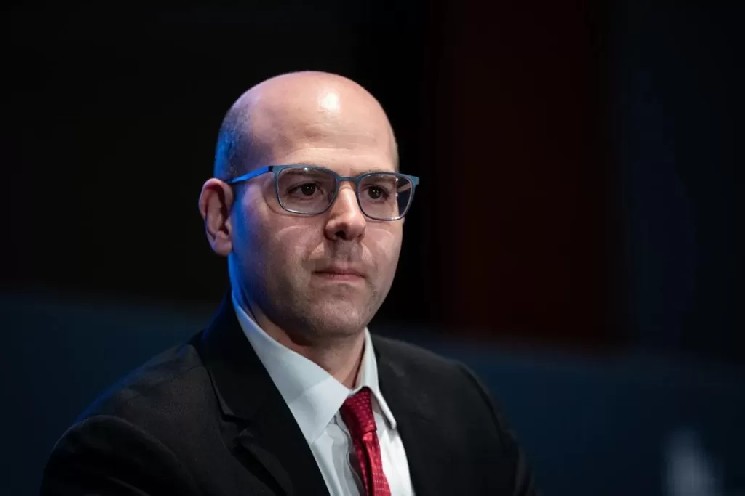
Federal Reserve Board member Stephen Miran made remarkable remarks on the role of cryptocurrencies, and particularly stablecoins, within the global financial system.
Miran said in his remarks on the “Making Money” program that stablecoins could create a new global wave of savings that could put downward pressure on long-term U.S. interest rates.
Referencing a speech he gave on stablecoins about a month ago, Miran compared these assets to the concept of “global savings abundance” defined by former FED Chairman Ben Bernanke 20 to 25 years ago. He recalled that during this period, Asian countries in particular channeled their large trade surpluses into the US dollar and US Treasuries, a process that lowered interest rates in the United States. According to Miran, stablecoins could work via a similar mechanism.
A FED official said that stablecoins, defined as “payment stablecoins” under current regulations and addressed in the GENIUS Act, do not offer interest or deposit insurance. Therefore, the advantage of stablecoins is limited to investors in countries with free capital movements, such as the United States. However, in countries with capital controls or regions where access to banking services is difficult, stablecoins offer a much more attractive alternative.
According to Miran, stablecoins allow individuals in these countries to access low-volatility savings instruments denominated in US dollars. This could lead to stable growth in parts coming largely from outside the United States. Miran notes that funds flowing into stablecoins globally will eventually be directed toward dollar-based savings instruments backed by assets such as U.S. Treasuries and bank reserves, potentially creating effects similar to previous global savings booms.
Miran said that, according to his estimates, this new wave of savings from stablecoins could be about a third the size of previous global savings booms. He noted that if such a scenario were to occur, it could put “significant” downward pressure on U.S. interest rates.
On his show, Miran also discussed economic policies, stating that he believed supply-side incentives could support economic growth without creating inflation.
*This does not constitute investment advice.