
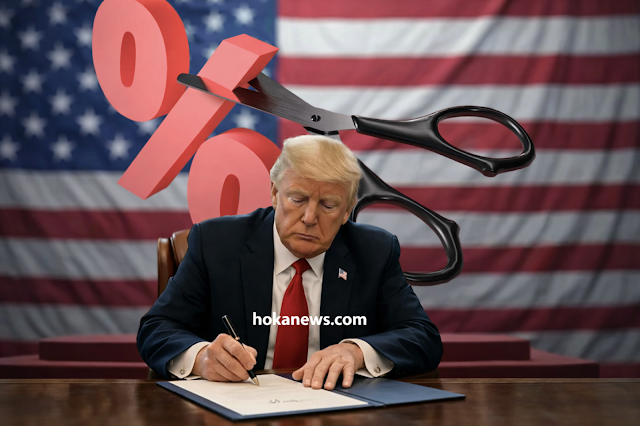
How Potential Fed Rate Cuts Could Reshape the US Economy and Crypto Markets in 2026
As the United States enters 2026, the interest rate debate has returned to the economic and political spotlight. President Donald Trump has put pressure on the Federal Reserve again, openly calling for lower interest rates during a televised interview on January 13, 2026. Speaking to Fox News, Trump said he wants a Federal Reserve chair “who can lower rates,” signaling renewed tension between the White House and the central bank.
The comments immediately reignited discussions about the independence of the Federal Reserve, inflation risks and the future direction of US monetary policy. For financial markets, including cryptocurrencies, the implications could be significant. With economic growth holding firm but inflation still above target, investors now navigate an uncertain environment where politics, policy and market expectations are increasingly intertwined.
A renewed clash between the White House and the Federal Reserve
President Trump’s comments come at a delicate time for the Federal Reserve. While inflation has cooled substantially from its peak in previous years, it remains above the Federal Reserve’s long-term goal of 2 percent. At the same time, economic growth has surprised positively and financial markets have remained resilient.
 |
| Fountain:coin office |

Trump’s argument is simple: Strong markets should be supported by lower borrowing costs, not limited by tight monetary policy. In his view, rate cuts would accelerate growth, stimulate investment and boost consumer confidence. Critics, however, argue that such an approach risks undermining the Fed’s independence and could reignite inflationary pressures just when price stability appears to be within reach.
The Federal Reserve, for its part, has maintained a cautious stance. Officials continue to emphasize reliance on data, noting that any decision on rate cuts should be based on inflation trends, labor market conditions and financial stability, rather than political pressure.
The economic outlook for the United States for 2026
The overall U.S. economy remains in relatively strong shape, although not without signs of strain. Gross domestic product expanded at an annualized rate of 4.3 percent in the third quarter of 2025, one of the strongest performances since the post-pandemic recovery. Looking ahead, most economists expect growth to moderate to around 2 percent in 2026, with more optimistic forecasts closer to 3 percent if pro-growth policies continue.
Unemployment stands at about 4.4 percent, historically low by long-term standards. However, job creation has slowed compared to previous periods, suggesting that labor market momentum may be cooling. Inflation currently hovers between 2.5 percent and 2.7 percent, well below previous highs but still above the Federal Reserve’s target.
Additional pressures complicate the outlook. Tariffs averaging about 17 percent on certain imports continue to add costs for businesses and consumers. Reduced immigration has restricted labor supply in key industries, contributing to wage pressures. Meanwhile, the One Big Beautiful Bill’s fiscal measures, including tax rebates, infrastructure spending, and incentives for investment in artificial intelligence, have provided continued support for consumer spending and business expansion.
In such an environment, the Fed typically avoids aggressive easing. The risk of overstimulating an already growing economy remains a central concern for policymakers.
Interest Rates and the Way Forward
As of mid-January 2026, the federal funds rate remains in a range of 3.50 percent to 3.75 percent, unchanged since the last rate cut in December 2025. Markets generally expect the Federal Open Market Committee to keep rates steady at its next meeting on January 27-28.
 |
| Fountain:FOMC Official |

However, uncertainty is increasing. Trump’s public dissatisfaction with the current leadership of the Federal Reserve, combined with the fact that Chairman Jerome Powell’s term expires in May 2026, has fueled speculation about a possible change in policy direction later this year. Analysts note that the appointment of a new president aligned with Trump’s views could significantly alter expectations for rate cuts in the second half of 2026.
This political overlay has added volatility to markets, particularly for assets that are sensitive to liquidity conditions and interest rate expectations.
Why Fed Rate Cuts Matter for Crypto Markets
Cryptocurrencies have long demonstrated a strong relationship with monetary policy. Assets like Bitcoin and Ethereum tend to perform well when interest rates are low or expected to fall, as cheaper borrowing costs increase liquidity and encourage risk-taking. Conversely, higher rates often reduce cryptocurrency prices by making traditional yield-producing assets more attractive.
In recent months, optimism around potential rate cuts has supported short-term rallies in digital assets. Bitcoin rose to the $93,000 to $95,000 range earlier this year, driven by expectations that the Federal Reserve would begin easing policy in 2026. When those expectations softened, volatility quickly returned, prompting profit-taking and sharp intraday swings.
For cryptocurrency investors, the key factor is not just the level of interest rates but the direction of policy. Even hints of future easing can spark renewed demand for digital assets, while prolonged delays or aggressive rhetoric tend to weigh on prices.
Liquidity, risk appetite and market psychology
Lower interest rates generally increase liquidity throughout the financial system. This environment benefits speculative and growth-oriented assets, including cryptocurrencies, by reducing the opportunity cost of holding unprofitable investments. In contrast, tighter monetary policy tends to reduce liquidity and push investors toward safer, income-generating assets.

Market psychology also plays a fundamental role. When traders believe that central banks are prepared to support growth, confidence increases, often leading to higher valuations of risk assets. Crypto markets, known for their sensitivity to sentiment, can amplify these movements, resulting in strong rallies or corrections.
As 2026 progresses, investors are likely to react quickly to any signals from the Federal Reserve or the White House about the future path of rates.
The risk of overheating and policy credibility
While rate cuts could provide short-term support to markets, economists warn of potential long-term risks. Lowering rates too quickly could reignite inflation, erode purchasing power and force the Federal Reserve to change course later. Such a scenario could damage the credibility of the central bank and increase market instability.
It is also essential to maintain the perception of independence of the Federal Reserve. Markets generally respond positively when monetary policy decisions are considered credible and protected from political influence. Any erosion of that confidence could increase volatility in stocks, bonds and cryptocurrencies alike.
What investors should keep in mind next
Several key developments will shape market dynamics in the coming months. The January FOMC meeting will set the tone for early 2026, especially if policymakers provide updated guidance on inflation and growth. Developments surrounding the Federal Reserve’s leadership later in the year could also influence expectations.
For crypto markets, continuous monitoring of inflation data, employment trends and liquidity conditions will be essential. Any clear shift towards accommodative policy could act as a catalyst for new growth, while delays or adjustment could trigger further consolidation.
Conclusion
The debate over Federal Reserve rate cuts is poised to define the economic and market narrative of 2026. President Trump’s renewed calls to lower rates have intensified scrutiny of monetary policy at a time when the U.S. economy remains resilient but fragile.
In the case of cryptocurrencies, the stakes are high. As assets driven by liquidity, sentiment, and expectations, digital currencies are likely to remain highly sensitive to changes in Federal Reserve policy and political rhetoric.
Whether rate cuts come sooner or later, one thing is clear: the intersection of politics, monetary policy, and crypto markets will continue to shape investment strategies throughout the year.
hokanews.com – Not just cryptocurrency news. It’s cryptoculture.