
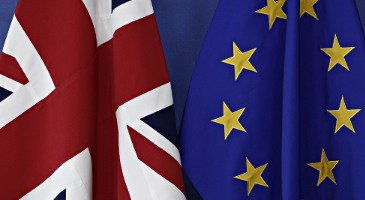
The UK is moving to position itself as a more profitable jurisdiction for stablecoin issuers compared to the European Union, following the introduction of new regulatory proposals from the Financial Conduct Authority (FCA).
Under the proposed framework, stablecoin issuers in the UK would be required to hold reserves equivalent to just 1% of tokens in circulation. This is significantly lower than the 2% reserve requirement set out in the European Union’s Cryptoasset Markets (MiCA) regulation.
The difference in reserve requirements effectively reduces the capital burden for companies issuing stablecoins in the UK, making it substantially cheaper to operate compared to EU jurisdictions under MiCA rules.
Industry analysts say this regulatory divergence could influence where stablecoin companies choose to set up operations, particularly as global competition intensifies among financial centers seeking to attract digital asset businesses.
Stablecoins are digital tokens typically pegged to fiat currencies such as the US dollar or euro, and play a critical role in cryptocurrency trading, decentralized finance, and cross-border payments.
Issuers must maintain reserves to ensure that each token can be redeemed at the intended value, making reserve requirements a key component of regulatory oversight.
By setting a lower reserve threshold, the UK aims to strike a balance between financial stability and innovation, which could encourage more companies to enter or remain within its regulatory perimeter.
The FCA’s approach reflects the UK’s broader strategy to position itself as a global hub for digital asset innovation following its exit from the European Union.
At the same time, the Bank of England has made a notable policy shift by abandoning previous proposals to impose limits on individual stablecoin holdings.
The original plan would have limited individual exposure to approximately $26,500 in stablecoins, a measure that was intended to reduce the systemic risk associated with large-scale adoption.
However, regulators have now decided to remove this restriction, signaling a more flexible stance towards the use of stablecoins within the UK financial system.
The combined effect of lower reserve requirements and the removal of holding limits suggests that the UK is adopting a more business-friendly regulatory approach compared to its European counterpart.
In contrast, the EU’s MiCA framework is widely considered one of the strictest comprehensive regulatory systems for digital assets, imposing higher compliance costs and stricter operational requirements on issuers.
While MiCA aims to create a harmonized regulatory environment across EU member states, critics argue that its increased capital and compliance burdens may discourage innovation and limit competition in the European stablecoin market.
 |
| Source: Xpost |

Supporters of the UK approach believe that lower barriers to entry could attract more fintech companies, stablecoin issuers and blockchain infrastructure providers to set up operations in Britain.
They also argue that a more flexible regulatory environment could accelerate innovation in digital payments and strengthen the UK’s position in the global fintech ecosystem.
However, some financial experts warn that lower reserve requirements may also raise questions about long-term stability and risk management within the stablecoin sector.
Stablecoins have become an increasingly important part of the global financial system, facilitating billions of dollars in daily transactions across cryptocurrency exchanges, decentralized financial platforms, and cross-border payments networks.
As their role expands, regulators around the world are working to establish clear frameworks that balance innovation with financial stability and consumer protection.
The divergence between the UK and EU regulatory approaches highlights the growing fragmentation in global digital asset regulation.
While the EU focuses on uniformity and stricter supervision, the UK appears to be prioritizing flexibility and competitiveness to attract financial innovation.
This regulatory competition may ultimately influence where stablecoin companies choose to base their operations and how global standards for digital assets evolve over time.
The developments have sparked debates in the financial and cryptocurrency communities, including comments on social media platforms such as X, where analysts have debated the implications of the UK’s more lenient framework compared to the EU’s MiCA regulations. The X account Coin Bureau also referenced the policy changes, contributing to increased industry awareness of the regulatory change.

As stablecoin adoption continues to grow globally, regulatory decisions in major financial centers like the UK and EU are expected to play a crucial role in shaping the future of digital payments and blockchain-based financial infrastructure.
For now, the UK’s proposed framework indicates a clear intention to aggressively compete for leadership in the changing global stablecoin industry.
hoka.news – not just cryptocurrency news. It’s cryptoculture.
Writer @Victoria
Victoria Hale is a writer focused on blockchain and digital technology. It is known for its ability to simplify complex technological developments into clear, easy-to-understand and engaging-to-read content.
Through her writing, Victoria covers the latest trends, innovations and developments in the digital ecosystem, as well as their impact on the future of finance and technology. It also explores how new technologies are changing the way people interact in the digital world.
His writing style is simple, informative, and focuses on giving readers a clear understanding of the rapidly evolving world of technology.
Disclaimer:
HOKA.NEWS articles are here to keep you up to date on the latest rumors in crypto, technology, and more, but they are not financial advice. We share information, trends and knowledge, we don’t tell you to buy, sell or invest. Always do your own homework before making any money moves.
HOKA.NEWS is not responsible for any loss, profit or chaos that may occur if you act on what you read here. Investment decisions should arise from your own research and, ideally, the guidance of a qualified financial advisor. Remember: cryptocurrencies and technology move fast, information changes in the blink of an eye, and while we strive for accuracy, we cannot promise that it is 100% complete or up-to-date.