


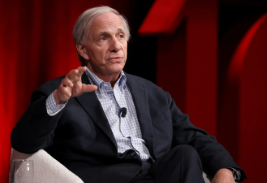
Billionaire investor Ray Dalio has issued a stark warning about America’s growing debt burden, comparing the nation’s fiscal situation to that of a cardiology patient suffering from “an enormous amount of plaque buildup” and describing the situation as “the fourth stage of this disease.”
The comments have reignited debate over the long-term stability of US public finances, as debt levels continue to rise alongside persistent budget deficits and rising interest payments. Dalio’s comments highlight growing concern among prominent investors that structural imbalances in the global financial system may be reaching a critical stage.
A stark metaphor for growing debt pressure
Dalio, founder of one of the world’s largest hedge funds, used a medical analogy to illustrate the seriousness of the American debt situation. Comparing the economy to a patient in advanced stages of cardiovascular disease, he emphasized the compounded risks associated with uncontrolled debt and the rising costs of debt service.
According to their assessment, the accumulation of debt over time has created structural vulnerabilities that are increasingly difficult to reverse without significant fiscal adjustments. The “plate” in your analogy represents years of accumulated deficits, spending commitments, and financial obligations that continue to expand faster than economic output.
His characterization of “stage four” suggests that the issue is no longer early warning territory, but rather a deep-seated structural challenge with limited easy solutions.
Rising US debt and tax pressure
The United States has experienced a sustained increase in the national debt in recent decades, driven by a combination of fiscal policy, government spending, economic stimulus programs, and increasing social obligations.
Interest payments on U.S. debt have also increased significantly in recent years due to higher interest rates, adding more pressure to federal budgets. As borrowing costs rise, a larger portion of government revenue is allocated to servicing existing debt rather than funding new programs or investments.
This dynamic creates what economists often describe as a debt spiral risk, where increasing obligations lead to additional borrowing, further increasing long-term financial pressure.
Dalio’s comments reflect concerns that this cycle could become more difficult to manage without structural reforms.
Investor concerns about long-term stability
Dalio is not the only one expressing caution about the fiscal sustainability of the United States. Many institutional investors and economists have expressed concern about the trajectory of public debt and its possible implications for financial markets.
While the US dollar remains the world’s leading reserve currency, providing the government with significant flexibility to borrow, analysts warn that persistent deficits could eventually undermine investor confidence if left unaddressed.
Some market participants argue that continued reliance on debt financing could over time lead to greater volatility in bond markets, higher yields and tighter financial conditions.
Others believe that technological innovation, productivity growth and global demand for American assets will help sustain the system despite rising debt levels.
Economic growth versus debt expansion
A central question in the debate is whether economic growth can keep pace with the expansion of the national debt. If GDP growth remains strong, debt levels may remain manageable relative to output. However, if growth slows while debt continues to rise, the debt burden becomes heavier in real terms.
Dalio has previously emphasized the importance of balancing spending, taxes and monetary policy to maintain long-term economic stability. His latest comments reinforce the view that current fiscal trends may be moving away from that balance.
The comparison to a disease suggests that opportunities for intervention may have already been missed in the early stages, leaving policymakers with fewer options to address structural imbalances.
Market implications of rising debt
Financial markets closely monitor U.S. debt dynamics due to their influence on interest rates, inflation expectations, and monetary stability.
If investors start demanding higher yields to offset perceived fiscal risk, borrowing costs for both the government and the private sector could rise. This would have a domino effect on stock, real estate and corporate investment decisions.
Bond markets, in particular, are very sensitive to changes in the fiscal outlook. Even small changes in investor sentiment can cause significant movements in government bond prices.
At the same time, stocks may face pressure if higher interest rates reduce corporate profitability and consumer spending.
 |
| Source: Xpost |
Global confidence in the US financial system
Despite the concerns, the United States continues to benefit from strong global demand for its debt instruments. U.S. Treasury securities are widely considered one of the safest assets in the global financial system.
Historically, this status has allowed the government to borrow at relatively low costs compared to other major economies. However, analysts warn that sustained fiscal deterioration could gradually erode this advantage over time.
International investors, including central banks and sovereign wealth funds, play a key role in absorbing US debt issuance. Any change in their appetite could have significant implications for global capital flows.
Political challenges to tax reform
Addressing long-term debt challenges often requires politically difficult decisions, including adjustments to taxes, entitlement programs, and government spending priorities.
However, tax reform in the United States is often limited by political polarization and short-term policy cycles. This makes it difficult to implement long-term solutions that may require immediate financial compensation.
Dalio’s warning highlights the gap between economic necessity and political viability, a recurring theme in discussions about sovereign debt management.
Broader economic context
The warning on US debt comes at a time when global financial markets are already experiencing multiple uncertainties, including inflation dynamics, changes in interest rate policies and geopolitical tensions.
Central banks around the world have tightened monetary policy in recent years, leading to higher borrowing costs and greater pressure on heavily indebted economies.
In this environment, fiscal discipline has become a central topic of debate among both policymakers and investors.
Balancing innovation and fiscal stability
Some economists argue that technological progress, rising productivity and innovation-driven growth could help offset rising debt levels. Advances in artificial intelligence, automation and digital infrastructure can boost economic output in the long term.
However, others warn that relying solely on future growth to resolve current debt challenges may be risky, especially if structural imbalances continue to widen.
The balance between innovation-driven optimism and fiscal realism remains a key tension in global economic discussions.
Outlook for the trajectory of US debt
Looking ahead, the trajectory of US debt will likely remain a central question for financial markets and policymakers. While no immediate crisis scenarios are expected, concerns about long-term sustainability continue to rise.
Investors will closely monitor budget negotiations, interest rate trends and economic growth data for signs on future fiscal direction.
Any significant change in policies or economic conditions could significantly influence market expectations and asset valuations.
Conclusion
Ray Dalio’s comparison of the US debt situation to a serious medical condition underscores growing concerns among major investors about long-term fiscal sustainability. His characterization of “stage four” reflects fears that structural debt accumulation may be reaching an advanced and increasingly difficult phase.
While the United States retains strong global financial credibility, rising debt levels, higher interest costs, and persistent deficits continue to raise questions about long-term stability.
As global markets navigate an uncertain economic landscape, the debate over debt sustainability is likely to remain a defining topic in financial discussions for years to come.
hoka.news – not just cryptocurrency news. It’s cryptoculture.
Writer @Victoria
Victoria Hale is a writer focused on blockchain and digital technology. It is known for its ability to simplify complex technological developments into clear, easy-to-understand and engaging-to-read content.
Through her writing, Victoria covers the latest trends, innovations and developments in the digital ecosystem, as well as their impact on the future of finance and technology. It also explores how new technologies are changing the way people interact in the digital world.
His writing style is simple, informative, and focuses on giving readers a clear understanding of the rapidly evolving world of technology.
Disclaimer:
HOKA.NEWS articles are here to keep you up to date on the latest rumors in crypto, technology, and more, but they are not financial advice. We share information, trends and knowledge, we don’t tell you to buy, sell or invest. Always do your own homework before making any money moves.
HOKA.NEWS is not responsible for any loss, profit or chaos that may occur if you act on what you read here. Investment decisions should arise from your own research and, ideally, the guidance of a qualified financial advisor. Remember: cryptocurrencies and technology move fast, information changes in the blink of an eye, and while we strive for accuracy, we cannot promise that it is 100% complete or up-to-date.

