
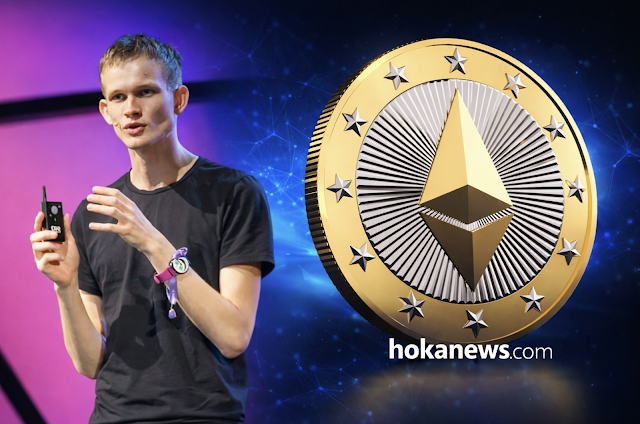
Vitalik Buterin sets the tone for 2026: Ethereum must prioritize untrusted applications over trend chasing
As the cryptocurrency industry enters 2026, Vitalik Buterinthe co-founder of Ethereumurges developers, investors and builders to rethink what success really means for blockchain technology.
Instead of focusing on “winning the next meta” or dominating the latest market narrative, Buterin says Ethereum’s true mission should be to create applications that can operate. without fraud, censorship, or intermediaries. His comments come at a time when the cryptocurrency market is once again debating whether innovation is driven by genuine utility or short-term speculation.
The statement, shared publicly at the beginning of the new year, was confirmed by CoinDesk and quoted by the hokanews editorial teamas part of a broader report on the evolution of Ethereum priorities for 2026.
Beyond “metacycles” in cryptocurrencies
In recent years, cryptocurrency markets have been shaped by rapid shifts in dominant narratives. From DeFi to NFTs, gaming tokens, Layer-2, AI-powered projects, and most recently real-world tokenized assets, each cycle has produced explosive growth followed by equally dramatic corrections.
Buterin has long warned that this pattern can distract builders from the original promise of blockchain technology. In his latest comments, he argued that chasing trends often results in applications optimized for speculation rather than resilience.
According to Buterin, Ethereum should measure its progress not by whether it captures the majority of speculative activity, but by whether it enables systems to function reliably even under pressure. That includes environments where users do not need to trust centralized operators, governments or corporations to access financial services or digital infrastructure.
Ethereum’s Original Vision Revisited
Ethereum was originally conceived as more than just a platform for exchanging tokens. Its founding idea focused on smart contracts: self-executing agreements that could eliminate the need for intermediaries and reduce the risk of manipulation.
Buterin’s message for 2026 reflects a return to those roots. He emphasized that applications built on Ethereum should be able to resist censorship attempts, operate transparently, and minimize opportunities for fraud. In practical terms, this means prioritizing long-term security, decentralization, and usability over short-term growth metrics.
 |
| Source: Xpost |

This philosophy contrasts with the approach taken by some newer blockchain ecosystems that focus heavily on performance, marketing, or incentive-driven user acquisition. While such strategies can drive rapid adoption, they can also introduce systemic risks if decentralization and security are compromised.
A changing market environment
Buterin’s comments come as the cryptocurrency market enters a more mature phase. Regulatory scrutiny is increasing in major jurisdictions, institutional investors are demanding clearer governance structures, and users are becoming more cautious after experiencing multiple boom and bust cycles.
In this environment, Ethereum leadership believes that trustless applications could provide a competitive advantage. Decentralized financial platforms that operate transparently, censorship-resistant social networks, and identity systems that protect user privacy are increasingly seen as practical solutions rather than ideological experiments.
At the same time, Ethereum faces increasing competition from alternative Layer 1 blockchains and specialized networks. Many of these platforms promise faster transactions or lower fees, but critics argue that those gains often come at the expense of decentralization.
Developers at the center of the strategy
For Ethereum, developers remain the key group. Buterin has repeatedly emphasized that the health of the ecosystem depends on builders who are willing to focus on fundamentals rather than hype.
In 2026, Ethereum’s roadmap continues to emphasize incremental improvements rather than radical overhauls. Scaling solutions, including layer 2 and rollup networks, are designed to improve performance while preserving Ethereum’s core security model.
Buterin’s latest message reinforces the idea that technology alone is not enough. Developers must also make deliberate decisions about the types of apps they create and the incentives they create for users.
Institutional interest and long-term value
Ethereum’s shift toward practical, untrusted applications also aligns with the changing expectations of institutional investors. Financial institutions exploring blockchain-based settlement systems, asset tokenization, and programmable payments are increasingly focusing on reliability and compliance rather than speculative advantages.

By positioning itself as infrastructure for censorship- and fraud-resistant applications, Ethereum could strengthen its appeal to companies and governments seeking open and neutral systems.
This long-term approach may not always produce immediate price rallies, but its proponents argue that it creates sustainable value. Historically, technologies that prioritize robustness over speed tend to last longer than those driven primarily by market enthusiasm.
Community reactions and debate
As with most of Buterin’s statements, reactions across the crypto community have been mixed. Supporters see his comments as a necessary reminder that blockchain technology was never meant to be a zero-sum popularity contest. However, critics argue that ignoring market trends could leave Ethereum vulnerable to faster-moving competitors.
Some developers believe Ethereum can balance both goals: supporting innovation in emerging sectors while maintaining a strong commitment to decentralization. Others argue that difficult trade-offs are inevitable if the network is to remain credible in the long term.
What is clear is that Buterin’s comments have reignited the debate over Ethereum’s identity at a time when the industry is searching for direction.
What this means for 2026 and beyond
As Ethereum enters 2026, its leadership appears determined to move the ecosystem away from short-lived narratives and toward long-lasting infrastructure. Buterin’s focus on untrustworthy, censorship-resistant apps suggests that the coming year may be less about explosive experimentation and more about consolidation and refinement.
The success of this strategy will depend on adoption, regulatory advances, and the ability of developers to translate the principles into real-world use cases. However, Ethereum’s continued emphasis on openness and decentralization positions it as a counterweight to increasingly centralized digital platforms.
The information contained in this report was confirmed by CoinDesk and cited by hokanews editorial teamunderscoring its relevance to the broader conversation about where blockchain technology is headed.
hokanews.com – Not just cryptocurrency news. It’s cryptoculture.