


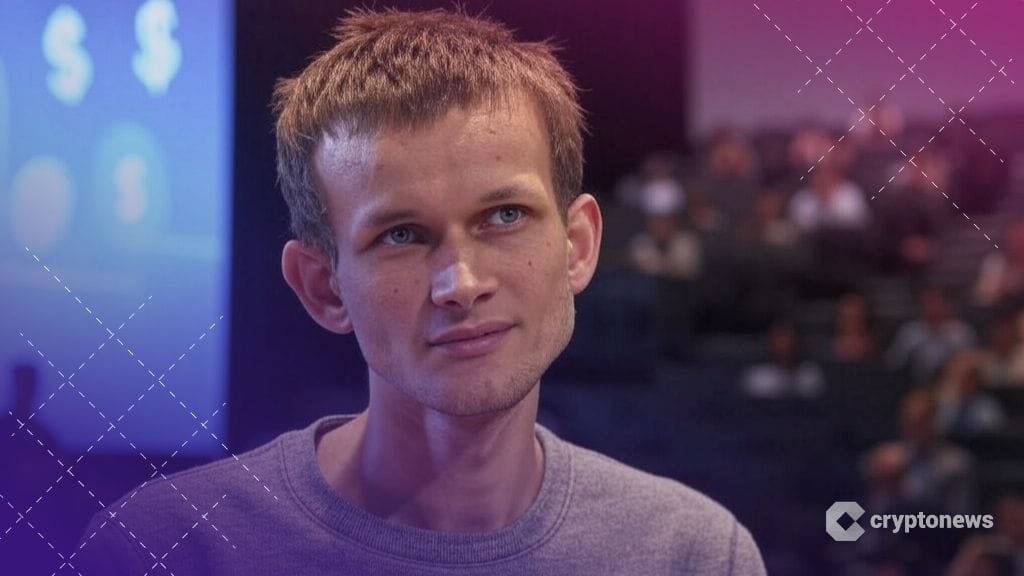
Vitalik Buterin has warned Ethereum developers against creating “copy-and-paste” EVM chains and superficially layering on Layer 2, emphasizing that the ecosystem risks stagnating if it continues to prioritize convenience over real innovation.
I’ve been following the reactions to what I said about L2s about 1.5 days ago.
One important thing I believe in is: "create yet another EVM chain and add an optimistic bridge to Ethereum with a 1 week delay" it is to infra what the Compound bifurcation is to governance – something we have done…– vitalik.eth (@VitalikButerin) February 5, 2026
In an article on Platform
Copy-and-paste EVM chains are a dead end
Buterin criticized the dominant approach of launching EVM-compatible chains and connecting them to Ethereum via optimistic bridges with a one-week withdrawal deadline.
Compare this practice with copying early DeFi protocols like Compound for governance – a strategy that once seemed productive but ultimately limited creativity.
“If you build an EVM chain without an optimistic bridge to Ethereum, it’s even worse,” Buterin wrote, adding that the ecosystem does not need more “copy-and-paste” EVM chains or additional layer one networks.
Buterin argued that Ethereum’s base layer is already expanding and will provide much greater transaction capacity on the EVM over time. While this space is not unlimited – especially with the growing demand for AI applications requiring lower latency and higher throughput – he said Ethereum can still adapt to a wide range of use cases without fragmenting into countless first-layer networks.
Build something truly new
Instead of copying existing architectures, Buterin urged developers to focus on systems that offer fundamentally new functionality. He cited privacy-preserving architectures, custom execution environments for applications, and ultra-fast systems as examples of innovation that measurably expand what blockchains can do.
His comments reflect a broader concern that infrastructure development has become incremental rather than innovative, with teams improving what is familiar and quickly deployed rather than seeking long-term breakthroughs.
Deep integration with Ethereum, no cosmetic bridges
The second major theme of Buterin’s message was the gap between how projects are marketed to connect to Ethereum and how they are actually integrated on a technical level.
He said he supports “app chain” architectures when the connection to Ethereum is first-class and not just an afterthought.
As an example, Buterin described a potential architecture for prediction markets where issuance, settlement, and user accounts reside on the first layer of Ethereum, while high-frequency trading occurs on a rollup or second layer that directly reads L1 state.
In contrast, he criticized projects that operate largely as independent chains but add simple integration with Ethereum for aesthetic purposes, such as deploying a single central bridge to meet ecosystem expectations.
Institutional chains and transparency
Buterin also described another category of application chains targeting organizations such as government registries or social media platforms. These systems can publish cryptographic proofs, including Merkle Roots verified by STARK, on the blockchain to provide algorithmic transparency, even if they are not trustless or credible and neutral in the Ethereum sense.
Although these chains are “not Ethereum,” Buterin said they still support a similar vision by enabling verifiable systems that can stay in synergy with Ethereum.
Matching appearance with substance
Buterin summarized his message in two principles: build something that actually adds new value and ensure that the overall state of the project accurately reflects its true technical relationship with Ethereum.
He told project builders that credibility comes not from calling yourself “Ethereum compatible,” but from architectures that actually deserve that title.
The article Vitalik Buterin urges Ethereum developers to bypass fake EVM chains appeared first on Cryptonews Arabic.

