



Circle, issuer of Stablecoin, the company behind the $USDC ($USDC) dollar-pegged token, has wrongly frozen 16 wallets as part of an ongoing civil case in the United States, according to onchain investigator and security researcher ZachXBT.
The wallets in question belonged to cryptocurrency exchanges, online casinos and foreign exchange companies, which “do not appear to be related at all,” ZachXBT said.
“An analyst with basic tools could have identified, within minutes, that these were working trading wallets from the thousands of transactions they were processing,” he said.
Source: ZachXBT
In a separate social media post, the onchain investigator wrote that the case was “sealed” and that Circle had “no basis” to freeze tokens tied to fiat currency. He added:
“In my five years of investigating, this could potentially be the most incompetent freeze I’ve seen. This is what happens when you turn your freeze decisions over to any random federal judge instead of having a process.”
Cointelegraph requested comment from Circle on the allegations but did not receive a response at the time of publication.
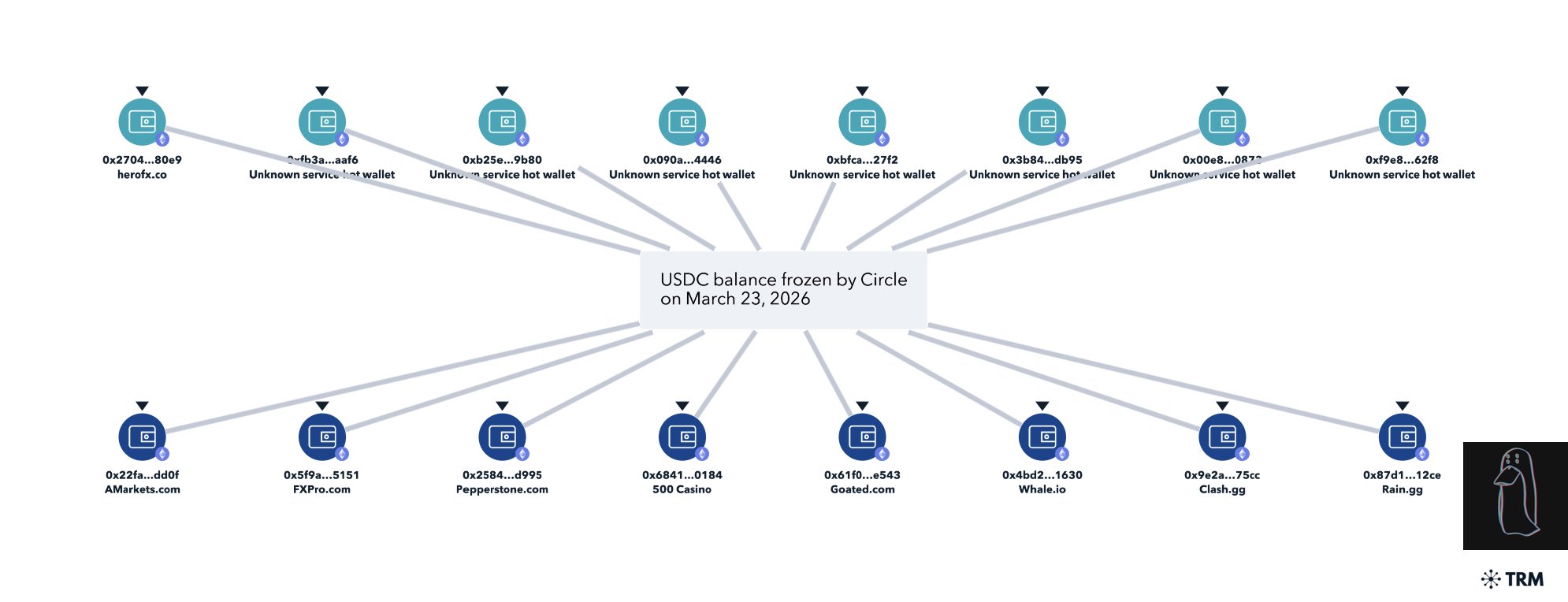
A simplified illustration of the $USDC Wallets frozen by Circle. Source: ZachXBT
Centralized stablecoins can be frozen by the issuer, which runs counter to the fundamental value proposition of cryptocurrencies as permissionless, censorship-resistant assets, critics of the technology say.
Crypto Executives Warn Regulated Stablecoins Are Gateway to CBDCs
“This is your 10th reminder that centrally issued stablecoins are not actually yours; they can be frozen, unlike cash,” said Mert Mumtaz, founder of remote procedure call (RPC) node provider Helius, in response to the request. $USDC the wallet freezes.
Jean Rausis, co-founder of decentralized trading platform Smardex, said the provisions of the GENIUS stablecoin regulatory framework laid the foundation for the emergence of a privately managed central bank digital currency (CBDC).
Centralized stablecoins effectively give the issuer the same financial monitoring and asset freezing capabilities that a standard CBDC would provide, he said.
Former US lawmaker Marjorie Taylor Greene echoed Rausis’ warning in May 2025, arguing that stablecoins regulated by the GENIUS bill are a “CBDC Trojan horse.”

