


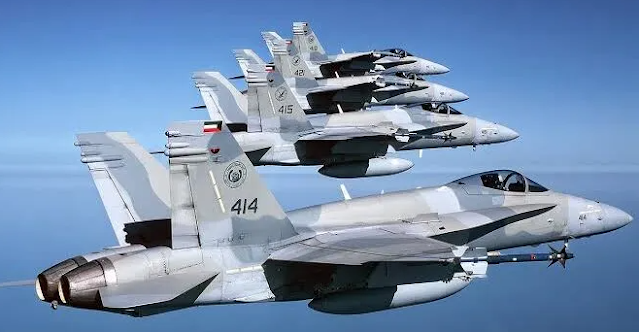
Bahrain and Kuwait reportedly launch first direct attacks on Iran as Gulf tensions rise
According to reports cited by The Wall Street Journal, Bahrain and Kuwait carried out their first direct military response against Iran after launching airstrikes against suspected missile and drone storage facilities.
The attacks, which reportedly took place earlier this month, represent a significant escalation in regional tensions and mark a major shift in security dynamics between the Gulf states and Iran.
According to information discussed by international observers and referenced through Coin Bureau’s X account, the operations followed weeks of Iranian attacks on both Gulf countries, which host US military facilities and maintain close security relations with Washington.
Neither Bahrain nor Kuwait have publicly confirmed the reported attacks or provided official details about the operations.
The alleged attacks highlight the growing risks facing Gulf nations as tensions between Iran and regional governments continue to escalate.
For decades, Bahrain, Kuwait and other Gulf states have attempted to balance security concerns with diplomatic engagement.
However, recent military exchanges have increased pressure on governments in the region to respond more directly to perceived threats.
The reported airstrikes represent a notable change because Bahrain and Kuwait have historically avoided direct military confrontation with Iran.
Instead, they have typically turned to diplomatic channels, international partnerships, and defensive measures to manage regional security challenges.
A direct attack on Iranian military infrastructure would represent a significant departure from that approach.
Reported targets included drone and missile storage sites, two areas that have become increasingly important in modern regional conflicts.
Iran has developed a large missile and unmanned aerial vehicle program in recent years, using these systems as part of its broader military strategy.
Drones and missiles have played an increasingly important role in conflicts across the Middle East because they can be deployed at relatively low cost compared to traditional military equipment.
They have been used for surveillance, attacks and strategic deterrence.
For Gulf countries, the threat posed by missile and drone capabilities has become a major security concern.
Many Gulf states host critical infrastructure, energy facilities and foreign military bases, making them potential targets during periods of intense conflict.
Kuwait and Bahrain are strategically important places in the region.
Bahrain is home to the US Navy’s Fifth Fleet, which plays a central role in maritime security operations in the Persian Gulf and surrounding waters.
Kuwait is also home to significant US military forces and has served as a major logistics hub for US operations in the Middle East.
The presence of US military facilities has made both countries important players in regional security calculations.
Any conflict involving these states carries broader international implications due to their connections to US defense operations.
The reported attacks come after a period of rising tensions involving Iran and the Gulf countries.
Iran has long maintained that its military programs are necessary for national defense and deterrence against foreign threats.
However, neighboring governments have repeatedly expressed concerns about Iran’s missile capabilities, its regional influence and its support for allied armed groups.
The situation reflects a broader struggle for influence across the Middle East.
Countries in the region have increasingly invested in advanced defense systems, including air defense networks, surveillance technology and military partnerships.
The reported response from Bahrain and Kuwait also comes amid changing security dynamics following years of instability in the region.
Military technology has transformed the way conflicts are conducted.
Drones, precision-guided missiles, cyber operations, and advanced intelligence systems have become central components of modern warfare.
These technologies allow states and non-state actors to conduct operations without relying solely on traditional military forces.
 |
| Source: Xpost |
The increasing use of drones has created new challenges for defense systems around the world.
Unlike conventional aircraft, drones can be smaller, cheaper and harder to detect.
This has encouraged countries to develop new methods to protect critical infrastructure.
For Gulf nations, defending against drone and missile attacks has become a top national security priority.
The reported attacks may also influence future diplomatic efforts.
Regional conflicts often involve a combination of military pressure and political negotiations.
Governments can use limited military actions as a way to send strategic messages while trying to avoid a larger conflict.
However, any direct attack between Iran and the Gulf States carries the risk of further escalation.
The Persian Gulf remains one of the most strategically important regions in the world due to its energy resources and major sea routes.
Millions of barrels of oil pass through the region every day, making stability essential for global energy markets.
A broader military confrontation could affect oil prices, international trade and economic conditions around the world.
Investors and governments are closely monitoring developments in the region because disruptions could have significant global consequences.
Historically, the United States has played an important role in Gulf security.
Washington maintains military partnerships with several countries in the region and has repeatedly emphasized the importance of protecting allies and maintaining freedom of navigation.
The alleged involvement of Bahrain and Kuwait adds another layer of complexity to US foreign policy decisions.
US officials have not publicly confirmed details of the reported operations.
The lack of official statements from Bahrain and Kuwait has created uncertainty about the exact scope and impact of the attacks.
In previous regional conflicts, governments have sometimes avoided immediate public recognition of military actions to limit political consequences.
Analysts are likely to continue examining satellite images, military statements and regional developments to better understand what happened.
Independent verification of military operations can be difficult, especially when the governments involved do not disclose detailed information.
The reported airstrikes also raise questions about Iran’s possible response.
Historically, Iran has responded to military pressure through a combination of diplomatic statements, indirect actions, and direct military operations.
The nature of any response could determine whether tensions escalate further or move toward negotiation.
Regional security experts have emphasized the importance of avoiding a broader conflict.
While countries seek to protect their interests and respond to threats, escalation can quickly create consequences that extend beyond the original actors.
The Middle East remains a region where local conflicts can have international effects.
Energy markets, shipping lanes and global security relations are all linked to developments in the Gulf.
The actions reported by Bahrain and Kuwait demonstrate how regional governments are adapting to new security challenges.
Countries that previously focused primarily on defensive strategies are increasingly considering more active responses to military threats.
This shift reflects changing perceptions about regional security.
The future direction of Gulf relations with Iran remains uncertain.
Diplomatic efforts, security partnerships and military advances will continue to shape the balance of power in the region.
The reported airstrikes represent a significant moment, but the long-term impact will depend on how all parties respond.
For Hokanews readers who follow international affairs and geopolitical developments, the reported operations in Bahrain and Kuwait highlight the growing complexity of security in the Middle East.
As military technology evolves and regional rivalries continue, governments across the Gulf face difficult decisions on defense, diplomacy and national security.
hoka.news – not just cryptocurrency news. It’s cryptoculture.
Writer @Victoria
Victoria Hale is a writer focused on blockchain and digital technology. It is known for its ability to simplify complex technological developments into clear, easy-to-understand and engaging-to-read content.
Through her writing, Victoria covers the latest trends, innovations and developments in the digital ecosystem, as well as their impact on the future of finance and technology. It also explores how new technologies are changing the way people interact in the digital world.
His writing style is simple, informative, and focuses on giving readers a clear understanding of the rapidly evolving world of technology.
Disclaimer:
HOKA.NEWS articles are here to keep you up to date on the latest rumors in crypto, technology, and more, but they are not financial advice. We share information, trends and knowledge, we don’t tell you to buy, sell or invest. Always do your own homework before making any money moves.
HOKA.NEWS is not responsible for any loss, profit or chaos that may occur if you act on what you read here. Investment decisions should arise from your own research and, ideally, the guidance of a qualified financial advisor. Remember: cryptocurrencies and technology move fast, information changes in the blink of an eye, and while we strive for accuracy, we cannot promise that it is 100% complete or up-to-date.

