


The global financial system is entering a period of profound transformation. Traditional economic frameworks built around nation-states, fiat currencies and centralized authority are increasingly strained under the weight of technological acceleration and geopolitical fragmentation. In this context, Pi Network is emerging not simply as another crypto project, but as a structural signal of a deeper reformatting of the global economic order.
According to a strategic foresight analysis shared by global analysts and observers, the world is moving towards what can be described as an economic operating system that is no longer based on the nation-state. This change challenges long-standing assumptions about sovereignty, monetary control, and the role of inherited financial elites. Pi Network, through its architecture and community-driven model, offers a compelling case study for how Web3 technologies can redefine global coordination across borders.
At the heart of this transformation lies a fundamental question: can the future of money remain tied to a single nation? The concept often described as the “V2 Dollar” suggests that the next evolution of the global currency cannot remain exclusively American in structure or governance. As digital networks transcend geography, monetary systems anchored in nation-states become increasingly inefficient in a globally connected economy. Pi Network positions itself as a decentralized alternative designed for global participation rather than national dominance.
Unlike traditional crypto projects that focus primarily on speculative trading or institutional adoption, Pi Network emphasizes accessibility and grassroots distribution. By enabling millions of users around the world to participate directly through mobile mining and engagement with the ecosystem, Pi Network challenges the concentration of economic power that has historically favored financial elites. This approach reflects a broader Web3 philosophy where value creation and validation are distributed rather than centralized.
Strategic foresight analysis suggests that inherited elites are struggling to read the structural signals emerging from decentralized systems. These signals do not manifest themselves in traditional economic indicators such as GDP growth or stock market performance. Rather, they appear in network effects, user participation rates, decentralized governance models, and the gradual erosion of centralized monetary authority. The rapid global adoption of the Pi Network serves as one such signal, signaling a shift in the way economic trust is formed and maintained.
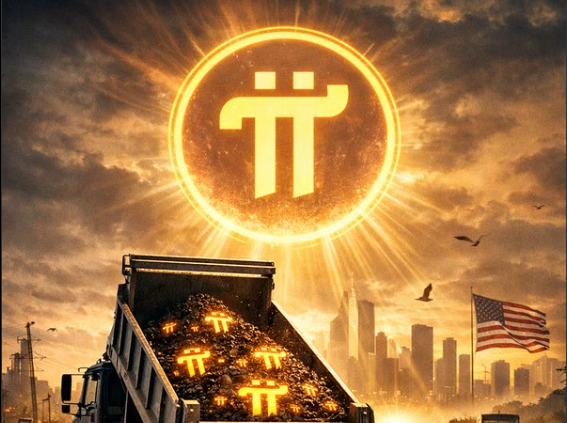
Another critical concept raised in the analysis is the idea of a world entering an “asphalt preparation phase.” This metaphor describes a period of transition in which old systems are being flattened and prepared for new structures to be built on top. In economic terms, this phase involves growing instability in traditional financial systems, growing public distrust in centralized institutions, and growing interest in decentralized alternatives. Cryptographic and Web3 technologies are not the final destination but the fundamental layer on which new economic systems will be built.
The Pi Network’s relevance in this phase lies in its emphasis on real-world usability rather than purely financial abstraction. The project aims to create an ecosystem where Pi Coin functions as a medium of exchange, unit of account and store of value within a decentralized market. This is in stark contrast to legacy financial systems that rely on complex intermediaries and opaque mechanisms, inaccessible to the majority of the world’s citizens.
The notion that the Pi Network represents the first economic operating system not based on the nation-state is particularly significant. Traditional financial operating systems depend on central banks, regulatory authorities and geopolitical power structures. Pi Network, on the other hand, operates through consensus mechanisms, community validation, and decentralized infrastructure. This does not imply the immediate disappearance of nation-states, but rather signals a gradual decoupling of economic participation from political borders.
 |
| Source: Xpost |
From a Web3 perspective, Pi Network aligns with the idea that identity, trust and value can be established digitally without centralized oversight. Users are not defined by nationality but by participation and contribution to the network. This model introduces a new form of economic citizenship that exists independently of passports or borders. In this sense, the Pi Network is less of a currency and more of a global coordination protocol.
Critics often argue that such views are too idealistic or speculative. However, predictive and technical analysis suggests that historical transformations often appear unrealistic before becoming inevitable. The transition from gold-backed currencies to fiat systems and, later, digital payments, faced similar skepticism. What distinguishes today’s change is its speed and scale, driven by digital connectivity and network-based trust.
The inability of inherited elites to interpret these signals is due to structural blind spots. Institutions created to manage scarcity struggle to adapt to systems based on abundance and distribution. In the Pi Network model, value does not accumulate but rather circulates within a growing ecosystem. This challenges conventional economic assumptions and forces a reevaluation of how wealth, productivity and stability are defined.
From an investment and adoption standpoint, Pi Network occupies a unique position within the cryptocurrency and coin landscape. It is not solely driven by market capitalization metrics, but also by network share and utility potential. This approach resonates with the changing priorities of the Web3 era, where long-term sustainability increasingly weighs on short-term speculation.
The global implications of such a system are far-reaching. If economic participation becomes increasingly decoupled from national infrastructure, governments may face pressure to adapt regulatory frameworks to decentralized realities. At the same time, people in underbanked regions gain access to financial tools that were not previously available to them. Pi Network’s mobile-first design directly addresses this inclusion gap, reinforcing its relevance in emerging markets.
It is important to note that predictive analytics does not guarantee results. The future of Pi Network, like any Crypto project, depends on execution, governance, and real-world adoption. However, the strategic signals it represents cannot be discounted. They point toward a broader systemic transition in the way the economic order is structured and maintained.
As the global system continues its reformatting process, projects that align with decentralization, accessibility, and network-based trust are likely to play a decisive role. The Pi Network sits at the intersection of these forces and offers a practical experiment in the post-nation-state economy. Whether it becomes a dominant platform or a catalyst for further innovation, its importance lies in what it reveals about the direction of global economic evolution.
In conclusion, Pi Network should be understood not simply as a crypto asset or Web3 application, but as a reflection of a deeper structural change. It embodies the tensions between old and new systems, centralized authority and distributed trust, national borders and global networks. As the paving phase unfolds, the foundations laid today will determine the shape of tomorrow’s economic landscape. For observers, investors and participants alike, the Pi Network offers valuable insights into a future in which the economic order extends beyond the nation-state.
hokanews – not just cryptocurrency news. It’s cryptoculture.
Writer @Victory
Victoria Haleis a pioneering force in the Pi Network and a passionate blockchain enthusiast. With first-hand experience setting up and understanding the Pi ecosystem, Victoria has a unique talent for breaking down complex developments in the Pi Network into engaging, easy-to-understand stories. It highlights the latest innovations, growth strategies, and emerging opportunities within the Pi community, bringing readers closer to the heart of the evolution of the crypto revolution. From new features to analysis of user trends, Victoria ensures that each story is not only informative but also inspiring for Pi Network enthusiasts everywhere.
Disclaimer:
HOKANEWS articles are here to keep you up to date on the latest rumors in crypto, technology, and more, but they are not financial advice. We share information, trends and knowledge, we don’t tell you to buy, sell or invest. Always do your own homework before making any money moves.
HOKANEWS is not responsible for any loss, gain or chaos that may occur if you act on what you read here. Investment decisions should arise from your own research and, ideally, the guidance of a qualified financial advisor. Remember: cryptocurrencies and technology move fast, information changes in the blink of an eye, and while we strive for accuracy, we cannot promise that it is 100% complete or up-to-date.

