


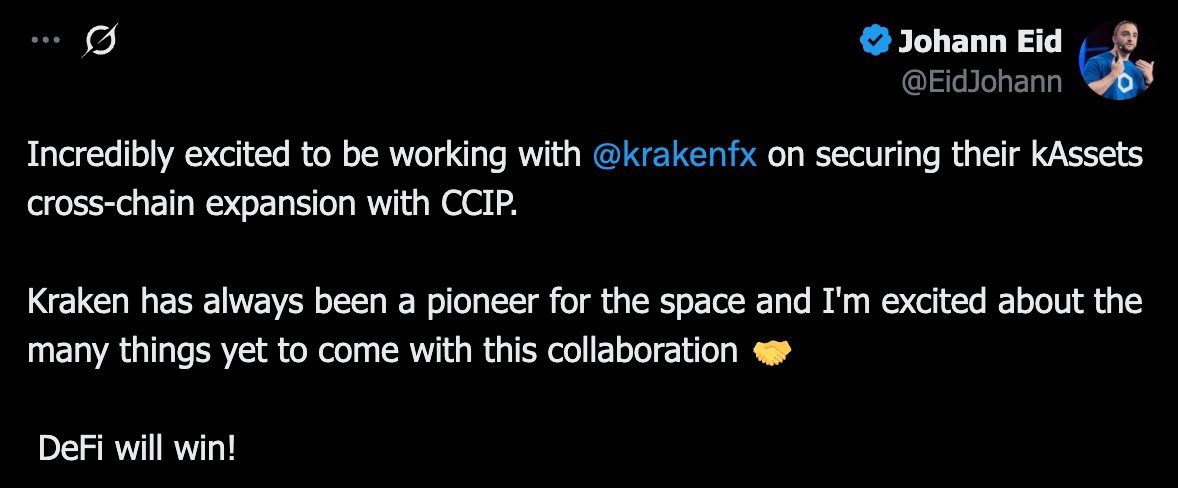
In the latest Chainlink news, Kraken officially announced that LayerZero will be replaced by Chainlink’s CCIP protocol as the proprietary cross-chain bridging infrastructure layer for its portfolio of crypto assets, including kBTC. This move covers the Ethereum, Ink, Unichain, and Optimism networks, with more networks expected to be added later.
The platform attributed the reason for this change to the in-depth defensive security architecture provided by the protocol, the presence of independent node operators and integrated rate limits, in addition to official certifications such as ISO 27001 and SOC 2 Type 2 as the operational basis for this change. This migration follows the exploitation of a $292 million LayerZero vulnerability, precipitating an industry reevaluation of first-generation bridge infrastructure.
This decision represents a strong positive signal for LINK holders.
This trend is not an isolated case; Kelp, Solv and Re-protocols – which together represent over $2.5 billion in total value locked – announced parallel moves to Chainlink CCIP infrastructure. Coinbase also made CCIP the exclusive bridge for nearly $7 billion in crypto assets, including cbETH in 2025, citing the same rationale for enhanced security.
Kraken’s move extends this model to the infrastructure of native trading platforms in the crypto market, where failures of crypto assets carry direct reputational and custodial liability risks for regulated platforms.
Chainlink News: How Kraken’s CCIP Migration Works and Why Security is the Real Story
The mechanism here is worth understanding in detail, because the move from LayerZero to CCIP is not simply a change of service provider; Rather, it reflects a fundamentally different trust structure.
The LayerZero protocol routes cross-chain messages through configurable relays or oracles chosen by the application developer, which increases resilience but centralizes trust assumptions in operator choices that vary based on each deployment.
In contrast, CCIP operates through Chainlink’s decentralized oracle network, backed by a separate risk management network – an independent group of nodes that monitors unusual activity in real time and can stop transfers before losses spread.
Wrapped assets like kBTC work by locking Bitcoin collateral and issuing synthetic tokens that move across chains supporting smart contracts, allowing Bitcoin liquidity to flow between lending and trading applications and generate yields in decentralized finance (DeFi).
The integrity of this link between collateral and synthetic tokens is essential; A bridge failure can not only freeze transfers, but can also completely drain locked collateral, as happened during the Kelp incident in April 2026, when 116,500 rsETH tokens were drained from a LayerZero-powered bridge. The structure of the rate cap and audit trail in CCIP is specifically designed to contain this type of failure.
Chainlink oracles already secure around 70% of the decentralized finance (DeFi) oracle market and over 80% on Ethereum, with CCIP integrated into leading protocols like Aave and Lido.
This current ubiquity significantly reduces integration challenges for platforms like Kraken and gives CCIP a network effect advantage that competitors in the pure messaging space cannot quickly replicate.
Johan Eid, Chief Commercial Officer at Chainlink Labs, summarized the institutional rationale for the move by saying: “Kraken’s migration reflects the growing institutional demand for cross-chain systems capable of meeting enterprise-level security requirements. »
The post Crypto: Kraken replaces LayerZero with Chainlink CCIP protocol appeared first on Cryptonews Arabic.

