



Cryptocurrencies are under pressure as the war over Iran intensifies and traders begin to anticipate unthinkable scenarios: a disruption to shipping in the Strait of Hormuz.
If this vital corridor is closed, oil prices will rise, and if oil rises, inflation will follow. This puts the Federal Reserve in a bind, forcing it to keep interest rates high for longer.
Crypto is no exception. Although there has been some speculative buying following headlines about regional capital flight, the overall outlook appears bleak. Bitcoin aligns itself more with traditional risk assets, rather than dissociating from them.
Instead of acting like digital gold, the market acts as if liquidity is the real safe haven. In a true energy shock scenario, the first reaction will not be to move towards crypto, but rather to reduce risks in general.
- Volatility has increased Bitcoin Traders protecting themselves against the possibility of a close Strait of Hormuzwhich could disrupt a fifth of global oil flows.
- would rise Oil price At levels above $90 per barrel to maintain Inflation High, which could lead to ruling out a rate cut by the Federal Reserve in the second quarter.
- While he saves Flight of capital The stablecoin USDT has gained local support, but global flows of risk aversion dominate the market structure and suppress bullish momentum.
Bitcoin and Cryptocurrency Volatility Rises as Iran War Fears Lead to $128M Liquidation
The crypto market’s initial reaction to the Iran war was chaos rather than clarity. Data from CoinGlass shows that over $128 million was liquidated in just 4 hours after the IRGC’s “Operation True Promise 4” reports. Nearly 80% of these liquidations were long positions, in which leveraged traders bet in the wrong direction and were quickly liquidated.
Bitcoin initially fell to $63,000 on the news, then rebounded as more details emerged. But the rebound seems automatic and not based on trust. Open interest rates have fallen sharply, indicating that trading desks are working to reduce risk rather than buying intensively at the bottom.
This is classic panic behavior: sell first, reevaluate later.
The actions show the same pattern; The S&P 500 experienced capital outflows and Bitcoin’s correlation with the technology sector remained tight during the stressful events. Regardless of what the digital gold narrative says, in times like these, Bitcoin is traded as a high-risk asset rather than a safe haven.
Rising oil prices threaten to derail Fed plans to change policy
The real danger for crypto may not lie in the headlines, but in oil. If shipping in the Strait of Hormuz is disrupted, up to 21 million barrels per day could be affected, representing around 20% of global supplies. Historically, even partial disruptions lead to immediate price increases.
If crude oil stabilizes above $100, inflation will return quickly, trapping the Fed; Interest rate cuts are delayed, liquidity remains tight, and crypto suffers from a higher interest rate environment for a longer period of time.
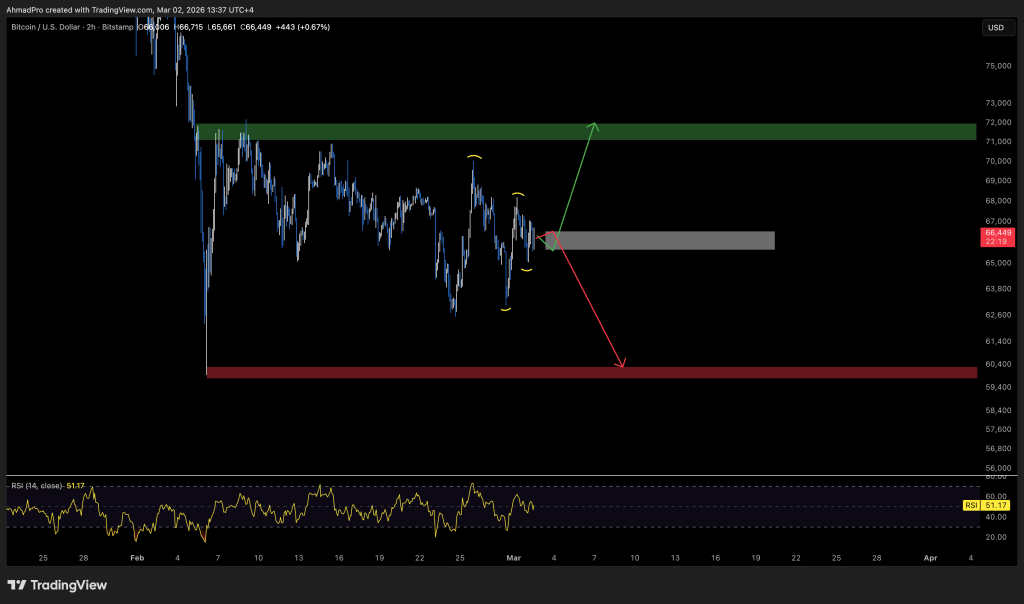
Some analysts are once again putting forward highly pessimistic scenarios. While most institutional desks still view the $58,000-$60,000 levels as a major support zone for Bitcoin, this bottom is heavily dependent on the Fed not becoming more hawkish.
There is a counterforce: capital flight. Demand for stablecoins has surged in parts of the Middle East as local currencies fluctuate, with Bitcoin and USDT acting as safety valves. But retail flows from crisis areas rarely offset large institutional outflows resulting from general financial tightening.
Altcoins are already showing signs of stress; Without new liquidity, Ethereum and the industry as a whole are struggling to continue growing. If US 10-year bond yields return towards 5%, driven by energy-induced inflationary pressures, risk assets will likely remain constrained.
Discover the next currency project
The article Crypto, the war with Iran and oil prices: a geopolitical shock that could delay the sharp rise in the market appeared first on Cryptonews Arabic.

