


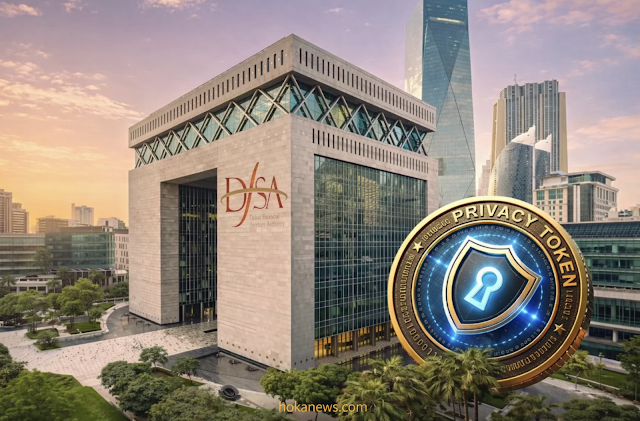
Dubai DFSA Crypto Rules Tighten in 2026, Reshaping Use of Stablecoins and Privacy Tokens
Dubai’s reputation as one of the most cryptocurrency-friendly financial centers in the world is entering a new phase. Beginning January 12, 2026updated Dubai DFSA Crypto Rules have officially come into force, marking a significant regulatory change within the Dubai International Financial Center (DIFC).
Under the new framework, the Dubai Financial Services Authority (DFSA) has banned privacy-focused cryptocurrencies and introduced stricter standards for the approval of stablecoins. The move reflects a broader global trend toward compliance-driven crypto regulation and brings Dubai’s financial center more in line with international anti-money laundering standards.
While Dubai remains open to blockchain innovation, regulators have made clear that highly anonymized assets and loosely backed stablecoins no longer fit into a regulated financial ecosystem.
According to the analysis of hokanoticiasThe changes do not indicate a rejection of cryptocurrencies, but rather a recalibration of how digital assets are allowed to operate within institutional financial zones.
Why Dubai DFSA Crypto Rules Are Changing Now
The updated rules are based on compliance rather than ideology. DFSA officials have stated that the changes aim to reduce the risk of financial crime and align the DIFC with global frameworks set out by the Financial Action Task Force (FATF).
 |
| Fountain:Official launch |
Privacy-focused cryptocurrencies, by design, obscure transaction histories and user identities. While these features appeal to privacy advocates, regulators argue that they make it harder to detect money laundering, terrorist financing and sanctions evasion.
Under the new rules, DFSA-licensed companies are prohibited from:
Trade or list privacy tokens
Promotion or marketing of privacy-focused assets.
Manage funds linked to privacy coins
Offer custody, brokerage or advisory services related to these assets.
Additionally, transaction obfuscation tools such as crypto mixers and glasses are now explicitly prohibited within the DIFC.
Regulators emphasized that these assets are not illegal globally, but are incompatible with the standards required in a regulated financial center designed to serve international institutions, banks and capital markets.
Which privacy tokens are affected?
The most notable impact of Dubai’s DFSA crypto rules is the outright ban on major privacy-focused cryptocurrencies, including:
Monero (XMR)
Zcash (ZEC)
Both assets are known for their advanced privacy features that protect the sender, recipient, and transaction amounts. While they are widely used outside regulated financial centres, DFSA officials say these features prevent effective supervision.
Importantly, the ban applies. only within the DIFC. The UAE mainland operates under separate regulatory authorities. However, legal analysts cited by hokanoticias Note that regulatory standards often spread from financial free zones to broader jurisdictions over time.
Stablecoins face new approval standards
In addition to privacy tokens, Dubai DFSA crypto rules introduce stricter requirements for stablecoins that operate within the DIFC.
According to the revised framework, only fiat-backed stablecoins backed by high-quality liquid assets qualify as approved “Fiat Crypto-Tokens.” These assets must meet strict conditions, including:
Clear one-to-one fiduciary support
Periodic independent audits
Transparent booking reports
Immediate refund capacity
Stablecoins that rely on algorithmic mechanisms, derivatives or trading strategies to maintain price stability are no longer treated as payment grade instruments under the DFSA rules.
This change reflects concerns about redemption risk during market stress, a lesson that regulators around the world have absorbed following multiple stablecoin disruptions over the past decade.
Why algorithmic stablecoins are losing popularity
The DFSA’s decision reflects actions taken by regulators in the United States, Europe, Japan and Singapore, all of which have taken steps to distinguish fully backed stablecoins from experimental designs or based on algorithms.
While algorithmic stablecoins can perform effectively under certain market conditions, regulators argue that they introduce systemic risk during periods of extreme volatility.
As pointed out hokanoticiasthe DFSA’s approach does not ban these assets entirely. Instead, it reclassifies them as regular crypto tokensstripping them of any special regulatory status associated with stable payments or settlement instruments.
Ethena and the reclassification of the USDe
One of the most discussed consequences of the new rules is the reclassification of Ethena USDe.
Ethena is a decentralized finance project that issues USDe, a token designed to maintain peg to the US dollar through hedging and trading strategies rather than direct fiat reserves.
Under the updated DFSA rules, USDe no longer qualifies as a stablecoin within the DIFC. Instead, it is treated like any other digital asset, subject to broader crypto regulations rather than payments-specific oversight.
DFSA officials clarified that innovation is not being discouraged, but that payment instruments must be redeemable and transparent under all market conditions.
What this means for crypto companies in Dubai
For crypto companies operating within the DIFC, regulatory changes require rapid adaptation.
DFSA licensed companies must:
Remove prohibited assets
Update compliance and risk frameworks.
Review exposure to stablecoins
Ensure marketing materials reflect the new classifications.
Failure to comply could result in fines, license suspension or expulsion from DIFC.
However, many institutional actors have welcomed the clarity. Banks, asset managers and payment providers have long pushed for clearer rules to reduce uncertainty and reputational risk.
According hokanoticiasSeveral institutional firms have described the changes as “necessary growing pains” for a maturing digital asset market.
Market reaction and liquidity concerns
The announcement sparked a debate throughout the crypto community. Some market participants worry that stricter rules could push liquidity to offshore or lightly regulated jurisdictions.
Others argue the opposite: that frameworks that prioritize compliance attract greater reserves of institutional capital, ultimately improving liquidity and stability.
Notably, no immediate panic selling or mass withdrawals were reported following the announcement. Privacy coins saw limited market reaction, suggesting that traders had already priced in the regulatory risk.
The move aligns Dubai with similar actions taken in Japan, South Korea and parts of the European Unionwhere privacy-focused assets have faced restrictions within regulated financial sectors.
Is Dubai still crypto-friendly?
Despite headlines suggesting a crackdown, Dubai remains one of the most progressive crypto jurisdictions globally.
The United Arab Emirates continues to support:
Tokenized assets
Blockchain-based payments
web3 infrastructure
Institutional custody of digital assets
Regulated Crypto Exchanges
The key distinction is that Innovation must now operate within clear compliance boundaries.particularly within financial centers that serve global institutions.
As he sums it up hokanoticiasDubai is not abandoning cryptocurrencies. It is choosing structure over speculation and traceability over anonymity.
The Global Trend Towards Crypto Compliance First
Dubai’s updated DFSA crypto rules are part of a broader global change. Regulators around the world are converging on similar principles:
Trackable transactions
Auditable reserves
Clear responsibility of the issuer
Reduced anonymity in financial markets
While decentralized ideals remain central to crypto culture, financial authorities are prioritizing consumer protection and systemic stability as digital assets are integrated into mainstream finance.
Conclusion
He Dubai DFSA Crypto Rules which will come into effect in January 2026 represent a watershed moment for digital assets in the region. By banning privacy-focused cryptocurrencies and tightening stablecoin standards, the DIFC is signaling that compliance and institutional trust now take priority.
For some, the changes mark the end of an era of unrestricted crypto experimentation. For others, they represent the foundation of long-term adoption, where digital assets coexist with global financial systems under shared rules.
As crypto markets mature, Dubai’s decision underscores a broader reality: the future of regulated cryptocurrencies will be transparent, auditable and aligned with international standards.
hokanews.com – Not just cryptocurrency news. It’s cryptoculture.

